Health chiefs have warned London’s measles outbreak is no longer a local incident, but a growing public health threat.
City News followed the emergency London Assembly meeting. Here’s what matters. Nearly 70 measles cases have been recorded in Enfield since January, helping push the capital past 100 confirmed infections overall.
Enfield has been hit hardest, with 71 confirmed cases, and most of those infected are children under 10.
WARNING SIGNS
Measles is a highly infectious virus that usually starts with flu-like symptoms, including a fever, cough, and a runny or blocked nose.
After a few days, tiny white spots can appear inside the mouth before a red or brown rash breaks out, often starting behind the ears and then spreading across the face and body.
Babies, pregnant women and people with weakened immune systems are most at risk. But measles is not just dangerous for the vulnerable. In severe cases, it can cause life-threatening complications if the infection spreads to the lungs or the brain.
“LOWEST VACCINATION RATES”
Health officials say the outbreak has been driven by falling vaccination rates in Enfield, which now has some of the lowest MMR uptake in the country.
Just 64.3% of five-year-olds received both doses of the MMR vaccine in 2024-25, far below the 95% coverage needed to stop measles spreading.
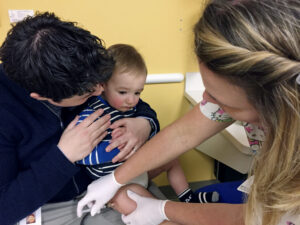
Health officials are trying to control the disease’s spread by urging parents to get their children vaccinated
East Enfield has recorded more cases than the west of the borough, where vaccine uptake is lowest and deprivation is highest.
Enfield’s Director of Public Health, Dudu Sher-Arami, said the outbreak exposed “a double whammy in how inequality plays out in our system.”
Several children and adults have already been hospitalised, piling more pressure on local NHS services.
‘BANNED FROM SCHOOL’
Enfield Council wrote to parents earlier this year urging families to check whether their children were fully vaccinated.
The letter warned that unvaccinated pupils could be temporarily kept off school if they came into contact with the virus.
Pop-up vaccination clinics have now been set up across the borough in a bid to drive up uptake and protect local communities.
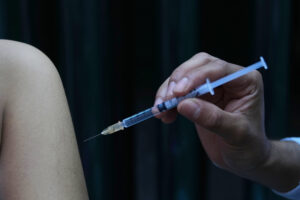
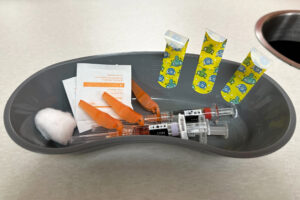
A health worker administers a dose of the measles vaccine outside a public hospital
However, Dr Yimmy Chow, Regional Deputy Director at UKHSA, warned the jab does not offer instant protection.
“The danger with measles is that vaccination isn’t immediately preventative,” she said, adding that the outbreak will only be brought under control through longer-term action.
UKHSA official Nalini Iyengar told Assembly members it was “difficult to say” whether the situation would stabilise before vaccination rates rise across the wider population.
WORST OUTBREAK IN YEARS
The outbreak comes after 2024 saw the highest number of measles cases in the UK for decades, with 3,681 confirmed infections nationwide.
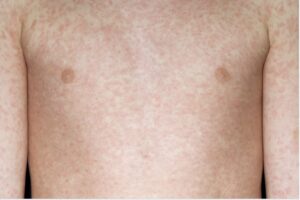
Measles forms a red rash across the body after a week
Last July, a child died after contracting measles, in the clearest sign yet of how serious the virus can be.
The World Health Organisation later stripped the UK of its measles elimination status, deepening alarm among politicians and public health officials.
Professor Devi Sridhar, Chair of Global Public Health, said falling vaccination rates had played a major role in the resurgence.
“Since the 1990s, our societal approach to vaccination has changed and uptake has reduced,” she said.
“There has been a shift in the level of trust people have in vaccines.”
But she added that vaccine hesitancy is only part of the story.
Many children were born during the Covid pandemic, when routine vaccination programmes were disrupted, she said, and for many families the problem is less outright refusal than the grind of work, childcare and everyday pressure.
VACCINE PROTECTION
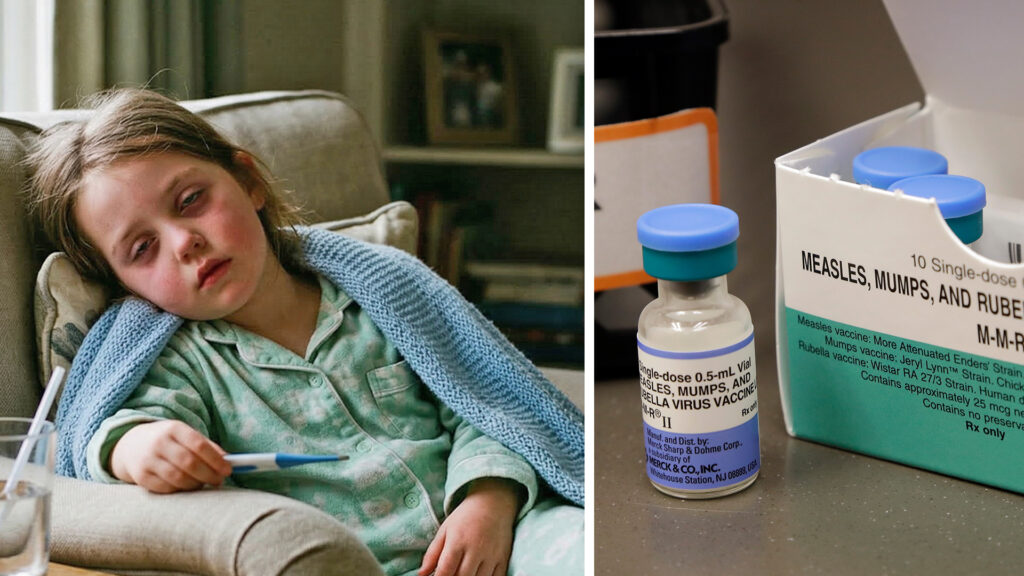
Measles, mumps and rubella vaccines are prepared
Health experts say most measles cases can be stopped with the MMR vaccine, which protects against measles, mumps and rubella.
The jab is free on the NHS and is about 99% effective when both doses are given.
Children are usually offered the first dose at 12 months, with the second coming later in childhood.
Submitted Article
Headline
Short Headline
Standfirst
Published Article
HeadlineMEASLES MAYHEM: North London cases surge as health chiefs warn crisis could spread
Short HeadlineMeasles Mayhem: London outbreak a "national concern" says London's Health Officials
StandfirstMore than 100 measles cases have been recorded across London as the UK loses its measles-free status
Health chiefs have warned London’s measles outbreak is no longer a local incident, but a growing public health threat.
City News followed the emergency London Assembly meeting. Here’s what matters. Nearly 70 measles cases have been recorded in Enfield since January, helping push the capital past 100 confirmed infections overall.
Enfield has been hit hardest, with 71 confirmed cases, and most of those infected are children under 10.
WARNING SIGNS
Measles is a highly infectious virus that usually starts with flu-like symptoms, including a fever, cough, and a runny or blocked nose.
After a few days, tiny white spots can appear inside the mouth before a red or brown rash breaks out, often starting behind the ears and then spreading across the face and body.
Babies, pregnant women and people with weakened immune systems are most at risk. But measles is not just dangerous for the vulnerable. In severe cases, it can cause life-threatening complications if the infection spreads to the lungs or the brain.
“LOWEST VACCINATION RATES”
Health officials say the outbreak has been driven by falling vaccination rates in Enfield, which now has some of the lowest MMR uptake in the country.
Just 64.3% of five-year-olds received both doses of the MMR vaccine in 2024-25, far below the 95% coverage needed to stop measles spreading.
Health officials are trying to control the disease’s spread by urging parents to get their children vaccinated
East Enfield has recorded more cases than the west of the borough, where vaccine uptake is lowest and deprivation is highest.
Enfield’s Director of Public Health, Dudu Sher-Arami, said the outbreak exposed “a double whammy in how inequality plays out in our system.”
Several children and adults have already been hospitalised, piling more pressure on local NHS services.
‘BANNED FROM SCHOOL’
Enfield Council wrote to parents earlier this year urging families to check whether their children were fully vaccinated.
The letter warned that unvaccinated pupils could be temporarily kept off school if they came into contact with the virus.
Pop-up vaccination clinics have now been set up across the borough in a bid to drive up uptake and protect local communities.
A health worker administers a dose of the measles vaccine outside a public hospital
However, Dr Yimmy Chow, Regional Deputy Director at UKHSA, warned the jab does not offer instant protection.
“The danger with measles is that vaccination isn’t immediately preventative,” she said, adding that the outbreak will only be brought under control through longer-term action.
UKHSA official Nalini Iyengar told Assembly members it was “difficult to say” whether the situation would stabilise before vaccination rates rise across the wider population.
WORST OUTBREAK IN YEARS
The outbreak comes after 2024 saw the highest number of measles cases in the UK for decades, with 3,681 confirmed infections nationwide.
Measles forms a red rash across the body after a week
Last July, a child died after contracting measles, in the clearest sign yet of how serious the virus can be.
The World Health Organisation later stripped the UK of its measles elimination status, deepening alarm among politicians and public health officials.
Professor Devi Sridhar, Chair of Global Public Health, said falling vaccination rates had played a major role in the resurgence.
“Since the 1990s, our societal approach to vaccination has changed and uptake has reduced,” she said.
“There has been a shift in the level of trust people have in vaccines.”
But she added that vaccine hesitancy is only part of the story.
Many children were born during the Covid pandemic, when routine vaccination programmes were disrupted, she said, and for many families the problem is less outright refusal than the grind of work, childcare and everyday pressure.
VACCINE PROTECTION
Measles, mumps and rubella vaccines are prepared
Health experts say most measles cases can be stopped with the MMR vaccine, which protects against measles, mumps and rubella.
The jab is free on the NHS and is about 99% effective when both doses are given.
Children are usually offered the first dose at 12 months, with the second coming later in childhood.
A 2024 Freedom of Information request showed Bromley Council had £4.5 million invested in arms companies that year with £1.5 million reportedly linked to Israel.
Undercover officers raided three linked shops in Barking town centre, revealing how illicit tobacco is being hidden in walls, ceilings and nearby locations to evade detection.
More than 330,000 people across the UK sought support from the Stop It Now helpline in 2025 over concerns about their own or someone else’s online sexual behaviour towards children, according to new charity data. The anonymous service says contacts by phone, email and webchat rose significantly over the year.