How Toxic Shock Syndrome changed one Londoner’s life
Toxic Shock Syndrome is extremely rare, but for one Londoner, it developed into sepsis and almost killed her. She says that there is still more to be done to remove the stigma surrounding the life-threatening condition.
The last thing Shivani remembers is inserting a tampon before going to bed on Friday, 7th April 2024. She had told her sister she was coming down with something. Her next memory is waking up five days later with an intubation tube down her throat.
Shivani Vasudeva, 24, told City News that she almost died from Toxic Shock Syndrome (TSS), which had developed into sepsis. But two years later, whilst her physical recovery has greatly improved, she is still having to deal with the stigma surrounding the illness.
She was later told that she had been awake all Saturday, confused, and suffering from the flu. The next day, her parents found her in bed, disoriented and delirious, speaking nonsense, and vomiting. When the ambulance refused to come, her father and brothers carried her limp body downstairs and drove her to the hospital.
She was quickly diagnosed with septic shock.
In her extreme confusion, she had to be restrained due to her kicking and screaming, and was catheterised. Shivani says that doctors did not spot the tampon during the procedure. It wasn’t until her sister understood that Shivani shouting ‘towel’ over and over again was her attempt to communicate this.
Shivani in the hospital
Shivani’s doctor’s notes say she was treated for TSS and the sepsis that developed from it. Toxic Shock Syndrome is a rare, life-threatening condition that is associated with tampon usage, although anyone can get it. It is caused by the common bacteria, Staphylococcus aureus, which can occasionally produce toxins that cause TSS.
Sepsis, a potentially fatal condition, can be triggered by this. It arises when the body’s reaction to an infection causes widespread damage to tissues and organs.
Her hospital stay is a sensitive topic for Shivani.
“The doctors at the hospital said that this was the most ill they’d ever seen someone become so quickly from sepsis.”
She experienced a ten-second seizure when she was first put under sedation. She was kept sedated for four days due to her extreme confusion. Despite being discharged seven days later, Shivani still did not understand what had happened to her, and it took her a long time to walk properly again.
“The first time I tried to stand up, I immediately sat back down and threw up.”
According to the UK Sepsis Trust, who helped Shivani in the early stages of her recovery, five people every hour in the UK die of septic shock. They told City News:
“It’s critical that public awareness of the signs and symptoms of sepsis continues to improve. We also need a commitment from health ministers on the development and implementation of a ‘sepsis pathway’ – a standardised treatment plan that ensures patients receive the right care.”
UK Sepsis Savvy Walk Fundraiser
Shivani said after her ordeal, she was “blissfully grateful” to be alive. However, she soon faced continuous stigma surrounding TSS. An aunt, during Shivani’s travels in India, told her,
“You leaving that tampon in too long was the most irresponsible thing you have ever done.”
Last year, a man she had worked with for only a couple of weeks implied her near-death experience was her fault.
“People say it won’t be you if you’re not negligent, but I wasn’t negligent. I often think, why me?… Ads for tampon companies depict them as being freeing, but there is no acknowledgement of the dangers they bring.”
Shivani says that there were also several failings of the hospital regarding knowledge around sepsis and toxic shock syndrome alike. Upon retrieval of the tampon, which was green due to the bacteria (a common sign of TSS), the hospital sent it off along with her blood to be tested for toxic shock officially. Shivani says the hospital lost these items.
Shivani and her family also say that the triage nurse who admitted her encouraged them to move her to the overdose ward after he falsely read her blood pressure as normal. Her father and mother both worked in medical fields, and they acknowledge that they missed the signs of sepsis.
Shivani and her family a month after she was discharged
Shivani wants knowledge around toxic shock and sepsis to improve. Toxic Shock Syndrome can happen to anyone, regardless of gender or age. The Toxic Shock Information Service told City News,
“Data is not collected on TSS cases, however it is estimated that in around half of cases TSS occurs as a result of localised infections for example following surgical procedures, burns, scalds, wounds, insect bites or even chicken pox spots. The other half of cases are seen in people who are menstruating and using tampons… the causal link between menstruation, tampons or other devices and TSS is not known.”
As of 2022, the Toxic Shock Syndrome Information Service (TSSIS) reported that their stats show an average of 40 cases of TSS every year, though many – like Shivani’s – go unreported as hospitals often treat the condition it progresses into.
Shivani feels lucky, but her ordeal has had lasting impacts. She says her muscles will never be as strong again due to the lasting effects of the sepsis, and a foot injury she sustained following her discharge only subsided in the last year.
City News has reached out to the hospital for a comment.
Submitted Article
Headline
Short Headline
Standfirst
Published Article
HeadlineHow Toxic Shock Syndrome changed one Londoner’s life
Short HeadlineHow Toxic Shock Syndrome changed one Londoner's life
StandfirstToxic Shock Syndrome is extremely rare, but for one Londoner, it developed into sepsis and almost killed her. She says that there is still more to be done to remove the stigma surrounding the life-threatening condition.
The last thing Shivani remembers is inserting a tampon before going to bed on Friday, 7th April 2024. She had told her sister she was coming down with something. Her next memory is waking up five days later with an intubation tube down her throat.
Shivani Vasudeva, 24, told City News that she almost died from Toxic Shock Syndrome (TSS), which had developed into sepsis. But two years later, whilst her physical recovery has greatly improved, she is still having to deal with the stigma surrounding the illness.
She was later told that she had been awake all Saturday, confused, and suffering from the flu. The next day, her parents found her in bed, disoriented and delirious, speaking nonsense, and vomiting. When the ambulance refused to come, her father and brothers carried her limp body downstairs and drove her to the hospital.
She was quickly diagnosed with septic shock.
In her extreme confusion, she had to be restrained due to her kicking and screaming, and was catheterised. Shivani says that doctors did not spot the tampon during the procedure. It wasn’t until her sister understood that Shivani shouting ‘towel’ over and over again was her attempt to communicate this.
Shivani in the hospital
Shivani’s doctor’s notes say she was treated for TSS and the sepsis that developed from it. Toxic Shock Syndrome is a rare, life-threatening condition that is associated with tampon usage, although anyone can get it. It is caused by the common bacteria, Staphylococcus aureus, which can occasionally produce toxins that cause TSS.
Sepsis, a potentially fatal condition, can be triggered by this. It arises when the body’s reaction to an infection causes widespread damage to tissues and organs.
Her hospital stay is a sensitive topic for Shivani.
“The doctors at the hospital said that this was the most ill they’d ever seen someone become so quickly from sepsis.”
She experienced a ten-second seizure when she was first put under sedation. She was kept sedated for four days due to her extreme confusion. Despite being discharged seven days later, Shivani still did not understand what had happened to her, and it took her a long time to walk properly again.
“The first time I tried to stand up, I immediately sat back down and threw up.”
According to the UK Sepsis Trust, who helped Shivani in the early stages of her recovery, five people every hour in the UK die of septic shock. They told City News:
“It’s critical that public awareness of the signs and symptoms of sepsis continues to improve. We also need a commitment from health ministers on the development and implementation of a ‘sepsis pathway’ – a standardised treatment plan that ensures patients receive the right care.”
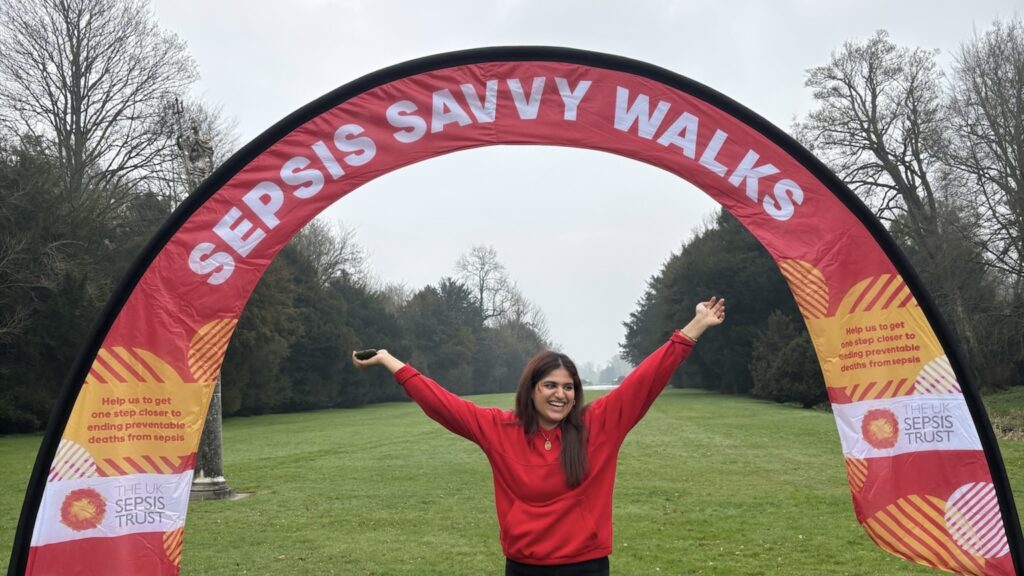
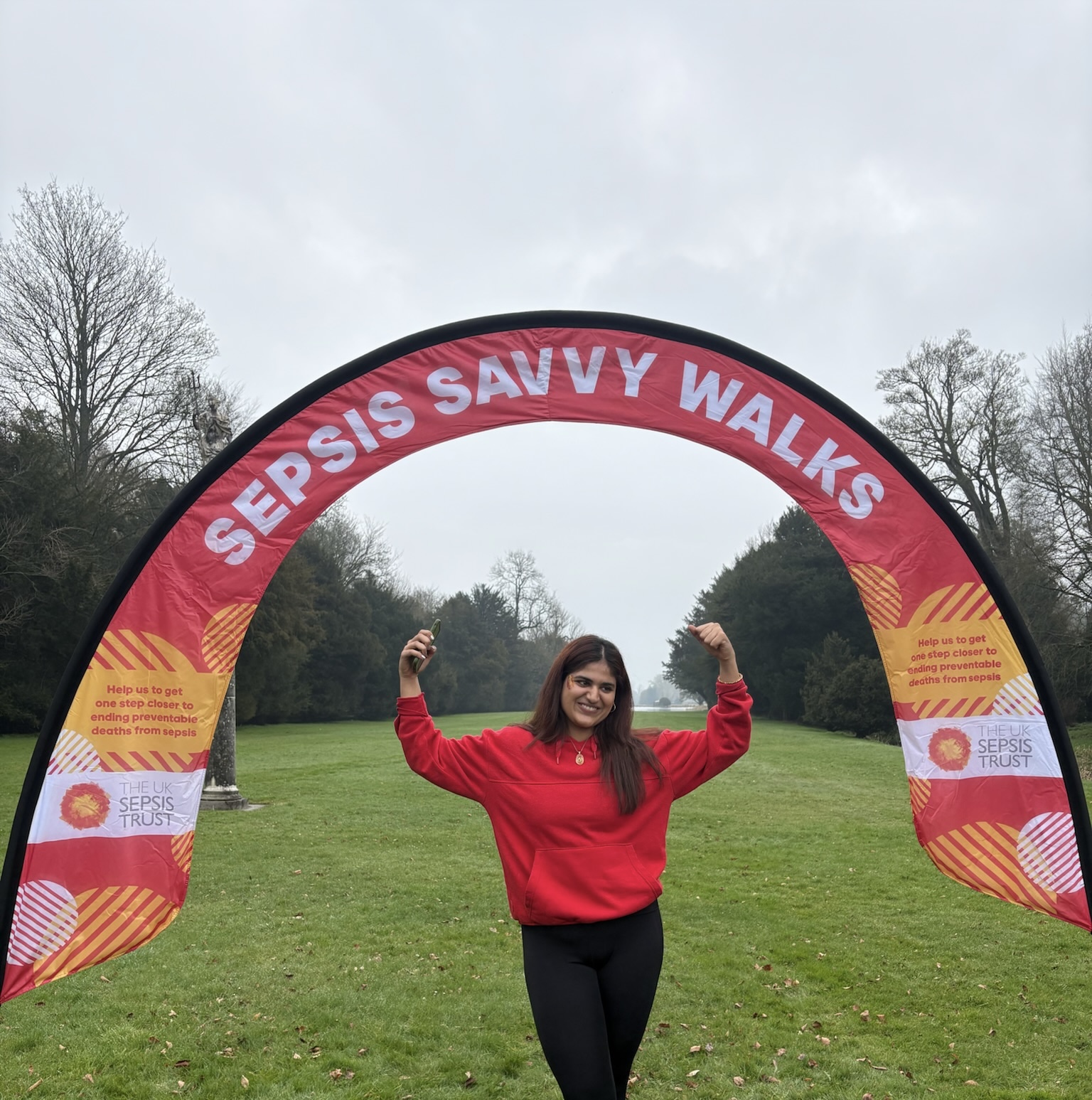
UK Sepsis Savvy Walk Fundraiser
Shivani said after her ordeal, she was “blissfully grateful” to be alive. However, she soon faced continuous stigma surrounding TSS. An aunt, during Shivani’s travels in India, told her,
“You leaving that tampon in too long was the most irresponsible thing you have ever done.”
Last year, a man she had worked with for only a couple of weeks implied her near-death experience was her fault.
“People say it won’t be you if you’re not negligent, but I wasn’t negligent. I often think, why me?… Ads for tampon companies depict them as being freeing, but there is no acknowledgement of the dangers they bring.”
Shivani says that there were also several failings of the hospital regarding knowledge around sepsis and toxic shock syndrome alike. Upon retrieval of the tampon, which was green due to the bacteria (a common sign of TSS), the hospital sent it off along with her blood to be tested for toxic shock officially. Shivani says the hospital lost these items.
Shivani and her family also say that the triage nurse who admitted her encouraged them to move her to the overdose ward after he falsely read her blood pressure as normal. Her father and mother both worked in medical fields, and they acknowledge that they missed the signs of sepsis.
Shivani and her family a month after she was discharged
Shivani wants knowledge around toxic shock and sepsis to improve. Toxic Shock Syndrome can happen to anyone, regardless of gender or age. The Toxic Shock Information Service told City News,
“Data is not collected on TSS cases, however it is estimated that in around half of cases TSS occurs as a result of localised infections for example following surgical procedures, burns, scalds, wounds, insect bites or even chicken pox spots. The other half of cases are seen in people who are menstruating and using tampons… the causal link between menstruation, tampons or other devices and TSS is not known.”
As of 2022, the Toxic Shock Syndrome Information Service (TSSIS) reported that their stats show an average of 40 cases of TSS every year, though many – like Shivani’s – go unreported as hospitals often treat the condition it progresses into.
Shivani feels lucky, but her ordeal has had lasting impacts. She says her muscles will never be as strong again due to the lasting effects of the sepsis, and a foot injury she sustained following her discharge only subsided in the last year.
A 2024 Freedom of Information request showed Bromley Council had £4.5 million invested in arms companies that year with £1.5 million reportedly linked to Israel.
Undercover officers raided three linked shops in Barking town centre, revealing how illicit tobacco is being hidden in walls, ceilings and nearby locations to evade detection.
More than 330,000 people across the UK sought support from the Stop It Now helpline in 2025 over concerns about their own or someone else’s online sexual behaviour towards children, according to new charity data. The anonymous service says contacts by phone, email and webchat rose significantly over the year.