Elon Musk’s AI bot named Grok has faced severe backlash in recent weeks, reigniting debate about the risks of artificial intelligence. We asked Elaena Ahmadi an AI Consulting Expert how to make use of the technology responsibly.
1. Use AI as your own personal shopping assistant
Elaena Ahmadi says,
“Outsource the research for buying important things… Like a virtual assistant.”
ChatGPT New Shopping Assistant feature
Most people use AI for advice or information, however, fewer have realised it can shop for them.
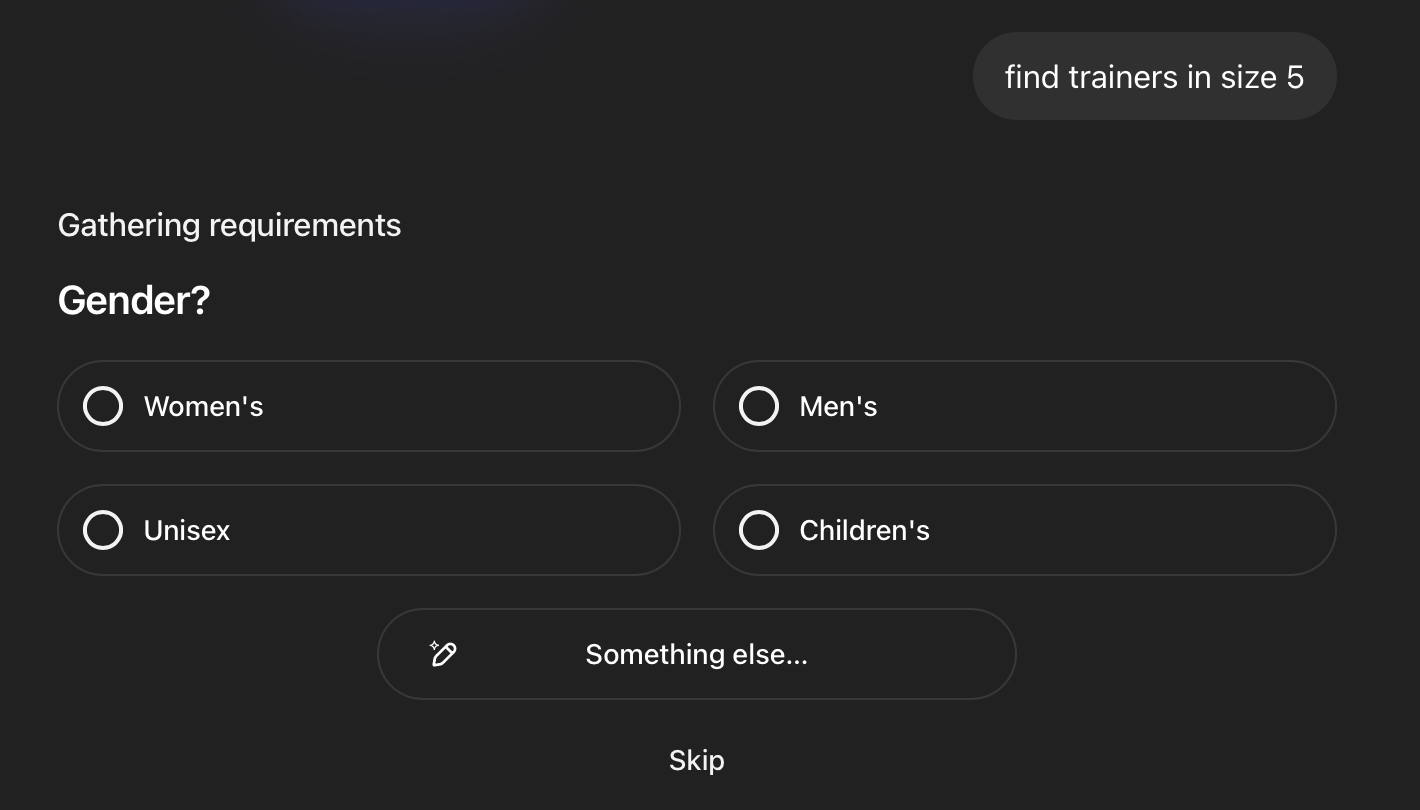
You can utilise the new Shopping Research filter on ChatGPT to find your perfect match. Describe it and you can let AI do the hunt across retailers.
If you need a specific outfit for a party – say the theme is 1920s – there’s no need to scroll through webpages but let the bot do the shopping for you.
An additional Easter Egg Ahmadi provided was the ability to check your local area for the highest reviewed salons or beauty places.
“You can ask it to identify places [with] the highest concentration of detailed feedback.”
Try it:
Prompt: “Find me [item] in [size/colour/style]. I want real options to buy now, not items that are out of stock” Or “Find me a well-reviewed hair salon near [location], make sure to prioritise places with a high volume of detailed reviews rather than just a high star rating”
2. Track your career progression and see what needs improvement
“The job you are doing today may bear little resemblance to the one you aimed for” said Ahmadi. “Few people map where they actually want to be going.”
“Run your own performance review for career progression.”
You can use AI to assess where you are now and plan next steps. Feed a model a picture of where you started and where you want to be. Give it your current and dream job titles.
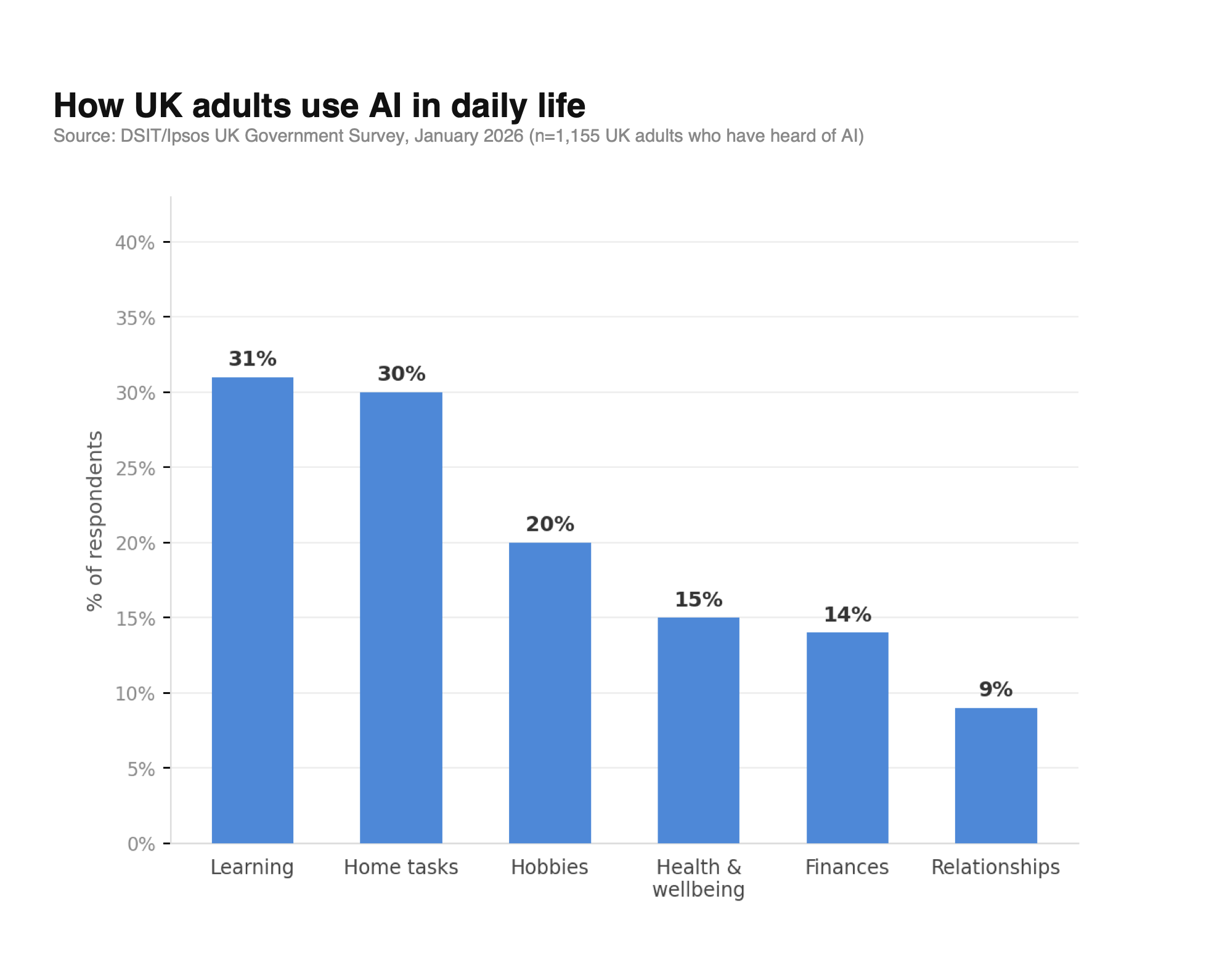
How UK adults use AI in daily life. Credit: DSIT/Ipsos UK Government Survey, January 2026
What skills and achievements do you have and ask it to assess your trajectory honestly.
Are there skills missing for the next step? Do you need more experience to break into the field you want? AI can give you a clearer overview picture and if directed the right way, it won’t tell you what you want to hear to be polite.
Try it:
Prompt: “Here is my career history so far [insert career history], in five years I want to be [insert goals, dream job position and aims]. Assess my trajectory bluntly, what’s working, what’s missing and what should I be doing differently. What do realistic next steps look like for me”
3. Use AI to understand things you have been too embarrassed to admit you don’t understand.
Ahmadi tells us:
“It can explain complex topics simply.”
There can be a news story you keep seeing that you don’t understand. Or a political development, economic argument or a technology debate. You may have seen it around enough to know it matters, but not enough about it to know what you think.
Paste the article or link the video and ask AI to explain it clearly drawing on only the material you have provided.
This works well for an equally dense document you might have been sent, or for example, a scientific study that has been cited which you want to assess properly.
Instruct it to draw only from the information you have shared. This keeps the AI grounded and prevents it from adding context or misinformation which you cannot verify.
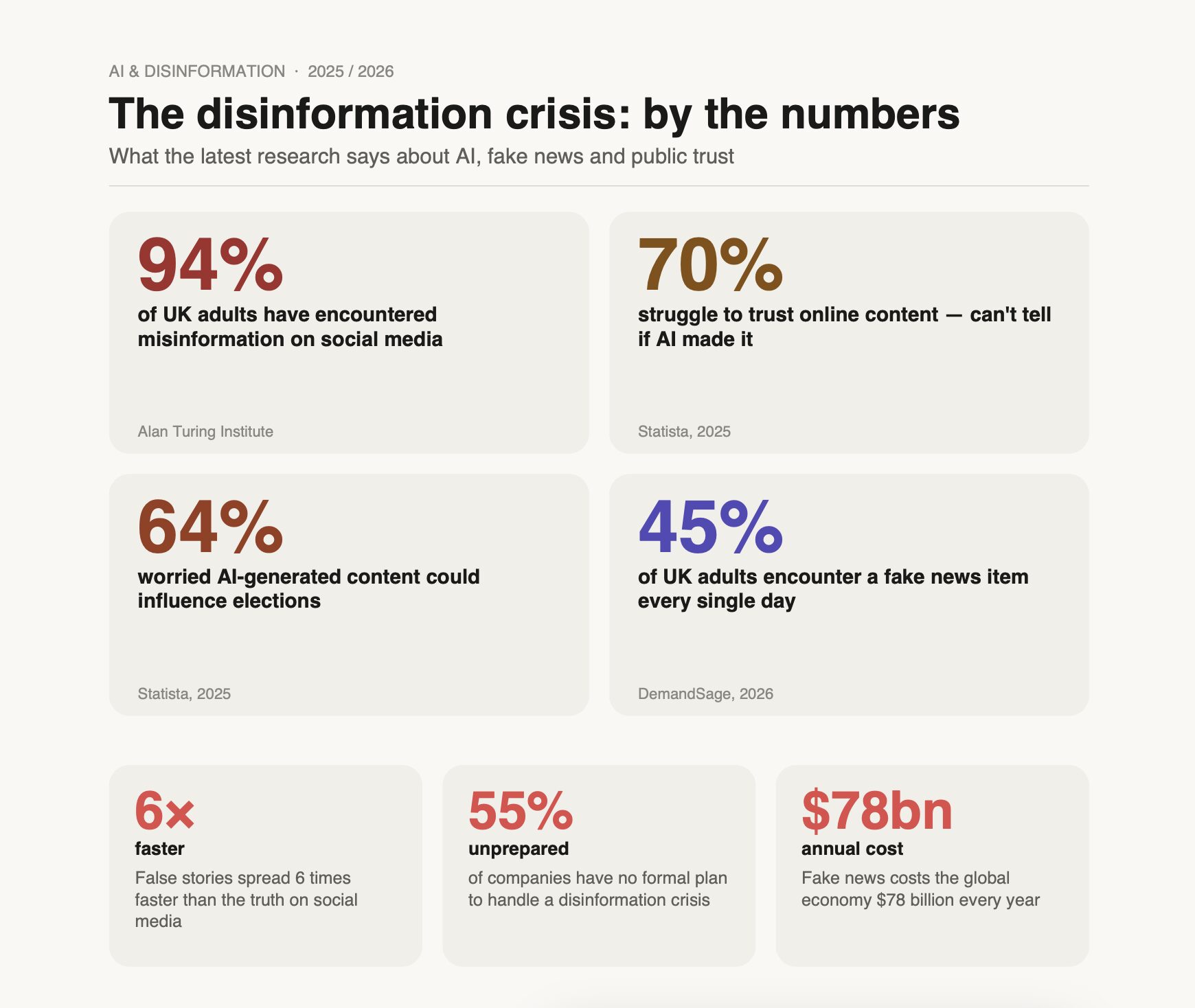
Credit: Data from the Alan Turing Institute, Statista Global Survey (2025), DemandSage (2026) and Signal AI (2026). Figures reflect UK and global research into public exposure to misinformation.
Try it:
Prompt: “Here is an article/video/document. Explain it to me clearly. What is actually being argued, what do I need to understand to follow it, and what questions should I be asking. Draw only from the material I’ve shared”
None of these require a paid subscription, technical knowledge, or more than a few minutes to set up.
Ahmadi is clear on what responsible AI usage can be: “AI doesn’t have to do your thinking for you” she says “It can do the boring, things you don’t want to do…so you have your free time to yourself again.”
Submitted Article
Headline
Short Headline
Standfirst
Published Article
HeadlineThree practical and ethical ways to use AI – according to an expert
Short HeadlineThree ethical ways to use AI
StandfirstAI is under fire again. Here are a few ways on how to use it safely and efficiently.
Elon Musk’s AI bot named Grok has faced severe backlash in recent weeks, reigniting debate about the risks of artificial intelligence. We asked Elaena Ahmadi an AI Consulting Expert how to make use of the technology responsibly.
1. Use AI as your own personal shopping assistant
Elaena Ahmadi says,
“Outsource the research for buying important things… Like a virtual assistant.”
ChatGPT New Shopping Assistant feature
Most people use AI for advice or information, however, fewer have realised it can shop for them.
You can utilise the new Shopping Research filter on ChatGPT to find your perfect match. Describe it and you can let AI do the hunt across retailers.
If you need a specific outfit for a party – say the theme is 1920s – there’s no need to scroll through webpages but let the bot do the shopping for you.
An additional Easter Egg Ahmadi provided was the ability to check your local area for the highest reviewed salons or beauty places.
“You can ask it to identify places [with] the highest concentration of detailed feedback.”
Try it:
Prompt: “Find me [item] in [size/colour/style]. I want real options to buy now, not items that are out of stock” Or “Find me a well-reviewed hair salon near [location], make sure to prioritise places with a high volume of detailed reviews rather than just a high star rating”
2. Track your career progression and see what needs improvement
“The job you are doing today may bear little resemblance to the one you aimed for” said Ahmadi. “Few people map where they actually want to be going.”
“Run your own performance review for career progression.”
You can use AI to assess where you are now and plan next steps. Feed a model a picture of where you started and where you want to be. Give it your current and dream job titles.
How UK adults use AI in daily life. Credit: DSIT/Ipsos UK Government Survey, January 2026
What skills and achievements do you have and ask it to assess your trajectory honestly.
Are there skills missing for the next step? Do you need more experience to break into the field you want? AI can give you a clearer overview picture and if directed the right way, it won’t tell you what you want to hear to be polite.
Try it:
Prompt: “Here is my career history so far [insert career history], in five years I want to be [insert goals, dream job position and aims]. Assess my trajectory bluntly, what’s working, what’s missing and what should I be doing differently. What do realistic next steps look like for me”
3. Use AI to understand things you have been too embarrassed to admit you don’t understand.
Ahmadi tells us:
“It can explain complex topics simply.”
There can be a news story you keep seeing that you don’t understand. Or a political development, economic argument or a technology debate. You may have seen it around enough to know it matters, but not enough about it to know what you think.
Paste the article or link the video and ask AI to explain it clearly drawing on only the material you have provided.
This works well for an equally dense document you might have been sent, or for example, a scientific study that has been cited which you want to assess properly.
Instruct it to draw only from the information you have shared. This keeps the AI grounded and prevents it from adding context or misinformation which you cannot verify.
Credit: Data from the Alan Turing Institute, Statista Global Survey (2025), DemandSage (2026) and Signal AI (2026). Figures reflect UK and global research into public exposure to misinformation.
Try it:
Prompt: “Here is an article/video/document. Explain it to me clearly. What is actually being argued, what do I need to understand to follow it, and what questions should I be asking. Draw only from the material I’ve shared”
None of these require a paid subscription, technical knowledge, or more than a few minutes to set up.
Ahmadi is clear on what responsible AI usage can be: “AI doesn’t have to do your thinking for you” she says “It can do the boring, things you don’t want to do…so you have your free time to yourself again.”
A 2024 Freedom of Information request showed Bromley Council had £4.5 million invested in arms companies that year with £1.5 million reportedly linked to Israel.
Undercover officers raided three linked shops in Barking town centre, revealing how illicit tobacco is being hidden in walls, ceilings and nearby locations to evade detection.
More than 330,000 people across the UK sought support from the Stop It Now helpline in 2025 over concerns about their own or someone else’s online sexual behaviour towards children, according to new charity data. The anonymous service says contacts by phone, email and webchat rose significantly over the year.