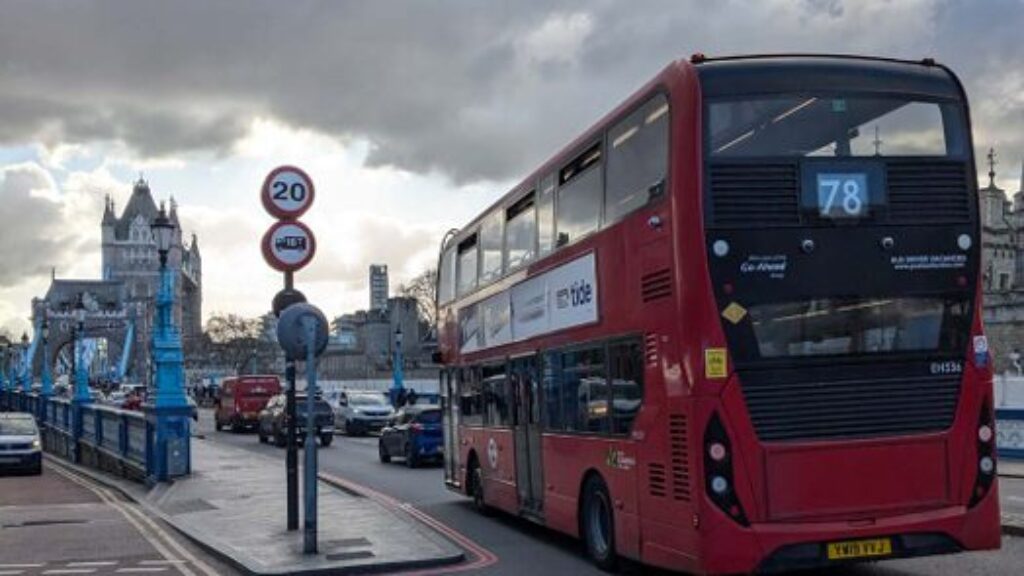
Transport for London (TfL) says it wants bus journeys to be faster. They aim to speed up journeys for commuters and reduce congestion by encouraging drivers to take the bus. TfL have a scheme for enabling this, the London Bus Priority Programme.
Here are five of the ways that TfL is trying to make buses faster to encourage their use.
1. Priority lights
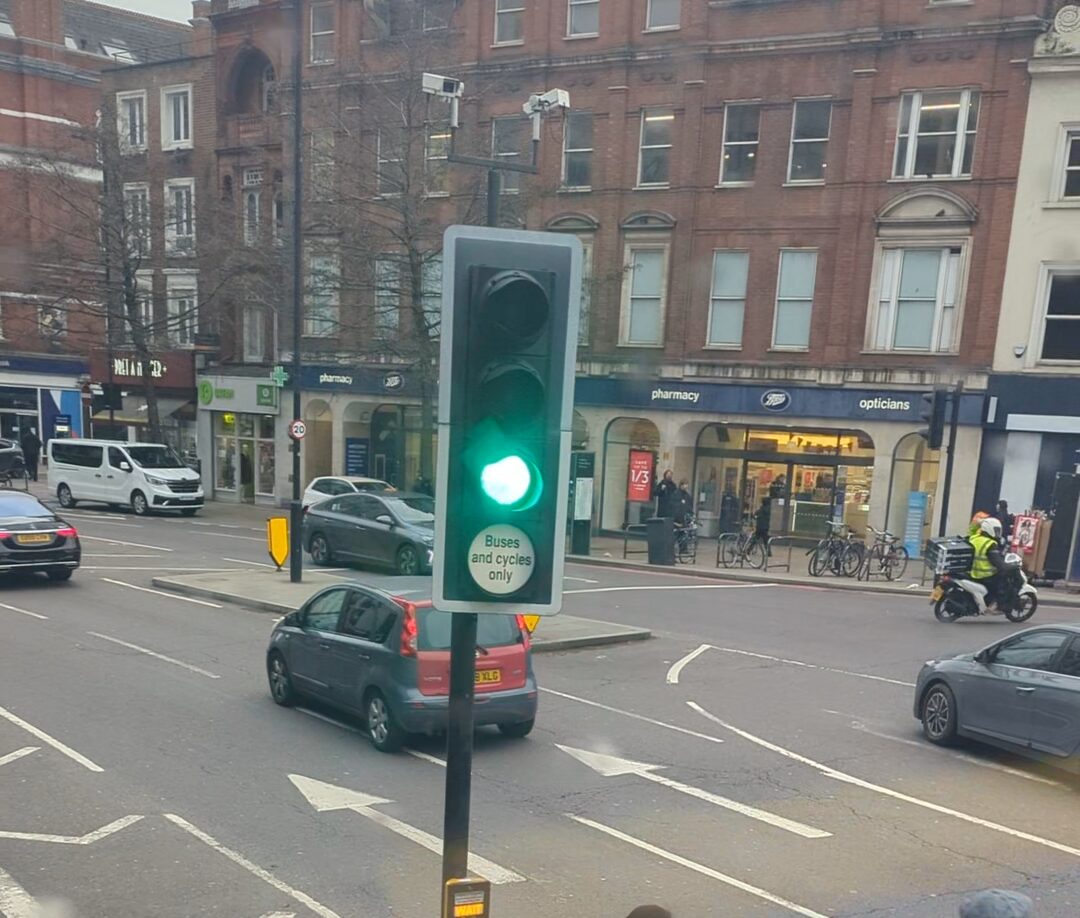
The first one might surprise you: Buses influence the traffic lights in London to speed up their journeys! TfL operate all the traffic lights in London. According to their data there are 5364 sets of traffic lights in London that TfL control. Of these, 2702 are junctions.
In an effort to control these junctions, TfL allow buses priority access. This means, that if a bus is approaching a green signal that’s about to turn red, the signal may stay green a few more seconds to allow the bus through. Likewise, if a signal is red, it may shave a few seconds off to allow the bus through faster.
2,161 of the junctions in London are outfitted with this functionality — about 80% of them — and TfL have the data about how they’re used. Each month over one and a half million bus journeys go through these junctions, and a quarter of a million bus journeys are sped up by this system.
2. Pedestrian call cancellation
Normally, when you press the button to cross at a pelican junction it will guarantee to stop the traffic with a red light. This will happen even if the pedestrian leaves the junction or manages to cross while the traffic lights are still green.
On new junctions, TfL can detect if a pedestrian is still waiting. If not, the junction will cancel the call. This means faster journeys for all road users, as you’ll no longer have the frustrating experience of waiting at a red light for a non-existent pedestrian to cross!
3. Bus gates
TfL use the term ‘bus gates’ for roads that are only for buses, cycles and sometimes taxis. They often provide shortcuts, especially around busy areas, such as the bus gate between Angel and Kings Cross. This forces cars to take the long way round.
TfL claim that one of the main aims of their Bus Priority Programme is to decrease the demand for using private cars. It also claims that such schemes reduce through traffics in neighbourhoods, making them safer for pedestrians and cyclists.
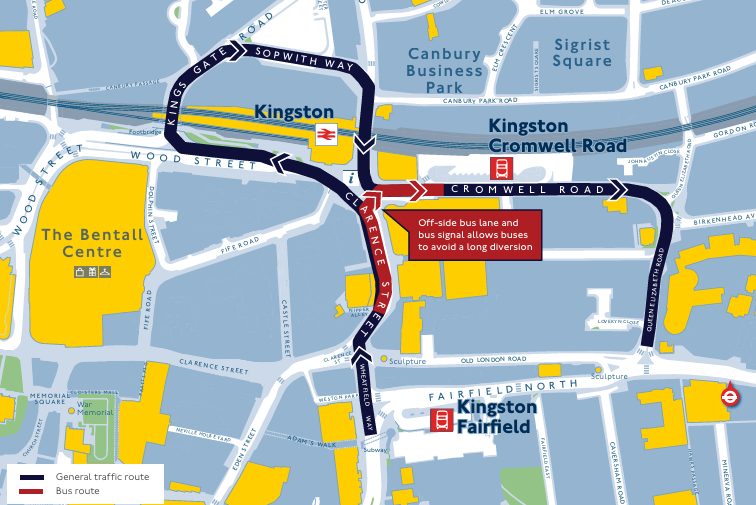
Another example is in Kingston, where a bus-only set of traffic lights allow buses to make a much shorter journey.
Credit: Transport for London
4. Bus lanes
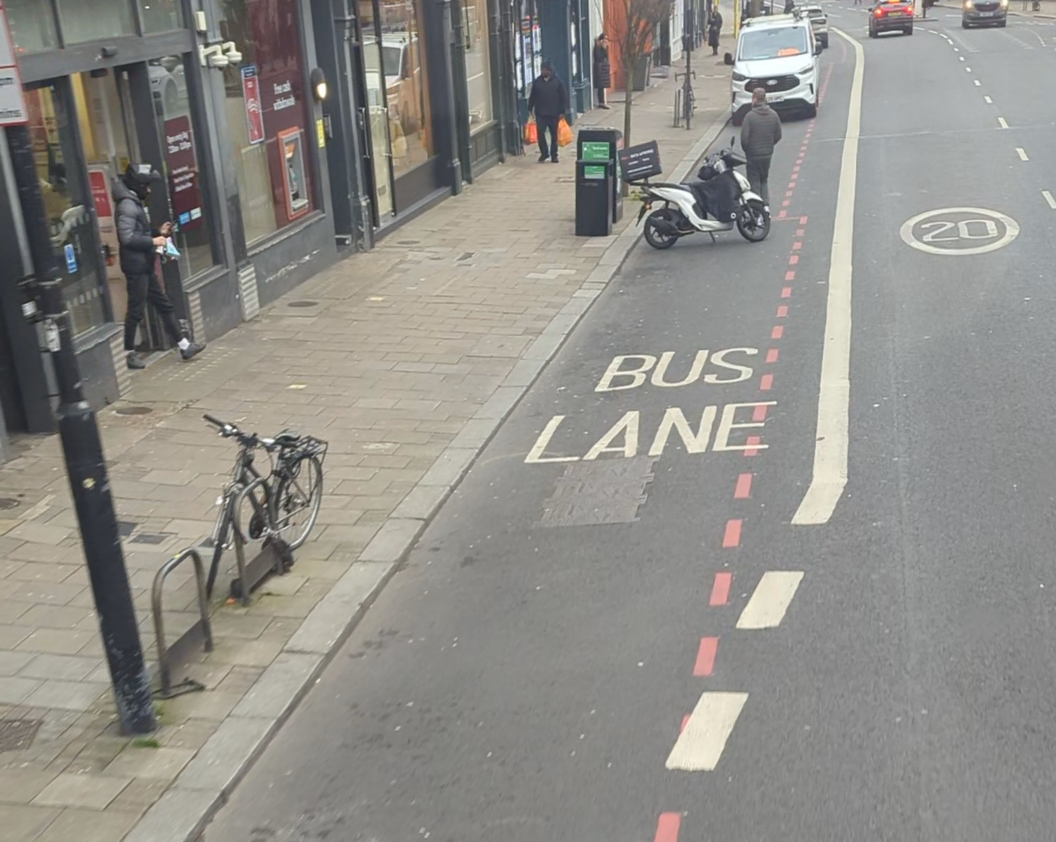
Anyone who has rode a London bus will know that these make a significant difference. In the last five years TfL have made over 25 kilometres of new bus lanes; largely in outer London boroughs like Merton, Redbridge and Lewisham.
TfL themselves only directly control ‘Red Routes’. These are the most important roads in the city. While they only account for 5% of London’s road length, they account for over 30% of traffic, so it’s important that these roads are well-managed.
Smaller roads are managed by the local boroughs, who are also installing new bus lanes.
5. Bus lane timing
Some older bus lanes were once only used during rush hour in the morning and evening. TfL have expanded the operational hours of many bus lanes, making them 24 hours a day, 7 days a week. It also says that, as a default, all new bus lanes should function 24/7.
TfL have stated they want to speed up bus journey times by 10% by 2030. However, the average speed of buses has decreased since 2014.
Submitted Article
Headline
Short Headline
Standfirst
Published Article
HeadlineTfL want to encourage drivers to switch to the bus
Short HeadlineShould taking the bus be faster? TfL aim to reduce journey times
StandfirstFrom bus lanes to controlling traffic lights, TfL is striving to make bus journeys faster
Transport for London (TfL) says it wants bus journeys to be faster. They aim to speed up journeys for commuters and reduce congestion by encouraging drivers to take the bus. TfL have a scheme for enabling this, the London Bus Priority Programme.
Here are five of the ways that TfL is trying to make buses faster to encourage their use.
1. Priority lights
The first one might surprise you: Buses influence the traffic lights in London to speed up their journeys! TfL operate all the traffic lights in London. According to their data there are 5364 sets of traffic lights in London that TfL control. Of these, 2702 are junctions.
In an effort to control these junctions, TfL allow buses priority access. This means, that if a bus is approaching a green signal that’s about to turn red, the signal may stay green a few more seconds to allow the bus through. Likewise, if a signal is red, it may shave a few seconds off to allow the bus through faster.
2,161 of the junctions in London are outfitted with this functionality — about 80% of them — and TfL have the data about how they’re used. Each month over one and a half million bus journeys go through these junctions, and a quarter of a million bus journeys are sped up by this system.
2. Pedestrian call cancellation
Normally, when you press the button to cross at a pelican junction it will guarantee to stop the traffic with a red light. This will happen even if the pedestrian leaves the junction or manages to cross while the traffic lights are still green.
On new junctions, TfL can detect if a pedestrian is still waiting. If not, the junction will cancel the call. This means faster journeys for all road users, as you’ll no longer have the frustrating experience of waiting at a red light for a non-existent pedestrian to cross!
3. Bus gates
TfL use the term ‘bus gates’ for roads that are only for buses, cycles and sometimes taxis. They often provide shortcuts, especially around busy areas, such as the bus gate between Angel and Kings Cross. This forces cars to take the long way round.
TfL claim that one of the main aims of their Bus Priority Programme is to decrease the demand for using private cars. It also claims that such schemes reduce through traffics in neighbourhoods, making them safer for pedestrians and cyclists.
Another example is in Kingston, where a bus-only set of traffic lights allow buses to make a much shorter journey.
Credit: Transport for London
4. Bus lanes
Anyone who has rode a London bus will know that these make a significant difference. In the last five years TfL have made over 25 kilometres of new bus lanes; largely in outer London boroughs like Merton, Redbridge and Lewisham.
TfL themselves only directly control ‘Red Routes’. These are the most important roads in the city. While they only account for 5% of London’s road length, they account for over 30% of traffic, so it’s important that these roads are well-managed.
Smaller roads are managed by the local boroughs, who are also installing new bus lanes.
5. Bus lane timing
Some older bus lanes were once only used during rush hour in the morning and evening. TfL have expanded the operational hours of many bus lanes, making them 24 hours a day, 7 days a week. It also says that, as a default, all new bus lanes should function 24/7.
TfL have stated they want to speed up bus journey times by 10% by 2030. However, the average speed of buses has decreased since 2014.
A 2024 Freedom of Information request showed Bromley Council had £4.5 million invested in arms companies that year with £1.5 million reportedly linked to Israel.
Undercover officers raided three linked shops in Barking town centre, revealing how illicit tobacco is being hidden in walls, ceilings and nearby locations to evade detection.
More than 330,000 people across the UK sought support from the Stop It Now helpline in 2025 over concerns about their own or someone else’s online sexual behaviour towards children, according to new charity data. The anonymous service says contacts by phone, email and webchat rose significantly over the year.