Two young people dead in Kent after a meningitis outbreak. Now, the outbreak is raising concerns in London.
18-year old sixth-form student, named only as ‘Juliette’, died on Saturday. This comes after an outbreak of meningitis was spread among young people in Kent. The illness has killed a Kent University student and put another 15 in hospital.
The UK Health Security Agency [UKHSA] has identified the strain behind the cases as Meningitis B (Men B). Routine vaccination for Men B was rolled out for babies and children from 2015, meaning that current generations of students and young adults across the country are mostly uncovered [unless they had it privately].
It is understood that the outbreak arose from a Kent nightclub ‘Club Chemistry’. Antibiotics are to be given to any close contacts to those affected. Nearly 1,300 doses were given out yesterday.
Today, the UKHSA have announced they’re launching a targeted vaccination programme for students living in affected halls of residence.
Is there a risk of it coming to London?
Health authorities assure the outbreak is contained to Kent. UK Health Security Agency’s Dr Gayatri Amirthalingham explained that we are currently not seeing the illness spreading more widely.
According to the UKHSA, fewer that 2% of meningitis cases are linked to close contact with an affected case. This suggests that the chance of one outbreak leading to another is quite low.
However, there are public concerns over the illness spreading when university students travel across the UK for the Easter holidays.
City News spoke with third year University of Kent student Ethan Swann, who went home to the north of England yesterday.
“I am not too worried now I’m back home, but most of my friends [who are still in Kent] are a lot more stressed.”
Health Secretary Wes Streeting spoke to MPs in the House of Commons today, calling the outbreak ‘unprecedented’ and called the strain ‘potentially lethal’. He warned that the symptoms are ‘easily mistaken for common conditions’ like hangovers.
Public health risk for the wider population ‘remains low’.
The Health Secretary emphasised that this is a ‘rapidly developing situation’ and one they’ll continue to monitor in Kent and across the country.
What is the current advice?
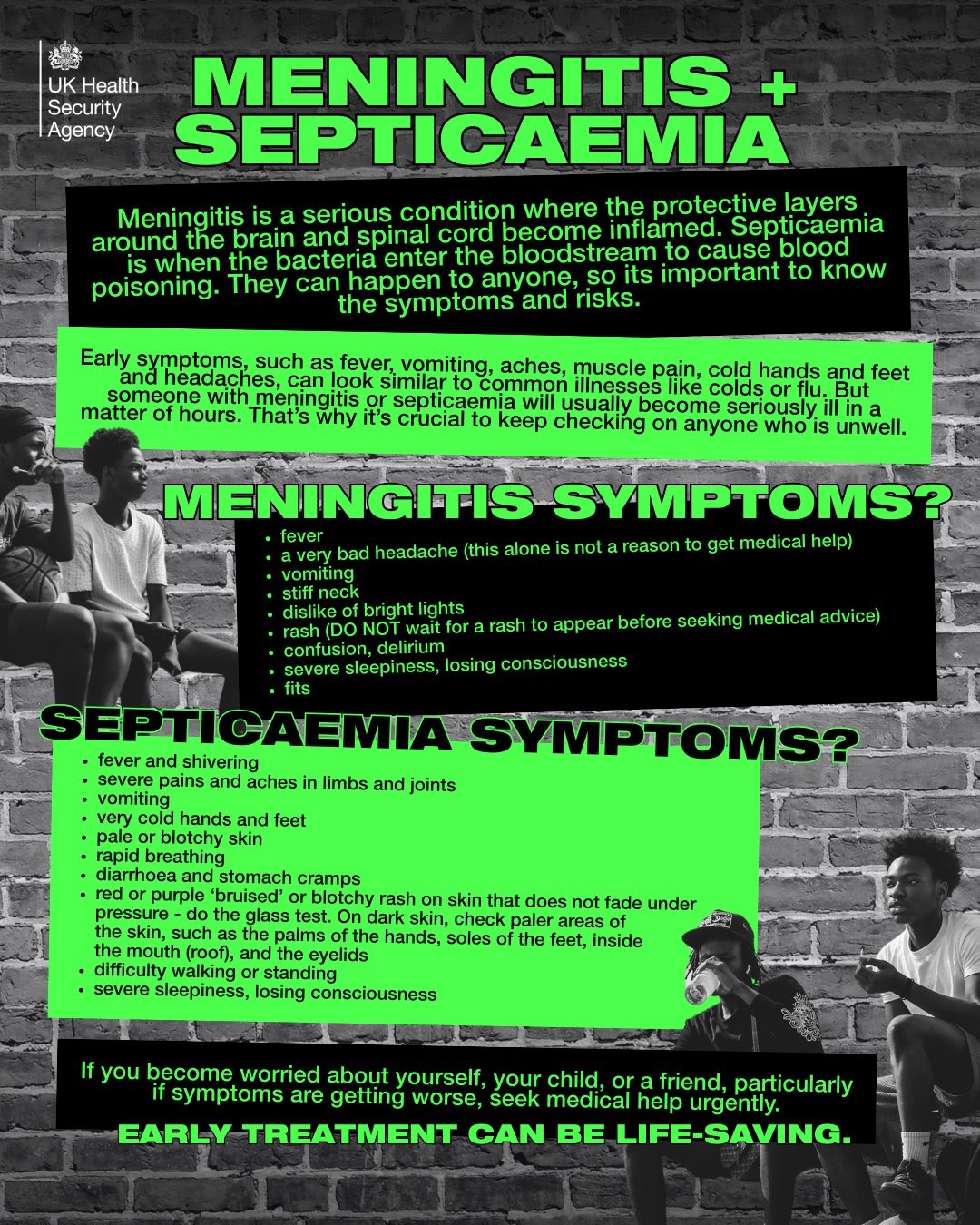
The UKHSA have given advice on X [formerly Twitter] on the symptoms of the condition.
Credit: UKHSA
The main symptoms of meningitis include, a stiff neck, headaches, rashes, vomiting and a fever.
Health officials are now considering a vaccine catch up scheme for children who didn’t receive the meningitis B jab.
Public health responses are currently using targeted antibiotics to fight the condition.
Submitted Article
Headline
Short Headline
Standfirst
Published Article
HeadlineKent’s meningitis outbreak sparks concern in London
Short HeadlineKent's meningitis outbreak sparks concern in London
StandfirstEverything City News knows about the meningitis outbreak in Kent.
Two young people dead in Kent after a meningitis outbreak. Now, the outbreak is raising concerns in London.
18-year old sixth-form student, named only as ‘Juliette’, died on Saturday. This comes after an outbreak of meningitis was spread among young people in Kent. The illness has killed a Kent University student and put another 15 in hospital.
The UK Health Security Agency [UKHSA] has identified the strain behind the cases as Meningitis B (Men B). Routine vaccination for Men B was rolled out for babies and children from 2015, meaning that current generations of students and young adults across the country are mostly uncovered [unless they had it privately].
It is understood that the outbreak arose from a Kent nightclub ‘Club Chemistry’. Antibiotics are to be given to any close contacts to those affected. Nearly 1,300 doses were given out yesterday.
Today, the UKHSA have announced they’re launching a targeted vaccination programme for students living in affected halls of residence.
Is there a risk of it coming to London?
Health authorities assure the outbreak is contained to Kent. UK Health Security Agency’s Dr Gayatri Amirthalingham explained that we are currently not seeing the illness spreading more widely.
According to the UKHSA, fewer that 2% of meningitis cases are linked to close contact with an affected case. This suggests that the chance of one outbreak leading to another is quite low.
However, there are public concerns over the illness spreading when university students travel across the UK for the Easter holidays.
City News spoke with third year University of Kent student Ethan Swann, who went home to the north of England yesterday.
“I am not too worried now I’m back home, but most of my friends [who are still in Kent] are a lot more stressed.”
Health Secretary Wes Streeting spoke to MPs in the House of Commons today, calling the outbreak ‘unprecedented’ and called the strain ‘potentially lethal’. He warned that the symptoms are ‘easily mistaken for common conditions’ like hangovers.
Public health risk for the wider population ‘remains low’.
The Health Secretary emphasised that this is a ‘rapidly developing situation’ and one they’ll continue to monitor in Kent and across the country.
What is the current advice?
The UKHSA have given advice on X [formerly Twitter] on the symptoms of the condition.
Credit: UKHSA
The main symptoms of meningitis include, a stiff neck, headaches, rashes, vomiting and a fever.
Health officials are now considering a vaccine catch up scheme for children who didn’t receive the meningitis B jab.
Public health responses are currently using targeted antibiotics to fight the condition.
A 2024 Freedom of Information request showed Bromley Council had £4.5 million invested in arms companies that year with £1.5 million reportedly linked to Israel.
Undercover officers raided three linked shops in Barking town centre, revealing how illicit tobacco is being hidden in walls, ceilings and nearby locations to evade detection.
More than 330,000 people across the UK sought support from the Stop It Now helpline in 2025 over concerns about their own or someone else’s online sexual behaviour towards children, according to new charity data. The anonymous service says contacts by phone, email and webchat rose significantly over the year.