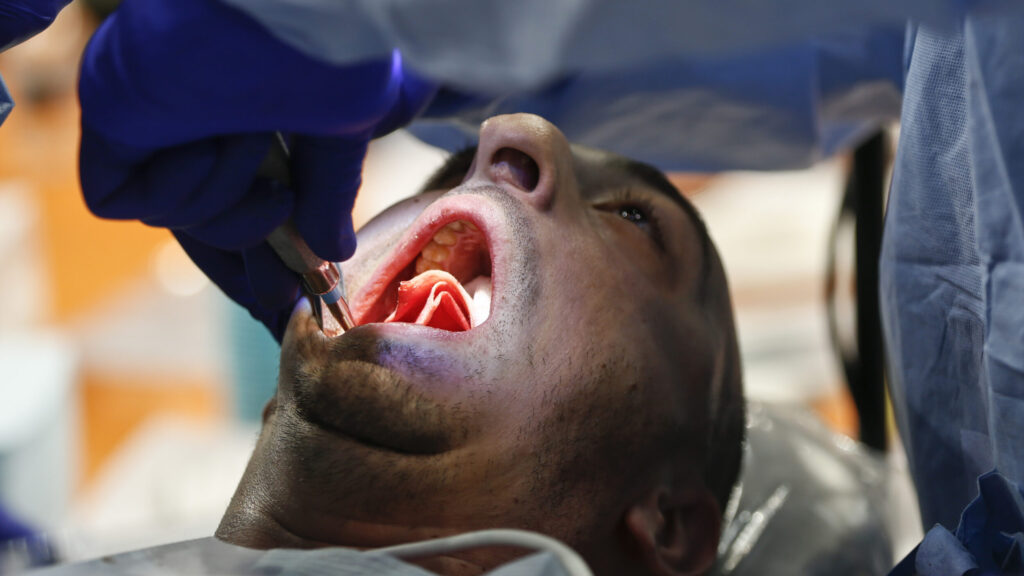
For patient Sara Coodien, from East London, what started as a minor toothache quickly escalated into a serious and expensive diagnosis.
After struggling to get an NHS appointment, she felt she had little choice but to seek private care.
“They took X-rays and said my tooth needed to be removed and replaced,” she said.
“I’d be off work for two weeks, and it would cost around £2,000.”
Sara is among a growing number of people turning to private dentists.
The General Dental Council says one in five of us has switched in the past two years, and we’re being hit with significantly higher bills as a result.
In November, the Chancellor, Rachel Reeves called for “urgent action” saying “hidden costs” were impacting families, and raised concerns about whether some treatments were necessary.
Now the Competition and Markets Authority has launched an investigation into the private dental sector.
Faced with a major procedure and a hefty bill, Sara decided to seek a second opinion, sending her X-rays to another dentist.
The response was completely different.
“They told me it was just an infection that needed antibiotics. I almost had a tooth removed for no reason and nearly paid £2,000,” she said.
Why prices vary
Adobe Stock
Unlike the NHS, where prices are fixed in bands, private treatment costs can vary widely between practices.
For patients, this can make it difficult to judge whether they are paying a fair price.
Some dentists argue higher costs reflect higher expertise.
Private dentist Vikaash Rasalingam, at Nilsden Dental Clinic, explained that training, postgraduate qualifications and years of experience can all influence pricing.
“I’m doing a diploma right now, which I paid £20,000 for. I would charge more because I know more of what I’m doing,” he said.
“It might be £150 now, but maybe in five, ten years, when I’ve done more courses, upskilled, I would charge maybe £200–250.”
Pressure on the system
Industry figures warn the issue goes beyond individual cases.
Some experts say practices are increasingly relying on private work to bolster their income, as funding and access issues continue to bite.
Eddie Crouch, the chair of the British Dental Association, says all dentists are “regulated” by the General Dental Council and are “acting appropriately, not carrying out extra work”.
“If we were misleading patients in any way, your whole livelihood could be at risk.”
He adds that there are exceptions to this, and such behaviour is condemned.
Submitted Article
Headline
Short Headline
Standfirst
Published Article
HeadlineAre private dentists scamming patients?
Short HeadlineAre private dentists scamming patients?
StandfirstPrivate dentists are under investigation for costly diagnosis and unnecessary treatment
For patient Sara Coodien, from East London, what started as a minor toothache quickly escalated into a serious and expensive diagnosis.
After struggling to get an NHS appointment, she felt she had little choice but to seek private care.
“They took X-rays and said my tooth needed to be removed and replaced,” she said.
“I’d be off work for two weeks, and it would cost around £2,000.”
Sara is among a growing number of people turning to private dentists.
The General Dental Council says one in five of us has switched in the past two years, and we’re being hit with significantly higher bills as a result.
In November, the Chancellor, Rachel Reeves called for “urgent action” saying “hidden costs” were impacting families, and raised concerns about whether some treatments were necessary.
Now the Competition and Markets Authority has launched an investigation into the private dental sector.
Faced with a major procedure and a hefty bill, Sara decided to seek a second opinion, sending her X-rays to another dentist.
The response was completely different.
“They told me it was just an infection that needed antibiotics. I almost had a tooth removed for no reason and nearly paid £2,000,” she said.
Why prices vary
Adobe Stock
Unlike the NHS, where prices are fixed in bands, private treatment costs can vary widely between practices.
For patients, this can make it difficult to judge whether they are paying a fair price.
Some dentists argue higher costs reflect higher expertise.
Private dentist Vikaash Rasalingam, at Nilsden Dental Clinic, explained that training, postgraduate qualifications and years of experience can all influence pricing.
“I’m doing a diploma right now, which I paid £20,000 for. I would charge more because I know more of what I’m doing,” he said.
“It might be £150 now, but maybe in five, ten years, when I’ve done more courses, upskilled, I would charge maybe £200–250.”
Pressure on the system
Industry figures warn the issue goes beyond individual cases.
Some experts say practices are increasingly relying on private work to bolster their income, as funding and access issues continue to bite.
Eddie Crouch, the chair of the British Dental Association, says all dentists are “regulated” by the General Dental Council and are “acting appropriately, not carrying out extra work”.
“If we were misleading patients in any way, your whole livelihood could be at risk.”
He adds that there are exceptions to this, and such behaviour is condemned.
As the weather turns, City News has spoken to a long-term rough sleeper to see how those on the street feel about Andy Burnham’s plan to end homelessness and the upcoming winter.