Today’s strike may have been called off, but future dates remain in place as the Rail, Maritime and Transport (RMT) union continue talks with the London Underground.
The dispute is over plans for a condensed four-day working week, which the RMT says would create dangerous working conditions.
The driver, who wishes to remain anonymous, said that often “the strikes won’t be anything to do with drivers.”
He went on to explain “I don’t wake up in the morning wanting to delay someone’s train” but said that he would also “struggle” to cross a picket line.
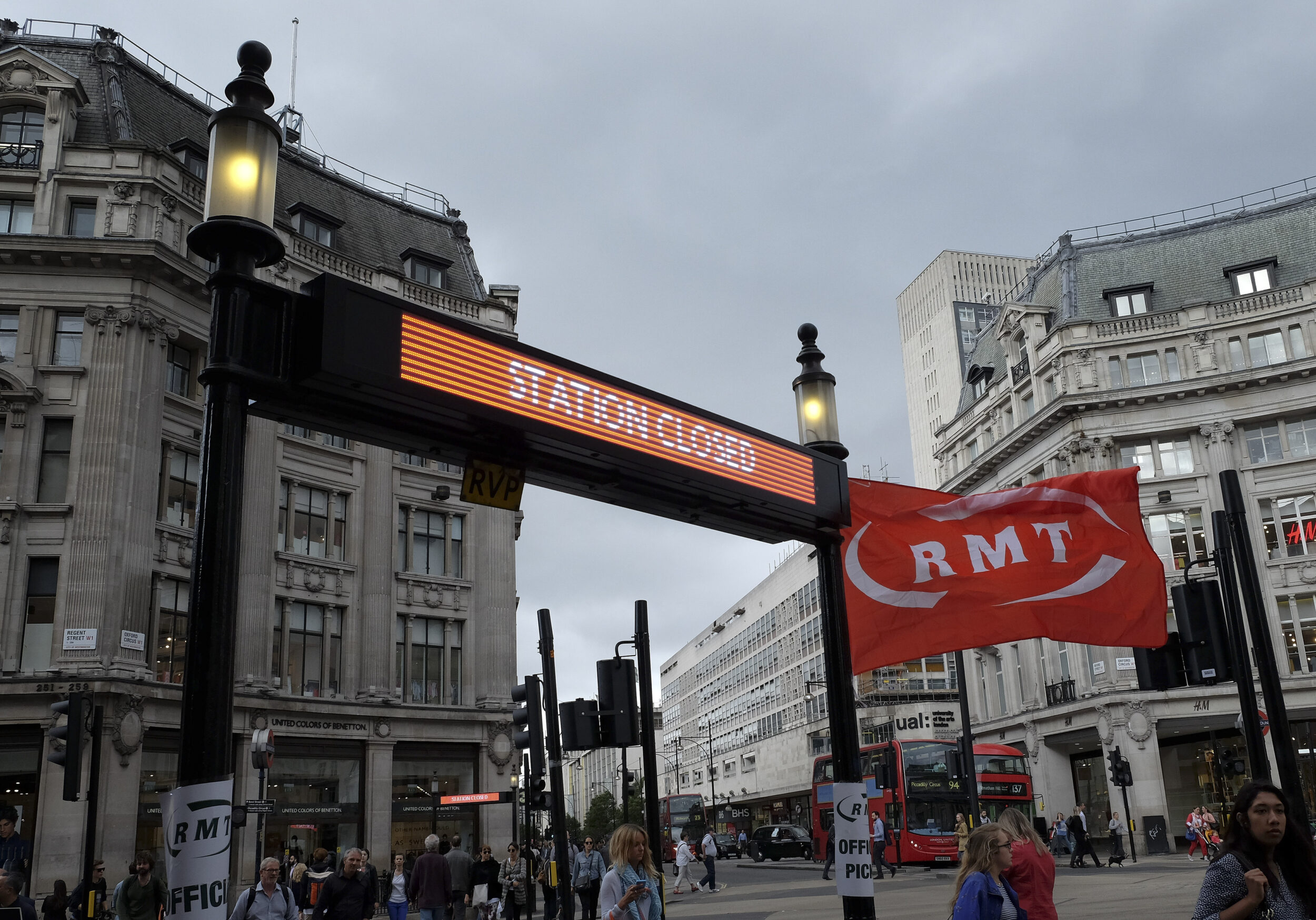
An RMT flag flies at the closed entrance at Oxford Circus in a previous strike. Credit: AP.
How will strikes affect passengers?
Strikes are still planned for the 21st and 23rd April and 19th and 21st May, with two further dates being added in June on the 16th and 18th.
It’s not clear exactly which services will be affected, but the impact is expected to be less than last September’s strike.
This is because only RMT drivers will be striking, whose members make up around half of all underground drivers.
Last year’s walk out was a combined action from both RMT and ASLEF, which is the other major driver’s union.
The tube driver told us members are often at the union’s mercy as they feel they can’t cross the picket line.
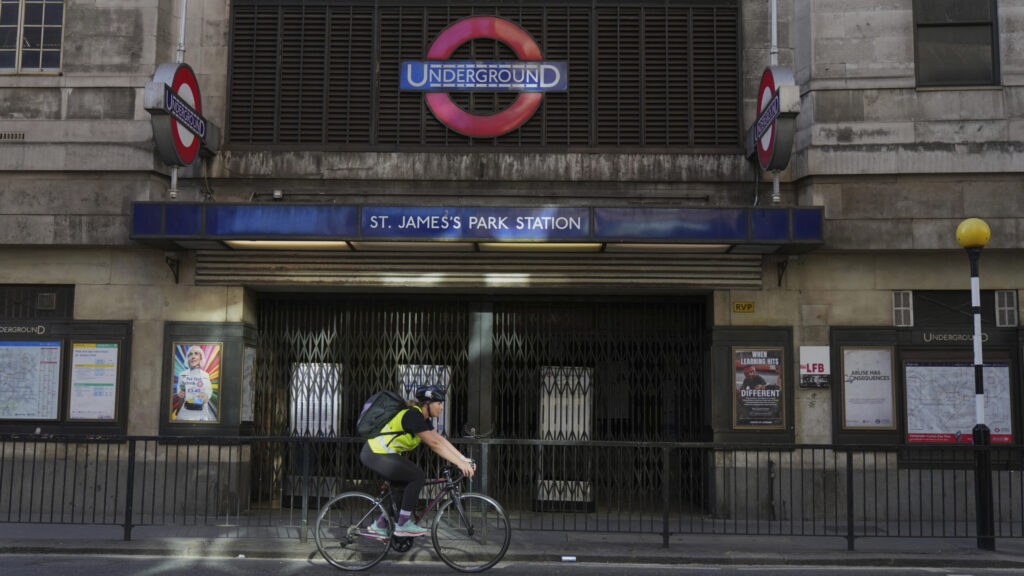
The RMT is concerned about longer shifts and the impact on safety. Credit: PA.
Why are strikes happening?
RMT members voted to oppose London Underground’s proposal of a condensed four-day working week.
Currently, tube drivers work 36 hours over five days. The plans would see drivers working longer shifts over fewer days, working out at 35 hours over four days for the same level of pay.
The union says it is concerned about longer shifts and the potential impact on safety.
Transport for London (TfL) has described the strikes as ‘completely unnecessary’ and said they are currently trialling a voluntary four-day week on the Bakerloo line.
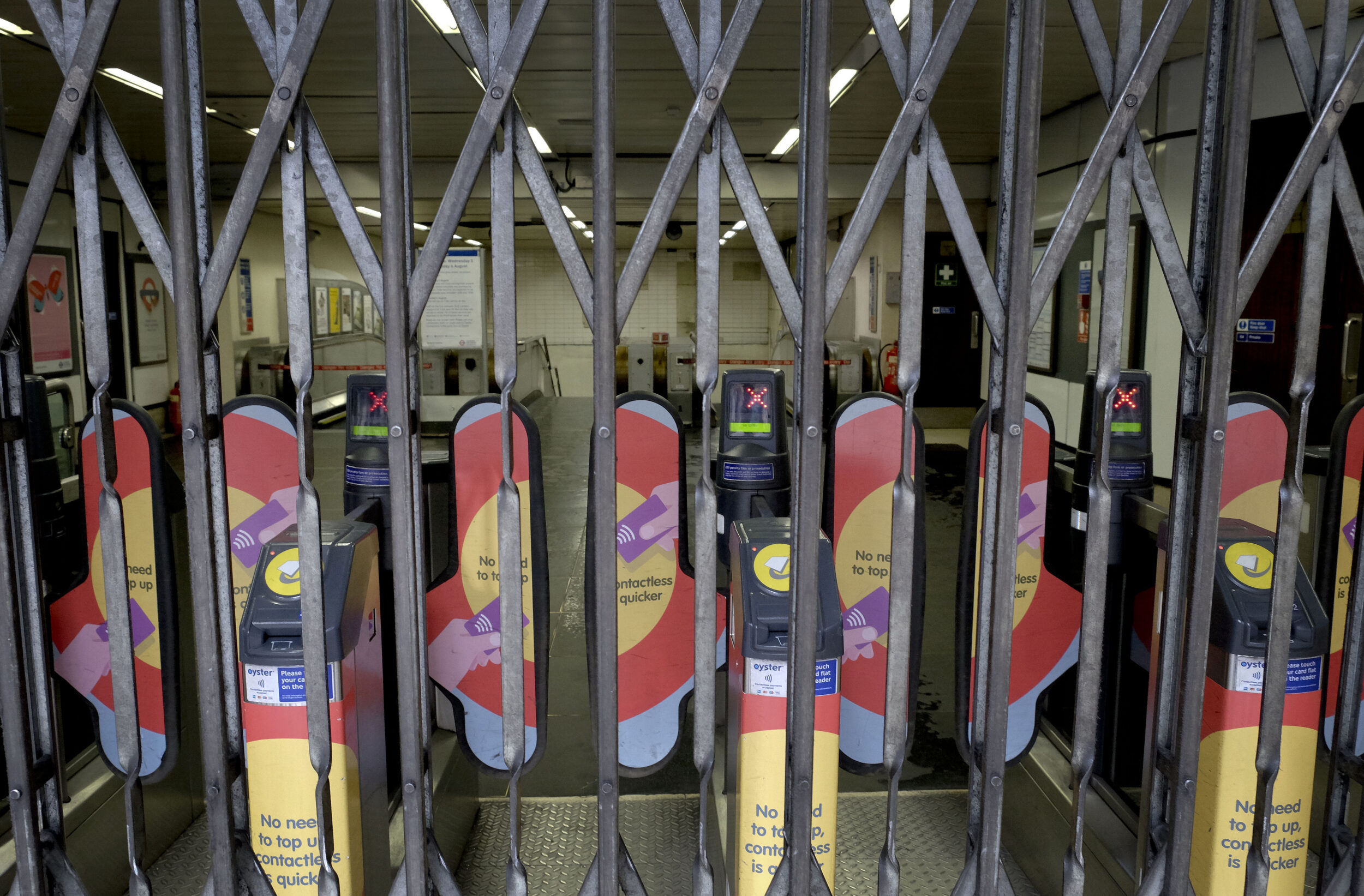
The strikes are planned for two days in April, May and June. Credit: PA.
The tube driver feels his profession can be dragged into news headlines regardless of whether they are involved “because it’s the easiest thing to do.”
He believes this contributes to a negative reputation: “in London, we’re up there with some of the most-hated professions.”
Submitted Article
Headline
Short Headline
Standfirst
Published Article
Headline‘I don’t wake up in the morning wanting to delay someone’s train’: Tube driver’s dilemma over proposed strikes
Short Headline‘I don’t wake up in the morning wanting to delay someone’s train’: Tube driver’s dilemma over strikes
StandfirstA tube driver has told City News he faces a difficult decision over planned strike action.
Today’s strike may have been called off, but future dates remain in place as the Rail, Maritime and Transport (RMT) union continue talks with the London Underground.
The dispute is over plans for a condensed four-day working week, which the RMT says would create dangerous working conditions.
The driver, who wishes to remain anonymous, said that often “the strikes won’t be anything to do with drivers.”
He went on to explain “I don’t wake up in the morning wanting to delay someone’s train” but said that he would also “struggle” to cross a picket line.
An RMT flag flies at the closed entrance at Oxford Circus in a previous strike. Credit: AP.
How will strikes affect passengers?
Strikes are still planned for the 21st and 23rd April and 19th and 21st May, with two further dates being added in June on the 16th and 18th.
It’s not clear exactly which services will be affected, but the impact is expected to be less than last September’s strike.
This is because only RMT drivers will be striking, whose members make up around half of all underground drivers.
Last year’s walk out was a combined action from both RMT and ASLEF, which is the other major driver’s union.
The tube driver told us members are often at the union’s mercy as they feel they can’t cross the picket line.
The RMT is concerned about longer shifts and the impact on safety. Credit: PA.
Why are strikes happening?
RMT members voted to oppose London Underground’s proposal of a condensed four-day working week.
Currently, tube drivers work 36 hours over five days. The plans would see drivers working longer shifts over fewer days, working out at 35 hours over four days for the same level of pay.
The union says it is concerned about longer shifts and the potential impact on safety.
Transport for London (TfL) has described the strikes as ‘completely unnecessary’ and said they are currently trialling a voluntary four-day week on the Bakerloo line.
The strikes are planned for two days in April, May and June. Credit: PA.
The tube driver feels his profession can be dragged into news headlines regardless of whether they are involved “because it’s the easiest thing to do.”
He believes this contributes to a negative reputation: “in London, we’re up there with some of the most-hated professions.”
A 2024 Freedom of Information request showed Bromley Council had £4.5 million invested in arms companies that year with £1.5 million reportedly linked to Israel.
Undercover officers raided three linked shops in Barking town centre, revealing how illicit tobacco is being hidden in walls, ceilings and nearby locations to evade detection.
More than 330,000 people across the UK sought support from the Stop It Now helpline in 2025 over concerns about their own or someone else’s online sexual behaviour towards children, according to new charity data. The anonymous service says contacts by phone, email and webchat rose significantly over the year.