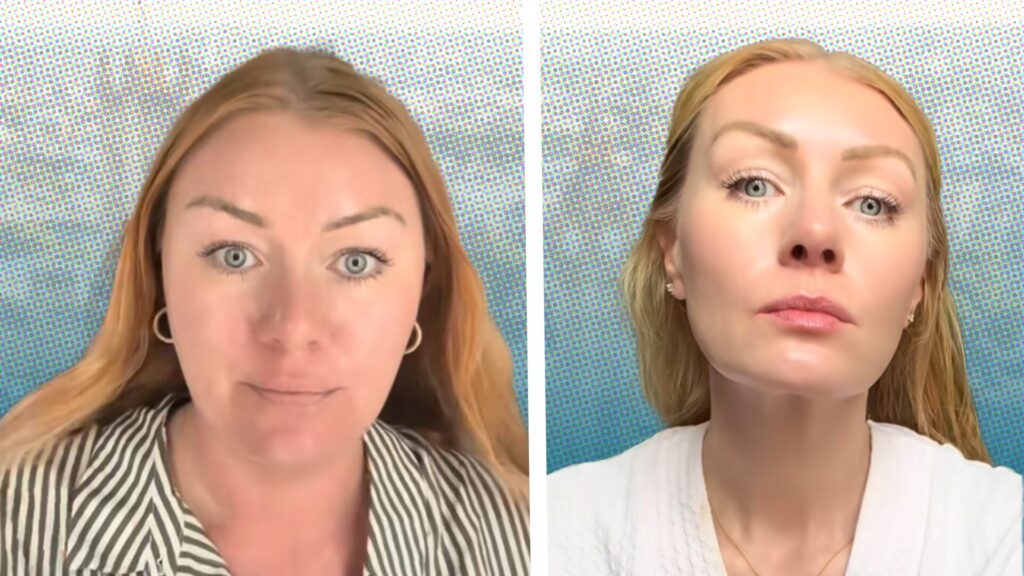
Across London, practitioners report growing demand from patients seeking to treat facial changes after rapid weight loss linked to Ozempic and Mounjaro jabs. Yet for some Londoners, those changes are not something to fix, but something to embrace.
Rapid, significant weight loss from GLP-1 drugs, like Ozempic and Mounjaro, inevitably reshapes the face. Harley Academy clinics told City News that they are seeing a clear increase in patients seeking treatments to soften these effects in London – from subtle filler to more intensive skin-tightening procedures.
YouGov polling suggests the number of UK adults using weight-loss injections could more than double in 2026, up from an estimated 1.5 million monthly users in 2025.
With that surge, longer-term changes to facial structure are becoming more visible – and London’s density of private clinics, combined with its faster uptake of aesthetic trends, means those effects are often seen here first.
“Ozempic face” is a term, coined to describe the hollow, gaunt or prematurely aged appearance associated with rapid weight loss, and it’s typically framed as a negative side effect. Echoing the “heroin chic” aesthetic of the 90s, it has become tabloid shorthand for a particular kind of celebrity transformation: sharper cheekbones, flatter midfaces, and a more angular, high-fashion look.
But as weight-loss drugs become increasingly common across the UK, the question is no longer confined to celebrity before-and-after shots.
“Ozempic face”
Practitioners report a steady increase in patients seeking to counteract facial volume loss following weight loss drugs – particularly around the midface, jawline and under-eye area. While “Ozempic face” isn’t a clinical term, the concerns behind it are present.
Dr Marcus Mehta
Dr Marcus Mehta of Harley Academy told City News:
“Treating jowls is increasingly popular among patients who’ve lost significant amounts of weight… the fat pads can descend, resulting in sagging as well as hollowing. Skin laxity is another common symptom… with patients looking for skin-tightening treatments to improve elasticity.”
Treatment typically starts with dermal fillers to restore lost volume, but where laxity is more advanced, surgery may be required – bringing higher costs and risks.
Increasingly, however, practitioners are keen to move away from the idea of “refilling” the face. Instead, the focus is on subtle rebalancing: small amounts of filler combined with collagen stimulation or skin-tightening treatments, timed carefully once weight has stabilised.
A leaner face and sharper contours
Outside the clinic, the narrative is less straightforward.
For many patients, facial changes are neither unexpected or unwelcome.
One Mounjaro user, Charlee Changes, who lost five stone over 18 months, describes the shift as part of a broader lifestyle transformation rather than something to correct. Her face became gradually more defined, with sharper contours and improved skin quality – changes she views positively.
“The improvements in my health, energy, and overall confidence far outweigh any aesthetic changes,” she says.
In fact, she had filler years before taking Mounjaro but since weight loss she feels she does not need treatment — reflecting a wider sentiment that a more angular face is a positive outcome from taking Mounjaro.
Criticised in tabloids, celebrated on TikTok
On TikTok, the same look often criticised in tabloids is frequently reframed as aspirational. Users document their transformations openly, with many favouring a more sculpted, defined appearance.
Anna Day describes her facial changes as one of the most striking parts of her Mounjaro journey. Once round, her face is now more defined, with sharper cheekbones and jawline – a shift she links to increased confidence and improved overall health. Rather than seeing volume loss as something to fix, she considers it a benefit.
HeadlineAfter the Weight Loss Jabs: Are Londoners Rethinking Their Faces?
Short HeadlineOzempic Face Hits London - or Not?
StandfirstFrom tabloids to TikTok: how Londoners are navigating the reality and the glamour of rapid weight-loss facial changes
Across London, practitioners report growing demand from patients seeking to treat facial changes after rapid weight loss linked to Ozempic and Mounjaro jabs. Yet for some Londoners, those changes are not something to fix, but something to embrace.
Rapid, significant weight loss from GLP-1 drugs, like Ozempic and Mounjaro, inevitably reshapes the face. Harley Academy clinics told City News that they are seeing a clear increase in patients seeking treatments to soften these effects in London – from subtle filler to more intensive skin-tightening procedures.
YouGov polling suggests the number of UK adults using weight-loss injections could more than double in 2026, up from an estimated 1.5 million monthly users in 2025.
With that surge, longer-term changes to facial structure are becoming more visible – and London’s density of private clinics, combined with its faster uptake of aesthetic trends, means those effects are often seen here first.
“Ozempic face” is a term, coined to describe the hollow, gaunt or prematurely aged appearance associated with rapid weight loss, and it’s typically framed as a negative side effect. Echoing the “heroin chic” aesthetic of the 90s, it has become tabloid shorthand for a particular kind of celebrity transformation: sharper cheekbones, flatter midfaces, and a more angular, high-fashion look.
But as weight-loss drugs become increasingly common across the UK, the question is no longer confined to celebrity before-and-after shots.
“Ozempic face”
Practitioners report a steady increase in patients seeking to counteract facial volume loss following weight loss drugs – particularly around the midface, jawline and under-eye area. While “Ozempic face” isn’t a clinical term, the concerns behind it are present.
Dr Marcus Mehta
Dr Marcus Mehta of Harley Academy told City News:
“Treating jowls is increasingly popular among patients who’ve lost significant amounts of weight… the fat pads can descend, resulting in sagging as well as hollowing. Skin laxity is another common symptom… with patients looking for skin-tightening treatments to improve elasticity.”
Treatment typically starts with dermal fillers to restore lost volume, but where laxity is more advanced, surgery may be required – bringing higher costs and risks.
Increasingly, however, practitioners are keen to move away from the idea of “refilling” the face. Instead, the focus is on subtle rebalancing: small amounts of filler combined with collagen stimulation or skin-tightening treatments, timed carefully once weight has stabilised.
A leaner face and sharper contours
Outside the clinic, the narrative is less straightforward.
For many patients, facial changes are neither unexpected or unwelcome.
One Mounjaro user, Charlee Changes, who lost five stone over 18 months, describes the shift as part of a broader lifestyle transformation rather than something to correct. Her face became gradually more defined, with sharper contours and improved skin quality – changes she views positively.
“The improvements in my health, energy, and overall confidence far outweigh any aesthetic changes,” she says.
In fact, she had filler years before taking Mounjaro but since weight loss she feels she does not need treatment — reflecting a wider sentiment that a more angular face is a positive outcome from taking Mounjaro.
Criticised in tabloids, celebrated on TikTok
On TikTok, the same look often criticised in tabloids is frequently reframed as aspirational. Users document their transformations openly, with many favouring a more sculpted, defined appearance.
Anna Day describes her facial changes as one of the most striking parts of her Mounjaro journey. Once round, her face is now more defined, with sharper cheekbones and jawline – a shift she links to increased confidence and improved overall health. Rather than seeing volume loss as something to fix, she considers it a benefit.
A 2024 Freedom of Information request showed Bromley Council had £4.5 million invested in arms companies that year with £1.5 million reportedly linked to Israel.
Undercover officers raided three linked shops in Barking town centre, revealing how illicit tobacco is being hidden in walls, ceilings and nearby locations to evade detection.
More than 330,000 people across the UK sought support from the Stop It Now helpline in 2025 over concerns about their own or someone else’s online sexual behaviour towards children, according to new charity data. The anonymous service says contacts by phone, email and webchat rose significantly over the year.