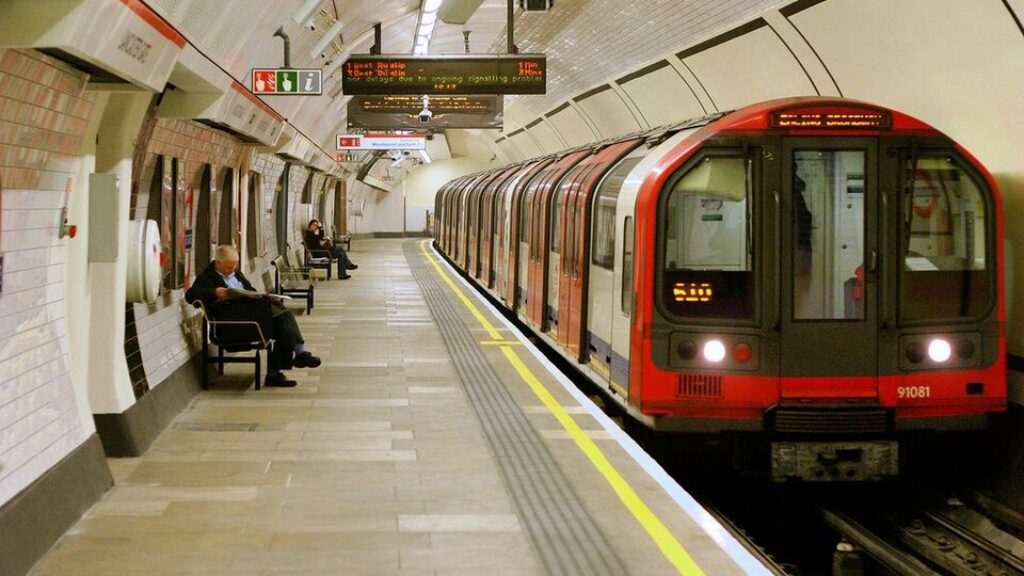
It’s 5am. Your bed starts shaking. But it’s not an earthquake. It’s just the first tube train of the day.
For Londoners living above tube lines, this is something they’re used to. The Northern, Victoria and Central lines being the biggest culprits.
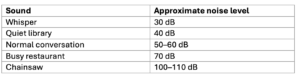
With noise levels reaching over 100 decibels on train lines – the equivalent of a powerful chainsaw – and recent data from London Travel News shows residents living nearby experience noise reaching over 50 decibels.
The London Boroughs hit with the most noise are Camden, Kennington, Islington and Brent. One resident described painful migraines and a lack of sleep as a big issue.
Is noise just over 50 decibels really that serious?
At 50-55 decibels, the noise is roughly equivalent to the sound of a normal conversation taking place nearby.
While this may not seem particularly loud, it is almost twice the World Health Organisation’s (WHO) recommended bedroom noise level of 30 decibels for good-quality sleep.
Children can be particularly vulnerable – research highlighted by the organisation links long-term noise exposure with difficulties in learning, concentration and academic performance.
And the problem isn’t necessarily how loud the noise is at one particular moment, but how frequently residents are exposed to it.
For local resident Caroline, who lives in Islington, the disruption is a regular occurrence.
“I can feel the noises multiple times a day, from early hours of the morning. Definitely at least 20-30 times a day. It gives me stress headaches and I’m used to it, but I struggle to sleep at times,” she said.
For people living above busy tube lines, the sound of passing trains can become part of everyday life, interrupting sleep night after night.
What is TfL doing about it?
Transport for London (TfL) says it recognises the impact that noise and vibrations can have on residents.
A spokesperson said: “We understand the importance of minimising noise levels on the Tube itself and in surrounding areas for our customers, staff and neighbours. This is a priority and we are determined to achieve this.”
TfL said it removed insulated rail joints and improved track conditions to reduce noise. It also continues to invest in track maintenance, including rail grinding, track modernisation and replacing redundant rail joints.
However, for residents such as Caroline, the question remains whether these measures will make a noticeable difference inside their homes.
Submitted Article
Headline
Short Headline
Standfirst
Published Article
HeadlineThe noise beneath our homes: London’s Tube problem
Short Headline
StandfirstFor some Londoners, the Tube doesn't just run beneath their homes - it shakes them awake.
It’s 5am. Your bed starts shaking. But it’s not an earthquake. It’s just the first tube train of the day.
For Londoners living above tube lines, this is something they’re used to. The Northern, Victoria and Central lines being the biggest culprits.
With noise levels reaching over 100 decibels on train lines – the equivalent of a powerful chainsaw – and recent data from London Travel News shows residents living nearby experience noise reaching over 50 decibels.
The London Boroughs hit with the most noise are Camden, Kennington, Islington and Brent. One resident described painful migraines and a lack of sleep as a big issue.
Is noise just over 50 decibels really that serious?
At 50-55 decibels, the noise is roughly equivalent to the sound of a normal conversation taking place nearby.
While this may not seem particularly loud, it is almost twice the World Health Organisation’s (WHO) recommended bedroom noise level of 30 decibels for good-quality sleep.
Children can be particularly vulnerable – research highlighted by the organisation links long-term noise exposure with difficulties in learning, concentration and academic performance.
And the problem isn’t necessarily how loud the noise is at one particular moment, but how frequently residents are exposed to it.
For local resident Caroline, who lives in Islington, the disruption is a regular occurrence.
“I can feel the noises multiple times a day, from early hours of the morning. Definitely at least 20-30 times a day. It gives me stress headaches and I’m used to it, but I struggle to sleep at times,” she said.
For people living above busy tube lines, the sound of passing trains can become part of everyday life, interrupting sleep night after night.
What is TfL doing about it?
Transport for London (TfL) says it recognises the impact that noise and vibrations can have on residents.
A spokesperson said: “We understand the importance of minimising noise levels on the Tube itself and in surrounding areas for our customers, staff and neighbours. This is a priority and we are determined to achieve this.”
TfL said it removed insulated rail joints and improved track conditions to reduce noise. It also continues to invest in track maintenance, including rail grinding, track modernisation and replacing redundant rail joints.
However, for residents such as Caroline, the question remains whether these measures will make a noticeable difference inside their homes.