As the winter tree-planting season begins, councils and environmental groups have told City News investment is needed to address a stark imbalance of tree coverage across London.
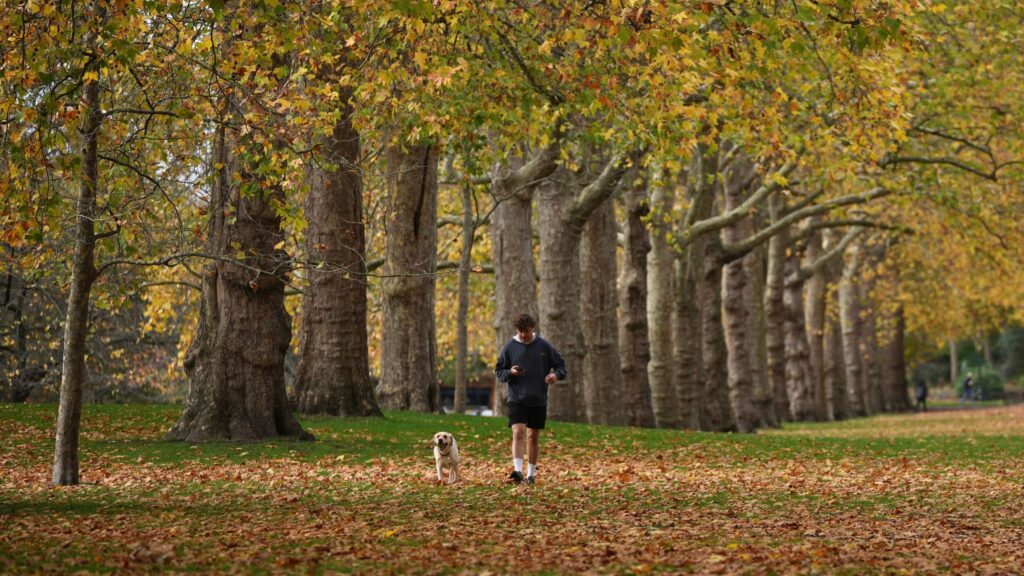
The capital’s most affluent boroughs tend to have the most trees – Camden has the highest coverage at 28%, followed closely by Richmond, recently named the happiest place to live in Britain.
While in boroughs like Dagenham canopy coverage is just 8%.
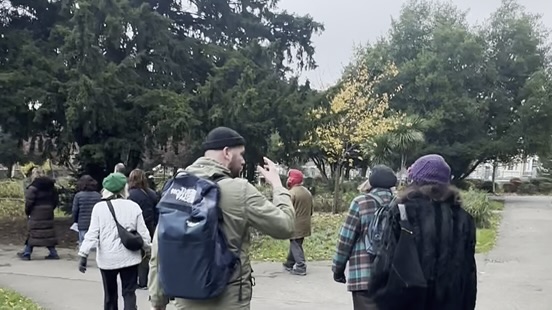
“Sadly, like a lot of things, money comes into it,” says Joe Hendricks, tree officer for Camden, who I joined on a tree walk in Kilburn Grange Park.
He is working with dozens of councils to improve green spaces.
“Some councils are more active than others, which speaks to how much money they have. Most residents in Camden like trees and wildlife.
“I also think there needs to be better education of people to understand the importance of trees,” Hendricks says.
Louie, Green Space Partnership Officer for Camden, says change “needs to come from a higher authority – there needs to be more investment for councils to invest in green space”.
Trees purify the air, provide habitats for wildlife, reduce flood risk, and much more, yet only a few can enjoy the benefits.
On my tree walk, I saw over 200 leafy trees creating a sense of calm and tranquillity against the hustle and bustle of the capital.
“We tax more affluent areas,” says Scarlett Weston, community nature officer for Camden: “This is redistributed, and trees are planted in areas where residents have lower access to nature.”
However, the gap remains stark.
In Dagenham, one of the poorest areas in London, residents told me they were desperate for more green spaces – and rather than a lack of interest in trees, they faced a lack of resources.
Olivia Virag, a local resident and member of a community improvement group, says: “I’m fighting a losing battle. It’s frustrating how hard it’s been to get greening treated as a priority”.
In August she produced a 94-page development plan for tree planting and green regeneration, which she says was rejected by Barking & Dagenham Council.
Virag criticises the authority for spending £25,000 on a Christmas event this December:
“It’s fair to ask what the same amount could achieve if we put it towards something that would benefit residents for years.”
A Barking & Dagenham council spokesperson said the event’s £25,000 was being funded from social value contributions and not “from budgets for essential services, green spaces or tree planting.”
Kilburn Grange Park Tree Walk. Credit: Odette Dyer
Matt Scott, CEO of Thames Life, which works with the people of Barking Riverside to tackle local issues, says:
“Residents in Barking and Dagenham deserve the same access to nature, green spaces and tree cover as those living in more affluent parts of London.”
The Thames Life group is campaigning to secure Tree Preservation Orders (TPOs) for four mature London plane trees on Choats Road threatened by redevelopment.
Scott emphasises that planting new trees is not a substitute for protecting the ones we have.
Trees already planted also face a greater risk of being destroyed in poorer neighbourhoods due to development or vandalism.
Hackney, which ranks as the most deprived on the Index of Multiple Deprivation in 2025, saw more than 60 trees vandalised in 2022, with further attacks reported last year.
In Tower Hamlets, resident Aggie Dziubek shares: “Langdon Park had new small trees planted two or three years ago, but hooligans pulled them out […], and these were never replaced.”
“Trees aren’t a nice to have,” says another local, Bill Yates.
“The heat here is miserable. I feel I have to leave next summer as my flat can’t cope. Trees cool the city down.”
A council spokesperson said: “Barking and Dagenham has made significant progress to increase tree coverage […] with an estimated 194,000 trees now across the borough.
“We have since set a new ambition to reach 250,000 trees by 2030. We remain committed to making our borough cleaner, greener and healthier for future generations.”
On Tuesday, Mayor of London Sadiq Khan announced that six boroughs with low tree coverage will receive £1.23 million to plant up to 5,000 trees for National Tree Week. This includes Barking and Dagenham.
Kate Sheldon, chief executive of Trees for Cities, said: “We are excited to work with the Mayor and project partners to tackle this ‘tree inequity’ and bring these benefits to the Londoners who need them the most.”
Submitted Article
Headline
Short Headline
Standfirst
Published Article
HeadlineResidents frustrated by lack of trees: London’s unequal green spaces explained
Short HeadlineWealthier boroughs greener than poorer areas
StandfirstLondon's most affluent boroughs tend to have the highest canopy coverage with poorer areas lagging behind
As the winter tree-planting season begins, councils and environmental groups have told City News investment is needed to address a stark imbalance of tree coverage across London.
The capital’s most affluent boroughs tend to have the most trees – Camden has the highest coverage at 28%, followed closely by Richmond, recently named the happiest place to live in Britain.
While in boroughs like Dagenham canopy coverage is just 8%.
“Sadly, like a lot of things, money comes into it,” says Joe Hendricks, tree officer for Camden, who I joined on a tree walk in Kilburn Grange Park.
He is working with dozens of councils to improve green spaces.
“Some councils are more active than others, which speaks to how much money they have. Most residents in Camden like trees and wildlife.
“I also think there needs to be better education of people to understand the importance of trees,” Hendricks says.
Louie, Green Space Partnership Officer for Camden, says change “needs to come from a higher authority – there needs to be more investment for councils to invest in green space”.
Trees purify the air, provide habitats for wildlife, reduce flood risk, and much more, yet only a few can enjoy the benefits.
On my tree walk, I saw over 200 leafy trees creating a sense of calm and tranquillity against the hustle and bustle of the capital.
“We tax more affluent areas,” says Scarlett Weston, community nature officer for Camden: “This is redistributed, and trees are planted in areas where residents have lower access to nature.”
However, the gap remains stark.
In Dagenham, one of the poorest areas in London, residents told me they were desperate for more green spaces – and rather than a lack of interest in trees, they faced a lack of resources.
Olivia Virag, a local resident and member of a community improvement group, says: “I’m fighting a losing battle. It’s frustrating how hard it’s been to get greening treated as a priority”.
In August she produced a 94-page development plan for tree planting and green regeneration, which she says was rejected by Barking & Dagenham Council.
Virag criticises the authority for spending £25,000 on a Christmas event this December:
“It’s fair to ask what the same amount could achieve if we put it towards something that would benefit residents for years.”
A Barking & Dagenham council spokesperson said the event’s £25,000 was being funded from social value contributions and not “from budgets for essential services, green spaces or tree planting.”
Kilburn Grange Park Tree Walk. Credit: Odette Dyer
Matt Scott, CEO of Thames Life, which works with the people of Barking Riverside to tackle local issues, says:
“Residents in Barking and Dagenham deserve the same access to nature, green spaces and tree cover as those living in more affluent parts of London.”
The Thames Life group is campaigning to secure Tree Preservation Orders (TPOs) for four mature London plane trees on Choats Road threatened by redevelopment.
Scott emphasises that planting new trees is not a substitute for protecting the ones we have.
Trees already planted also face a greater risk of being destroyed in poorer neighbourhoods due to development or vandalism.
Hackney, which ranks as the most deprived on the Index of Multiple Deprivation in 2025, saw more than 60 trees vandalised in 2022, with further attacks reported last year.
In Tower Hamlets, resident Aggie Dziubek shares: “Langdon Park had new small trees planted two or three years ago, but hooligans pulled them out […], and these were never replaced.”
“Trees aren’t a nice to have,” says another local, Bill Yates.
“The heat here is miserable. I feel I have to leave next summer as my flat can’t cope. Trees cool the city down.”
A council spokesperson said: “Barking and Dagenham has made significant progress to increase tree coverage […] with an estimated 194,000 trees now across the borough.
“We have since set a new ambition to reach 250,000 trees by 2030. We remain committed to making our borough cleaner, greener and healthier for future generations.”
On Tuesday, Mayor of London Sadiq Khan announced that six boroughs with low tree coverage will receive £1.23 million to plant up to 5,000 trees for National Tree Week. This includes Barking and Dagenham.
Kate Sheldon, chief executive of Trees for Cities, said: “We are excited to work with the Mayor and project partners to tackle this ‘tree inequity’ and bring these benefits to the Londoners who need them the most.”
Daily pitching fees are rising due to Council budget cuts. City News has spoken to the chair of Berwick Street Trader's society to understand the impact the new year changes will bring.