72 people were killed in the 24-story blaze last year.
SHARE:
Grenfell Tower could have been safely evacuated in as little as seven minutes, an expert said.
The inquiry looking into the tower block fire heard that there was sufficient time for a safe evacuation before the building’s rapid deterioration.
Professor David Purser described this time-period as the “golden early period.”
He also said the building’s single narrow staircase would have allowed a full evacuation of all 293 people inside.
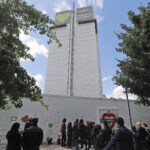
The 24-storey Grenfell Tower block of public housing flats in North Kensington, West London, United Kingdom. [Credit: Richard Baker / In Pictures via Getty Images]Prof Purser is a toxicologist and fire safety scientist.
He noted that “the physical capacity was enough for all of the occupants to have evacuated safely within minutes if there had been some means of alerting them to evacuate.”
He told the inquiry it was reasonably safe for residents to descend the stairs until about 02:00 in the morning.
“Although the single stair at Grenfell was quite narrow, there was a good handrail,” he said.
After 02:00, the lobbies and stairwell became “hazardous” with toxic smoke.
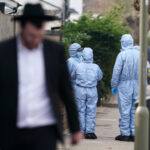
The Grenfell fire was one of Britain’s worst urban tragedies since World War II. Credit: Getty Images
The inquiry has heard London Fire Brigade did not begin changing its “stay put” advice to those inside the building until around 02:35.
Prof Purser said the blaze can be considered as 100 separate flat fires.
During this time occupants were exposed to heat or smoke in different ways depending on where they were in the building.
He said those who did not make it out of the tower are more likely to have died from breathing toxic smoke than being burned. He also noted that it was difficult to assess the conditions they were exposed to because most of the bodies were “completely consumed.”
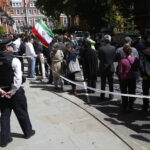
Protesters voice their concerns over the Government and local council’s management in the aftermath of the fire. Credit: Barcroft Media via Getty Images
The expert witness studied 15 blood samples from people who died in flats, lobbies and the stairs. All of these samples showed exposure to carbon monoxide.
“It is a strong possibility that those who died did so from smoke inhalation rather than being burned,” he said.
72 people died in the fire on 14 June 2017.
Submitted Article
Headline
Short Headline
Standfirst
Published Article
HeadlineExpert: Grenfell Tower could have been evacuated in seven minutes
Short HeadlineGrenfell 'could've been evacuated in seven minutes'
StandfirstProfessor David Purser told the inquiry it was reasonably safe for residents to descend the stairs until about 02:00 in the morning.
Grenfell Tower could have been safely evacuated in as little as seven minutes, an expert said.
The inquiry looking into the tower block fire heard that there was sufficient time for a safe evacuation before the building’s rapid deterioration.
Professor David Purser described this time-period as the “golden early period.”
He also said the building’s single narrow staircase would have allowed a full evacuation of all 293 people inside.
The 24-storey Grenfell Tower block of public housing flats in North Kensington, West London, United Kingdom. [Credit: Richard Baker / In Pictures via Getty Images]Prof Purser is a toxicologist and fire safety scientist.
He noted that “the physical capacity was enough for all of the occupants to have evacuated safely within minutes if there had been some means of alerting them to evacuate.”
He told the inquiry it was reasonably safe for residents to descend the stairs until about 02:00 in the morning.
“Although the single stair at Grenfell was quite narrow, there was a good handrail,” he said.
After 02:00, the lobbies and stairwell became “hazardous” with toxic smoke.
The Grenfell fire was one of Britain’s worst urban tragedies since World War II. Credit: Getty Images
The inquiry has heard London Fire Brigade did not begin changing its “stay put” advice to those inside the building until around 02:35.
Prof Purser said the blaze can be considered as 100 separate flat fires.
During this time occupants were exposed to heat or smoke in different ways depending on where they were in the building.
He said those who did not make it out of the tower are more likely to have died from breathing toxic smoke than being burned. He also noted that it was difficult to assess the conditions they were exposed to because most of the bodies were “completely consumed.”
Protesters voice their concerns over the Government and local council’s management in the aftermath of the fire. Credit: Barcroft Media via Getty Images
The expert witness studied 15 blood samples from people who died in flats, lobbies and the stairs. All of these samples showed exposure to carbon monoxide.
“It is a strong possibility that those who died did so from smoke inhalation rather than being burned,” he said.
Internationally renowned for transforming her life into confessional art, the exhibition offers an intimate and unapologetic glimpse into one of Britain’s most influential contemporary artists.
As e-bike riders weave through London’s busiest junctions, red lights are increasingly treated as optional. One software engineer says the problem may be baked into how hire firms charge users