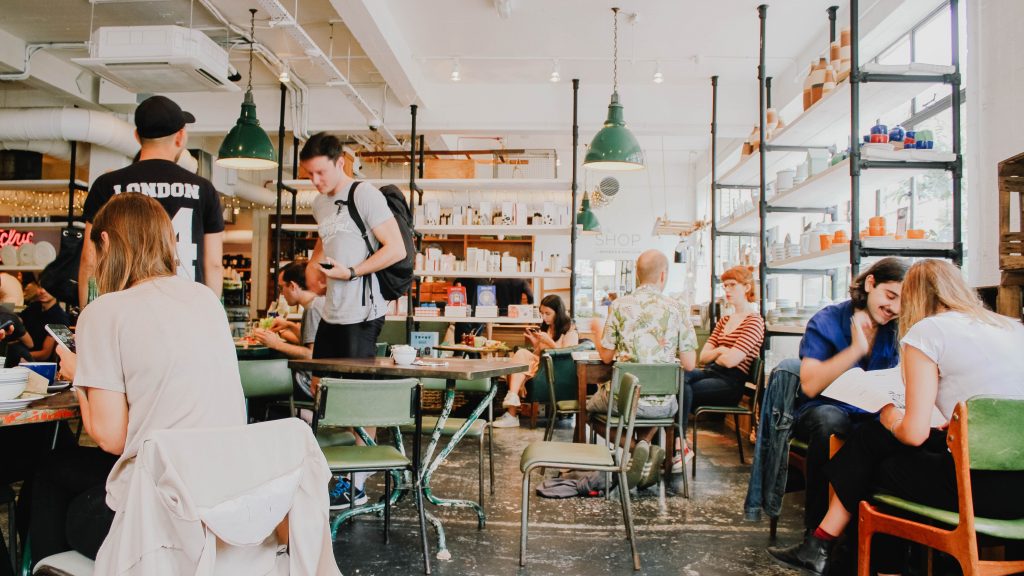
London's restaurant scene is bouncing back. Credit: Toa Heftiba for Unsplash
SHARE:
London’s bars and restaurants contributed to the 34% growth in the UK food industry between April and May, according to the latest data from the Office for National Statistics.
0.8% growth in the United Kingdom’s economy from April to May, was reported by the ONS, as coronavirus restrictions eased and businesses reopened.
Revenues in the sector have increased as customers returned to restaurants. Large parts of the indoor retail economy and outdoor dining locations reopened on 12 April after the government confirmed that the tests to ease restrictions had been met.
“Pubs and restaurants, who were again able to welcome indoor guests, were responsible for the vast majority of the growth seen in May, ” said Jonathan Athow, an economist at the ONS.
Changing business models
Many bars, clubs and restaurants in the capital have had to change their operating models to stay afloat. Afolabi Ogunkoya, owner of Cococure, a nightclub and bar in the City of London financial district pivoted away from being solely a nightclub operating on weekends, to a bar and restaurant. He now offers an app-based takeaway and delivery service six days of the week.
Delivery apps have helped restaurants survive the pandemic. Credit: Viktor Forgacs for Unsplash
“I’ve lost around roughly 1.1 million in revenue over the last 16 months, we had to try something different,” Mr Afolabi said.
Three neighbouring bars that did not change their business models have closed permanently.
Calls for more support
To prevent further permanent closures of businesses, Kate Nichols, chief executive of trade group UKHospitality says the sector needs more government support.
Kate Nichols, CEO UKHospitality trade group. Credit: Twitter
“Survival is already on a knife edge for many hospitality businesses,” she said. “We are conveying to the Government the acute need for an extension to the business rates holiday and the need for a permanently lower rate of VAT for the sector.”
Submitted Article
Headline
Short Headline
Standfirst
Published Article
HeadlineHospitality industry boosts GDP
Short HeadlineLondon hospitality boosts economic rebound
StandfirstRestaurants reopening in April boosted the economy reports the ONS.
London’s bars and restaurants contributed to the 34% growth in the UK food industry between April and May, according to the latest data from the Office for National Statistics.
0.8% growth in the United Kingdom’s economy from April to May, was reported by the ONS, as coronavirus restrictions eased and businesses reopened.
Revenues in the sector have increased as customers returned to restaurants. Large parts of the indoor retail economy and outdoor dining locations reopened on 12 April after the government confirmed that the tests to ease restrictions had been met.
“Pubs and restaurants, who were again able to welcome indoor guests, were responsible for the vast majority of the growth seen in May, ” said Jonathan Athow, an economist at the ONS.
Changing business models
Many bars, clubs and restaurants in the capital have had to change their operating models to stay afloat. Afolabi Ogunkoya, owner of Cococure, a nightclub and bar in the City of London financial district pivoted away from being solely a nightclub operating on weekends, to a bar and restaurant. He now offers an app-based takeaway and delivery service six days of the week.
Delivery apps have helped restaurants survive the pandemic. Credit: Viktor Forgacs for Unsplash
“I’ve lost around roughly 1.1 million in revenue over the last 16 months, we had to try something different,” Mr Afolabi said.
Three neighbouring bars that did not change their business models have closed permanently.
Calls for more support
To prevent further permanent closures of businesses, Kate Nichols, chief executive of trade group UKHospitality says the sector needs more government support.
Kate Nichols, CEO UKHospitality trade group. Credit: Twitter
“Survival is already on a knife edge for many hospitality businesses,” she said. “We are conveying to the Government the acute need for an extension to the business rates holiday and the need for a permanently lower rate of VAT for the sector.”
Internationally renowned for transforming her life into confessional art, the exhibition offers an intimate and unapologetic glimpse into one of Britain’s most influential contemporary artists.
As e-bike riders weave through London’s busiest junctions, red lights are increasingly treated as optional. One software engineer says the problem may be baked into how hire firms charge users