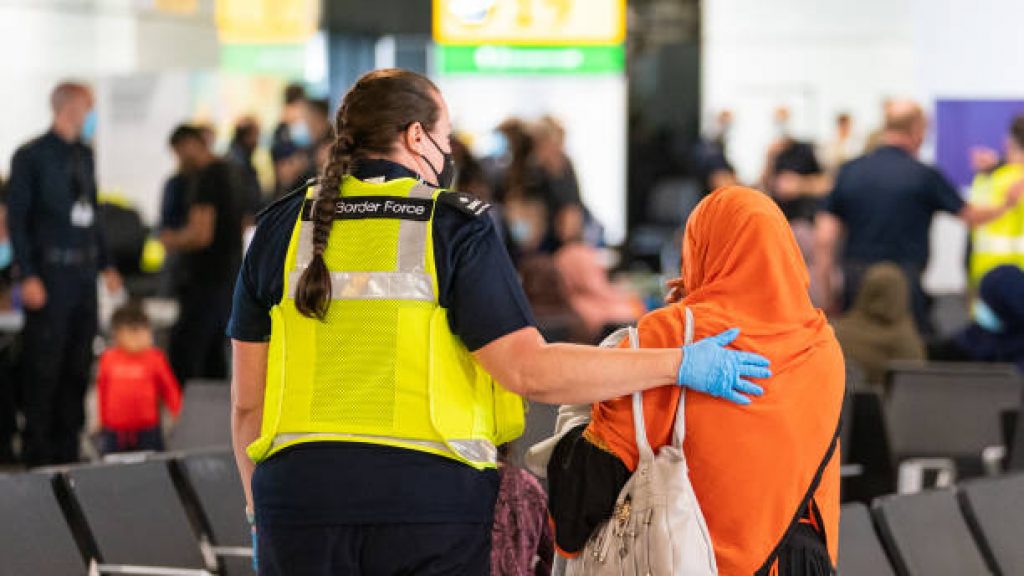
Twenty London boroughs have signed up to rehouse Afghan refugees in a pledge to solve issues faced in bridging hotels – but Home Officer Minister Victoria Atkins has argued that more London councils need to sign up to help.
Currently, 30% of Afghan refugees are in temporary accommodation, and struggling to find permanent housing.
There are fourteen ‘bridging’ hotels across eight London boroughs, where refugees have been staying while a more stable solution pends.
The Park Plaza Hotel in Waterloo, one of London’s fourteen bridging hotels – Teddy Phillips for City News
Having acknowledged the benefits of the councils’ pledges, Victoria Atkins has argued that it is still not enough, and more boroughs must join the scheme to effectively provide safe, permanent housing.
Approximately 15,000 people were evacuated from Afghanistan by British and American forces following the Taliban’s takeover of the country in August.
Refugees should also be able to find permanent housing under this scheme.
Refugees At Home
Sara Nathan, co-founder and trustee of charity Refugees At Home, dismisses the bridging hotels as a solution, stating that they were only ever meant be temporary.
Sara also told City News that in some hotels, adults play cricket at Lords, and children regularly attend school. But in other places, there really is nothing to do.
She suggested that the government could be calling on charities and Airbnb in addition to the bridging hotels, to speed up the rehousing process.
The Home Office announcement
The Home Office have released a statement recognising Operation Warm Welcome as the UK’s biggest emergency evacuation in recent memory.
“There is now a huge effort underway to get families into permanent homes. Those families temporarily accommodated in hotels have access to healthcare, education, any essential items they need and employment opportunities or Universal Credit.”
– Home Office
Submitted Article
Headline
Short Headline
Standfirst
Published Article
HeadlineLondon councils are complaining that they need more support housing Afghan refugees
Short HeadlineAfghan refugees need permanent housing
StandfirstCurrently, 30% of Afghan refugees are in temporary accommodation, and struggling to find permanent housing.
Twenty London boroughs have signed up to rehouse Afghan refugees in a pledge to solve issues faced in bridging hotels – but Home Officer Minister Victoria Atkins has argued that more London councils need to sign up to help.
Currently, 30% of Afghan refugees are in temporary accommodation, and struggling to find permanent housing.
There are fourteen ‘bridging’ hotels across eight London boroughs, where refugees have been staying while a more stable solution pends.
The Park Plaza Hotel in Waterloo, one of London’s fourteen bridging hotels – Teddy Phillips for City News
Having acknowledged the benefits of the councils’ pledges, Victoria Atkins has argued that it is still not enough, and more boroughs must join the scheme to effectively provide safe, permanent housing.
Approximately 15,000 people were evacuated from Afghanistan by British and American forces following the Taliban’s takeover of the country in August.
Refugees should also be able to find permanent housing under this scheme.
Refugees At Home
Sara Nathan, co-founder and trustee of charity Refugees At Home, dismisses the bridging hotels as a solution, stating that they were only ever meant be temporary.
Sara also told City News that in some hotels, adults play cricket at Lords, and children regularly attend school. But in other places, there really is nothing to do.
She suggested that the government could be calling on charities and Airbnb in addition to the bridging hotels, to speed up the rehousing process.
The Home Office announcement
The Home Office have released a statement recognising Operation Warm Welcome as the UK’s biggest emergency evacuation in recent memory.
“There is now a huge effort underway to get families into permanent homes. Those families temporarily accommodated in hotels have access to healthcare, education, any essential items they need and employment opportunities or Universal Credit.”
Internationally renowned for transforming her life into confessional art, the exhibition offers an intimate and unapologetic glimpse into one of Britain’s most influential contemporary artists.
As e-bike riders weave through London’s busiest junctions, red lights are increasingly treated as optional. One software engineer says the problem may be baked into how hire firms charge users