Professor Sharon Peacock: ‘I wasn’t allowed to study science at school’
AP
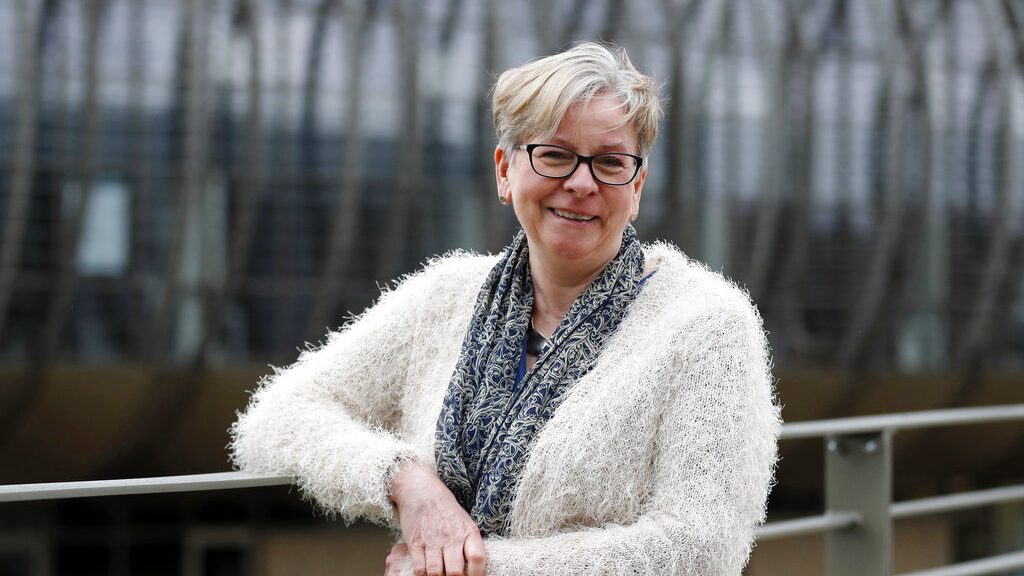
Professor Sharon Peacock's team are responsible for identifying the evolving variants of the Covid-19 virus, but she very nearly didn't pursue a career in science.
Given that Professor Sharon Peacock is the Executive Director of the Covid-19 Genomics UK Consortium (Cog-UK), it may come as a surprise to discover that she left school at 16 with no intention of becoming a scientist.
Cog-UK is responsible for delivering large-scale, rapid whole-genome virus sequencing of Covid-19 to Public Health Agencies, the NHS, and the UK government. The organisation has so far sequenced just over 600,000 viruses.
It has proven to be crucial in informing public health policy and vaccine efforts given the ability to track virus mutations and identify new strains—a huge step for science and something that has Prof Peacock excited.
“I think it’s something like a dream come true to tell you the truth, just to see pathogen genomics being used for public health benefit”, she says.
Prof Peacock nearly didn’t pursue a career in science. The daughter of a carpenter, who failed her 11-plus, attended a secondary modern where girls were discouraged from STEM.
“I left school at 16. I never dreamt of becoming a scientist […] I wasn’t allowed to do GCSE physics, chemistry, or maths because in those days science wasn’t for girls. I wasn’t considered able enough”.
Prof Peacock trained as a nurse after leaving school and gained night school science qualifications whilst working in a corner shop. After being rejected from medical school twice, her husband persuaded her to call Southampton University and ask for a place—she got into medical school and became the first in her family to attend university. This, she says, was “the single hardest thing [she] ever had to do”.
Dedication to public health has since defined Prof Peacock’s career. First, as a physician after graduating from medical school, and then in research and clinical microbiology.
Professor Sharon Peacock is keen to stress the importance of bringing together sequencing with vaccine development.
Awarded The Wellcome Trust Research Training Fellowship in microbiology in 1995, Prof Peacock became aware of the threat infectious outbreaks posed to global health. She then collaborated with the Wellcome Trust Sanger Institute in 2002 using genomics to investigate bacterial diseases in Thailand, and came back to the UK in 2009 becoming Professor of Clinical Microbiology at the University of Cambridge. Here she headed the Peacock Lab undertaking research relating to the sequencing of pathogens and disease control.
Prof Peacock’s work with superbug methicillin-resistant Staphylococcus aureus (MRSA) is what gained her global eminence, and became the precursor for her current role, dubbed by the media as the Covid-19 “variant hunter”.
An antibiotic-resistant strain of bacteria, MRSA, has roots in the overuse of antibiotics and poor infection control, causing it to be a major public health concern. About 20% of people carry the bacteria constantly, and similar to Covid-19, a proportion are asymptomatic.
Before her work, clinical testing was not granular enough to distinguish between strains that were part of an outbreak and those that were not. This meant blanket approaches to infection control.
This began to change in 2012, when Prof Peacock was part of a team that published a landmark study in the New England Journal of Medicine that mapped an MRSA outbreak in a neonatal unit retrospectively, using whole-genome sequencing. By identifying strains that were part of the outbreak and strains that were not—had they been doing it in real-time—they would have been able to identify the outbreak sooner and potentially shorten it.
“[This] was the first demonstration of the clinical utility of [whole-genome sequencing]”, says Dr Ewan Harrison, who, before the pandemic, was Deputy Lead of the Peacock Group and is now on secondment to Cog-UK as Director of Strategy and Transformation.
Dr Ewan Harrison says the detection of the Alpha variant, first detected in Kent, early December last year was a ‘game-changer for genomics globally’.
“Sharon is an expert in this area, and given her previous work, she was perfectly in place when [Covid-19] came along to lead a national consortium”.
The Queen acknowledged Prof Peacock’s contributions to clinical microbiology with a CBE in 2015, and in 2017, Peacock contributed to the Chief Medical Officer’s annual report on the potential for pathogen genomics in patient diagnosis and infection control.
Now the girl who was discouraged from a career in science leads a genomic sequencing effort that is helping the global fight against the Covid-19 pandemic. And advancements in genomic sequencing offer immense potential far beyond Covid-19, something Prof Peacock hopes will continue.
“It needs to become an integral part of public health microbiology,” she asserts. “What has proved useful during the pandemic—looking for genetic changes that can be used to detect and investigate outbreaks, or that signify resistance to treatments or vaccines—is just as applicable to other infectious diseases, like antimicrobial resistance.”
As the vaccine rolls out, work still needs to be done to understand the virus. A colossal amount of pressure for anyone, I finish by asking Prof Peacock what she does to wind down right now.
“Sleep”.
Given the growing concern about the Delta and other variants, Prof Peacock is unlikely to get an opportunity to sleep anytime soon!
Submitted Article
Headline
Short Headline
Standfirst
Published Article
HeadlineProfessor Sharon Peacock: ‘I wasn’t allowed to study science at school’
Short HeadlineUK top scientist wasn't allowed to study science
StandfirstProfessor Sharon Peacock's team are responsible for identifying the evolving variants of the Covid-19 virus, but she very nearly didn't pursue a career in science.
Given that Professor Sharon Peacock is the Executive Director of the Covid-19 Genomics UK Consortium (Cog-UK), it may come as a surprise to discover that she left school at 16 with no intention of becoming a scientist.
Cog-UK is responsible for delivering large-scale, rapid whole-genome virus sequencing of Covid-19 to Public Health Agencies, the NHS, and the UK government. The organisation has so far sequenced just over 600,000 viruses.
It has proven to be crucial in informing public health policy and vaccine efforts given the ability to track virus mutations and identify new strains—a huge step for science and something that has Prof Peacock excited.
“I think it’s something like a dream come true to tell you the truth, just to see pathogen genomics being used for public health benefit”, she says.
Prof Peacock nearly didn’t pursue a career in science. The daughter of a carpenter, who failed her 11-plus, attended a secondary modern where girls were discouraged from STEM.
“I left school at 16. I never dreamt of becoming a scientist […] I wasn’t allowed to do GCSE physics, chemistry, or maths because in those days science wasn’t for girls. I wasn’t considered able enough”.
Prof Peacock trained as a nurse after leaving school and gained night school science qualifications whilst working in a corner shop. After being rejected from medical school twice, her husband persuaded her to call Southampton University and ask for a place—she got into medical school and became the first in her family to attend university. This, she says, was “the single hardest thing [she] ever had to do”.
Dedication to public health has since defined Prof Peacock’s career. First, as a physician after graduating from medical school, and then in research and clinical microbiology.
Professor Sharon Peacock is keen to stress the importance of bringing together sequencing with vaccine development.
Awarded The Wellcome Trust Research Training Fellowship in microbiology in 1995, Prof Peacock became aware of the threat infectious outbreaks posed to global health. She then collaborated with the Wellcome Trust Sanger Institute in 2002 using genomics to investigate bacterial diseases in Thailand, and came back to the UK in 2009 becoming Professor of Clinical Microbiology at the University of Cambridge. Here she headed the Peacock Lab undertaking research relating to the sequencing of pathogens and disease control.
Prof Peacock’s work with superbug methicillin-resistant Staphylococcus aureus (MRSA) is what gained her global eminence, and became the precursor for her current role, dubbed by the media as the Covid-19 “variant hunter”.
An antibiotic-resistant strain of bacteria, MRSA, has roots in the overuse of antibiotics and poor infection control, causing it to be a major public health concern. About 20% of people carry the bacteria constantly, and similar to Covid-19, a proportion are asymptomatic.
Before her work, clinical testing was not granular enough to distinguish between strains that were part of an outbreak and those that were not. This meant blanket approaches to infection control.
This began to change in 2012, when Prof Peacock was part of a team that published a landmark study in the New England Journal of Medicine that mapped an MRSA outbreak in a neonatal unit retrospectively, using whole-genome sequencing. By identifying strains that were part of the outbreak and strains that were not—had they been doing it in real-time—they would have been able to identify the outbreak sooner and potentially shorten it.
“[This] was the first demonstration of the clinical utility of [whole-genome sequencing]”, says Dr Ewan Harrison, who, before the pandemic, was Deputy Lead of the Peacock Group and is now on secondment to Cog-UK as Director of Strategy and Transformation.
Dr Ewan Harrison says the detection of the Alpha variant, first detected in Kent, early December last year was a ‘game-changer for genomics globally’.
“Sharon is an expert in this area, and given her previous work, she was perfectly in place when [Covid-19] came along to lead a national consortium”.
The Queen acknowledged Prof Peacock’s contributions to clinical microbiology with a CBE in 2015, and in 2017, Peacock contributed to the Chief Medical Officer’s annual report on the potential for pathogen genomics in patient diagnosis and infection control.
Now the girl who was discouraged from a career in science leads a genomic sequencing effort that is helping the global fight against the Covid-19 pandemic. And advancements in genomic sequencing offer immense potential far beyond Covid-19, something Prof Peacock hopes will continue.
“It needs to become an integral part of public health microbiology,” she asserts. “What has proved useful during the pandemic—looking for genetic changes that can be used to detect and investigate outbreaks, or that signify resistance to treatments or vaccines—is just as applicable to other infectious diseases, like antimicrobial resistance.”
As the vaccine rolls out, work still needs to be done to understand the virus. A colossal amount of pressure for anyone, I finish by asking Prof Peacock what she does to wind down right now.
“Sleep”.
Given the growing concern about the Delta and other variants, Prof Peacock is unlikely to get an opportunity to sleep anytime soon!