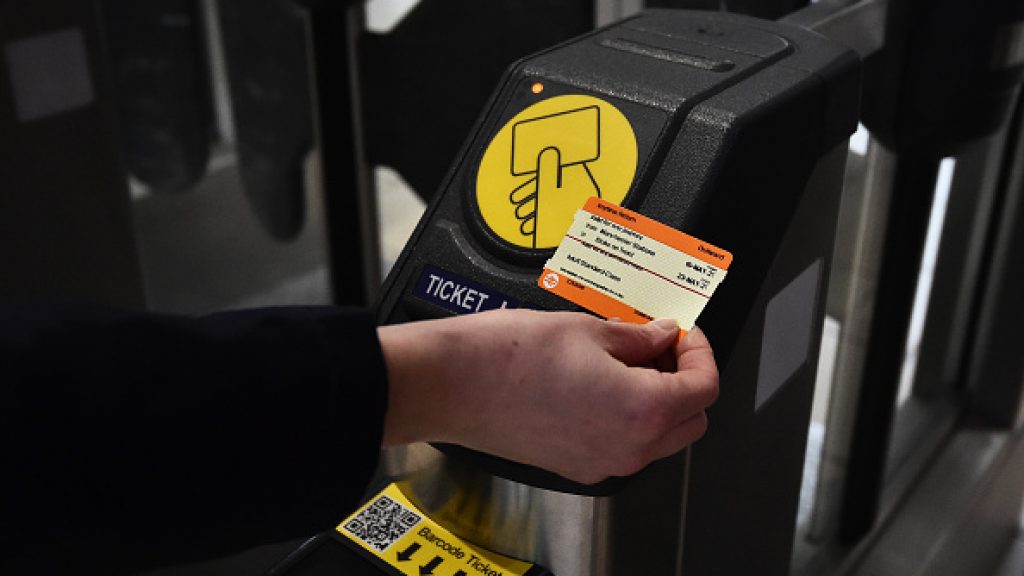
The tickets can be used two days a week, or eight times in a 28-day period, and are targeted at hybrid workers.
SHARE:
Flexible season tickets are being introduced for commuters who only plan to head to the office a few days a week.
The new tickets are available to buy now and can be used eight times in a 28-day period. That’s two days a week. They are targeting hybrid workers, who plan to continue working from home part-time, even after offices re-open. It is expected that this will become more common post-pandemic.
The flexible season tickets cannot be used for journeys within London. This is because of already existing offers, the Department of Transport says.
Some of the capitals busiest commuter station such as Waterloo have seen footfall decrease by up to 90% during the pandemic, as people opt to work from home. Credit: AP
A mixed response
However, some are expressing annoyance at the savings offered, because they aren’t as substantial as they hoped.
We’ve been speaking to Alice Ridley, a spokesperson for The Campaign for Better Transport, who say that they are ‘disappointed’.
“The discount on offer is being compared to the equivalent of a daytime return,” she says, “which isn’t a very fair way of doing it. We think that they should have been given a discount similar to a full-time season ticket, which would have encouraged more people to choose the train to travel.”
Air pollution in the capital
As a result, she fears the price could deter people from using public transport. If this happens, she says it could result in environmental damage.
“We’re already seeing traffic levels return to pre-pandemic levels. In some cases, they’re rising beyond that – and this is whilst people are still working from home. We have a climate emergency and a huge problem with air pollution. We need to reduce the number of people who commute by car,” she says.
“If we’re in a situation where people returning to work part-time feel it’s not affordable to use public transport, we’re going to see traffic rise to unsustainable levels. We aren’t going to be able to tackle carbon emissions. Air pollution is going to get worse.”
The future of flexible tickets
Others, however, are welcoming the new tickets.
Robert Nisbet, who works as the Director of Nations and Regions at the Rail Delivery Group, is calling it a “step in the right direction” for the industry. He says that this will “give commuters the freedom and flexibility to divide their time between home and the office.”
Mr Nisbet believes that more reforms are still to come. He claims that “rail companies want to go even further with regulatory reform of the fare system to get the most out of tap-in, tap-out technology to ensure that passengers get the best deal, whenever they choose to travel.”
Olivia Pidgeon, Chair of the Transport Committee also adds that this might pave the way for more flexible ticket arrangements. She suggests that this could lead to the development of a flexible London Travelcard, but no plans are currently in place.
Submitted Article
Headline
Short Headline
Standfirst
Published Article
HeadlineFlexible season tickets launch for post-pandemic commuters
Short HeadlineFlexible season tickets launch for commuters
StandfirstThe initiative has received mixed reactions, as campaigners brand the discounts too low to make an impact.
Flexible season tickets are being introduced for commuters who only plan to head to the office a few days a week.
The new tickets are available to buy now and can be used eight times in a 28-day period. That’s two days a week. They are targeting hybrid workers, who plan to continue working from home part-time, even after offices re-open. It is expected that this will become more common post-pandemic.
The flexible season tickets cannot be used for journeys within London. This is because of already existing offers, the Department of Transport says.
Some of the capitals busiest commuter station such as Waterloo have seen footfall decrease by up to 90% during the pandemic, as people opt to work from home. Credit: AP
A mixed response
However, some are expressing annoyance at the savings offered, because they aren’t as substantial as they hoped.
We’ve been speaking to Alice Ridley, a spokesperson for The Campaign for Better Transport, who say that they are ‘disappointed’.
“The discount on offer is being compared to the equivalent of a daytime return,” she says, “which isn’t a very fair way of doing it. We think that they should have been given a discount similar to a full-time season ticket, which would have encouraged more people to choose the train to travel.”
Air pollution in the capital
As a result, she fears the price could deter people from using public transport. If this happens, she says it could result in environmental damage.
“We’re already seeing traffic levels return to pre-pandemic levels. In some cases, they’re rising beyond that – and this is whilst people are still working from home. We have a climate emergency and a huge problem with air pollution. We need to reduce the number of people who commute by car,” she says.
“If we’re in a situation where people returning to work part-time feel it’s not affordable to use public transport, we’re going to see traffic rise to unsustainable levels. We aren’t going to be able to tackle carbon emissions. Air pollution is going to get worse.”
The future of flexible tickets
Others, however, are welcoming the new tickets.
Robert Nisbet, who works as the Director of Nations and Regions at the Rail Delivery Group, is calling it a “step in the right direction” for the industry. He says that this will “give commuters the freedom and flexibility to divide their time between home and the office.”
Mr Nisbet believes that more reforms are still to come. He claims that “rail companies want to go even further with regulatory reform of the fare system to get the most out of tap-in, tap-out technology to ensure that passengers get the best deal, whenever they choose to travel.”
Olivia Pidgeon, Chair of the Transport Committee also adds that this might pave the way for more flexible ticket arrangements. She suggests that this could lead to the development of a flexible London Travelcard, but no plans are currently in place.
A 39-year-old cyclist was killed in South East London after a collision with a lorry. A "ghost bike" has been placed near the site of the collision to warn future riders.
A 2024 Freedom of Information request showed Bromley Council had £4.5 million invested in arms companies that year with £1.5 million reportedly linked to Israel.
Undercover officers raided three linked shops in Barking town centre, revealing how illicit tobacco is being hidden in walls, ceilings and nearby locations to evade detection.
More than 330,000 people across the UK sought support from the Stop It Now helpline in 2025 over concerns about their own or someone else’s online sexual behaviour towards children, according to new charity data. The anonymous service says contacts by phone, email and webchat rose significantly over the year.