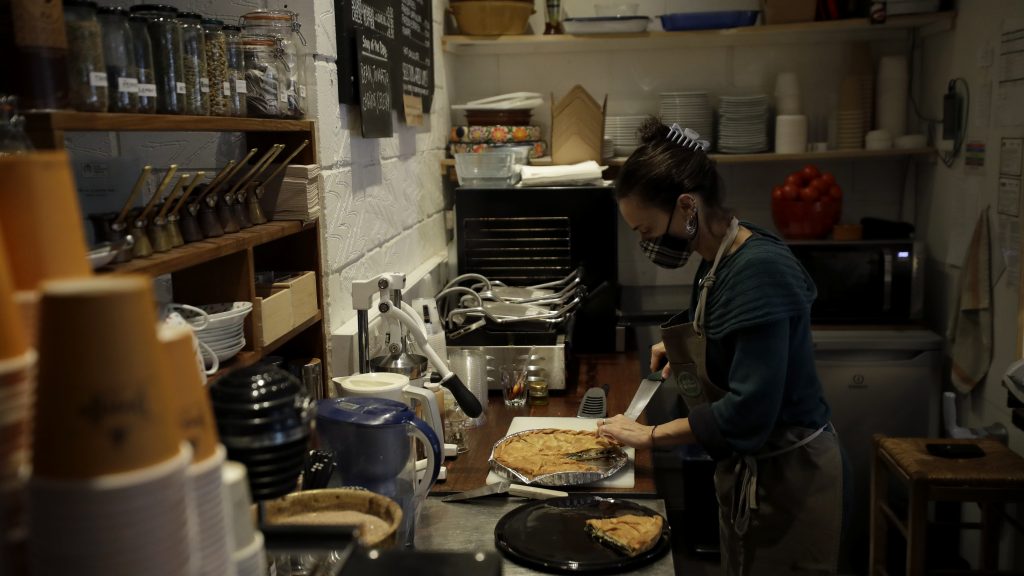
Small businesses, like Isle of Olive, will also have to start paying deferred VAT bills, and begin repayments on the more than forty five billion that is due in bounce back loans.
SHARE:
Small businesses are calling for more help, saying they face an 18-day gap in financial support due to ongoing Covid-19 restrictions.
The Federation for Small Businesses (FSB) says many firms had budgeted for a reopening on 21 June, but now face waiting until 19 July, the new proposed date for lifting restrictions.
Current support measures, including business rates exemptions and deferred VAT payments, come to an end on 1 July. The FSB says this gap in support is placing extra pressure on businesses already struggling to stay afloat.
FSB national chairman Mike Cherry said: “With ‘freedom day’ delayed and business support now peeling back, we are worried for those who suddenly face new costs, but are unable to raise revenue to pay for them. Some may now cease trading and let staff go”.
In response, the government has said “substantial” support will remain. They say the furlough scheme will stay in place and “is amongst the most generous schemes in the world.”
As of 1 August, the Government will reduce their contribution to 60% and employer’s will have to increase theirs to 20%. Credit: AP
As of 1 July, however, the amount of wage costs employers need to contribute for furloughed staff through national insurance and pension will rise from 5 per cent to 14 per cent.
Small businesses will also have to start paying deferred VAT bills and begin repayments on the more than £45bn that is due in bounce back loans.
This is having an especially large impact on small businesses in the night-time economy, many of whom have been shut for over a year due to the pandemic.
The FSB is asking for business relief rates to be extended, along with full furlough.
How is furlough changing on 1 July for small businesses?
The furlough scheme is due to end at the end of September, but from 1 July employers will have to start paying part of the cost needed to keep staff furloughed.
Up until now, the scheme has involved the Government paying for the staff of companies who cannot afford to pay them during the pandemic.
After 19 July, when restrictions are set to be lifted, the Government say they hope that most furloughed workers will be able to return.
This leaves an 18-day gap, where employers must contribute to the furlough scheme whilst being unable to open for business.
From 1 July, the Government will reduce contribution of an employee’s salary to 70%, whilst the company will contribute 10%.
As of 1 August, the Government will further reduce their contribution to 60% and employer’s will have to increase theirs to 20%.
Submitted Article
Headline
Short Headline
Standfirst
Published Article
HeadlineSmall businesses call for more support, having budgeted for 21 June reopening
Short HeadlineSmall businesses call for more financial support
StandfirstThe Federation for Small Businesses says a gap in support is placing pressure on already struggling businesses.
Small businesses are calling for more help, saying they face an 18-day gap in financial support due to ongoing Covid-19 restrictions.
The Federation for Small Businesses (FSB) says many firms had budgeted for a reopening on 21 June, but now face waiting until 19 July, the new proposed date for lifting restrictions.
Current support measures, including business rates exemptions and deferred VAT payments, come to an end on 1 July. The FSB says this gap in support is placing extra pressure on businesses already struggling to stay afloat.
FSB national chairman Mike Cherry said: “With ‘freedom day’ delayed and business support now peeling back, we are worried for those who suddenly face new costs, but are unable to raise revenue to pay for them. Some may now cease trading and let staff go”.
In response, the government has said “substantial” support will remain. They say the furlough scheme will stay in place and “is amongst the most generous schemes in the world.”
As of 1 August, the Government will reduce their contribution to 60% and employer’s will have to increase theirs to 20%. Credit: AP
As of 1 July, however, the amount of wage costs employers need to contribute for furloughed staff through national insurance and pension will rise from 5 per cent to 14 per cent.
Small businesses will also have to start paying deferred VAT bills and begin repayments on the more than £45bn that is due in bounce back loans.
This is having an especially large impact on small businesses in the night-time economy, many of whom have been shut for over a year due to the pandemic.
The FSB is asking for business relief rates to be extended, along with full furlough.
How is furlough changing on 1 July for small businesses?
The furlough scheme is due to end at the end of September, but from 1 July employers will have to start paying part of the cost needed to keep staff furloughed.
Up until now, the scheme has involved the Government paying for the staff of companies who cannot afford to pay them during the pandemic.
After 19 July, when restrictions are set to be lifted, the Government say they hope that most furloughed workers will be able to return.
This leaves an 18-day gap, where employers must contribute to the furlough scheme whilst being unable to open for business.
From 1 July, the Government will reduce contribution of an employee’s salary to 70%, whilst the company will contribute 10%.
As of 1 August, the Government will further reduce their contribution to 60% and employer’s will have to increase theirs to 20%.
Locked out in London and need a locksmith? Quotes can vary sharply between firms, leaving customers unsure what a fair price looks like, especially late at night.
A 2024 Freedom of Information request showed Bromley Council had £4.5 million invested in arms companies that year with £1.5 million reportedly linked to Israel.
Undercover officers raided three linked shops in Barking town centre, revealing how illicit tobacco is being hidden in walls, ceilings and nearby locations to evade detection.
More than 330,000 people across the UK sought support from the Stop It Now helpline in 2025 over concerns about their own or someone else’s online sexual behaviour towards children, according to new charity data. The anonymous service says contacts by phone, email and webchat rose significantly over the year.