WATCH: Aban Tribunal meets in London to investigate Iran fuel protests
The panel will publicly hear evidence from 45 witnesses to investigate whether crimes under international law have been committed by Iranian state forces and paramilitaries.
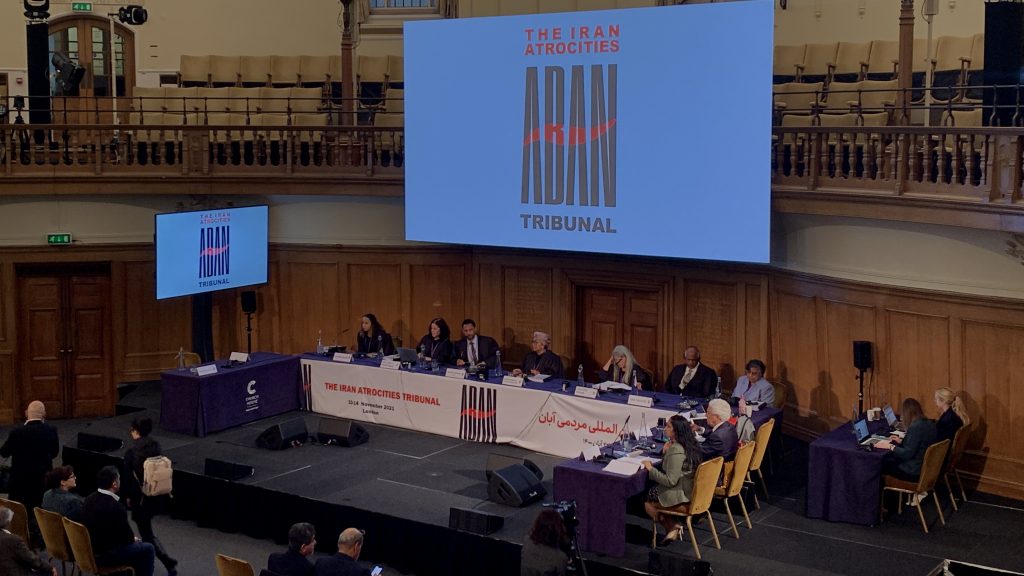
A five-day-long tribunal is taking place in Westminster to investigate the Iranian fuel protests of November 2019.
Human rights groups are demanding justice for thousands of protesters that were killed, injured, or detained at the time.
The Iran Atrocities Tribunal – also known as the Aban Tribunal – was organised by the human rights groups Justice for Iran, Iran Human Rights, and Together Against the Death Penalty.
The London-based human rights lawyer, Hamid Sabi, will co-counsel the hearing alongside practicing attorney Regina Paulose.
The panel in Westminster will determine whether crimes under international law have been committed by Iranian state forces and paramilitaries during the protests
What will the tribunal cover?
Evidence collected over the last two years will be scrutinised to consider whether the Iran government committed crimes under international law.
133 Iran government officials are under investigation, including the Supreme Leader Ali Khamenei and President Ebrahim Raisi. A full list of those being investigated can be found here.
Tribunal officials have said all under investigation had been contacted to allow them to give their own recollection of what happened, but none responded.
A panel made up of six legal experts and human rights activists will hear 45 witnesses during the proceedings, as well as review an additional 120 witness statements.
Despite the tribunal having no legal standing, its supporters hope that it could eventually lead to later prosecutions.
Founder of Iran Human Rights, Mahmood Amiry-Maghoddam, believes the tribunal is needed to gain justice for victims and their families, and hopes that it will empower them.
“Here is your voice”, Amiry-Maghoddam tells those who were affected by the protests: “You are not alone.”
What sparked the 2019 protests?
The 2019 protests broke out on 15th November after the Iranian government implemented a sudden 200% spike in fuel prices. Government forces allegedly responded to the crowds with extreme violence, with reports suggesting that thousands were severely injured.
An investigation by Amnesty International states that the Iranian authorities killed at least 304 people and arrested more than 7,000 after 10,000 had campaigned against the sudden rise in petrol prices.
The protests are deemed the most violent anti-government unrest since the rise of Iran’s Islamic Republic in 1979. Credit: Nicolas Garon/Wikimedia Commons
One witness, Amir Ansarifar, spoke to the panel about the death of his son, a bystander who was shot in Behbahan.
According to Mr. Ansarifar, authorities offered him money to keep quiet about the details of his son’s death.
Mr. Ansarifar’s daughter was also charged with publicity against the establishment and spreading lies.
These charges are still pending.
The coming days will hear more first-hand accounts like these in relation to the events of November 2019.
Many witnesses will not show their faces or disclose their names in order to protect their identities.
The verdict is expected to be delivered to the world in early 2022.
Submitted Article
Headline
Short Headline
Standfirst
Published Article
HeadlineWATCH: Aban Tribunal meets in London to investigate Iran fuel protests
Short HeadlineWATCH: London tribunal investigates Iran protests
StandfirstThe panel will publicly hear evidence from 45 witnesses to investigate whether crimes under international law have been committed by Iranian state forces and paramilitaries.
A five-day-long tribunal is taking place in Westminster to investigate the Iranian fuel protests of November 2019.
Human rights groups are demanding justice for thousands of protesters that were killed, injured, or detained at the time.
The Iran Atrocities Tribunal – also known as the Aban Tribunal – was organised by the human rights groups Justice for Iran, Iran Human Rights, and Together Against the Death Penalty.
The London-based human rights lawyer, Hamid Sabi, will co-counsel the hearing alongside practicing attorney Regina Paulose.
The panel in Westminster will determine whether crimes under international law have been committed by Iranian state forces and paramilitaries during the protests
What will the tribunal cover?
Evidence collected over the last two years will be scrutinised to consider whether the Iran government committed crimes under international law.
133 Iran government officials are under investigation, including the Supreme Leader Ali Khamenei and President Ebrahim Raisi. A full list of those being investigated can be found here.
Tribunal officials have said all under investigation had been contacted to allow them to give their own recollection of what happened, but none responded.
A panel made up of six legal experts and human rights activists will hear 45 witnesses during the proceedings, as well as review an additional 120 witness statements.
Despite the tribunal having no legal standing, its supporters hope that it could eventually lead to later prosecutions.
Founder of Iran Human Rights, Mahmood Amiry-Maghoddam, believes the tribunal is needed to gain justice for victims and their families, and hopes that it will empower them.
“Here is your voice”, Amiry-Maghoddam tells those who were affected by the protests: “You are not alone.”
What sparked the 2019 protests?
The 2019 protests broke out on 15th November after the Iranian government implemented a sudden 200% spike in fuel prices. Government forces allegedly responded to the crowds with extreme violence, with reports suggesting that thousands were severely injured.
An investigation by Amnesty International states that the Iranian authorities killed at least 304 people and arrested more than 7,000 after 10,000 had campaigned against the sudden rise in petrol prices.
The protests are deemed the most violent anti-government unrest since the rise of Iran’s Islamic Republic in 1979. Credit: Nicolas Garon/Wikimedia Commons
One witness, Amir Ansarifar, spoke to the panel about the death of his son, a bystander who was shot in Behbahan.
According to Mr. Ansarifar, authorities offered him money to keep quiet about the details of his son’s death.
Mr. Ansarifar’s daughter was also charged with publicity against the establishment and spreading lies.
These charges are still pending.
The coming days will hear more first-hand accounts like these in relation to the events of November 2019.
Many witnesses will not show their faces or disclose their names in order to protect their identities.
The verdict is expected to be delivered to the world in early 2022.
A 2024 Freedom of Information request showed Bromley Council had £4.5 million invested in arms companies that year with £1.5 million reportedly linked to Israel.
Undercover officers raided three linked shops in Barking town centre, revealing how illicit tobacco is being hidden in walls, ceilings and nearby locations to evade detection.
More than 330,000 people across the UK sought support from the Stop It Now helpline in 2025 over concerns about their own or someone else’s online sexual behaviour towards children, according to new charity data. The anonymous service says contacts by phone, email and webchat rose significantly over the year.