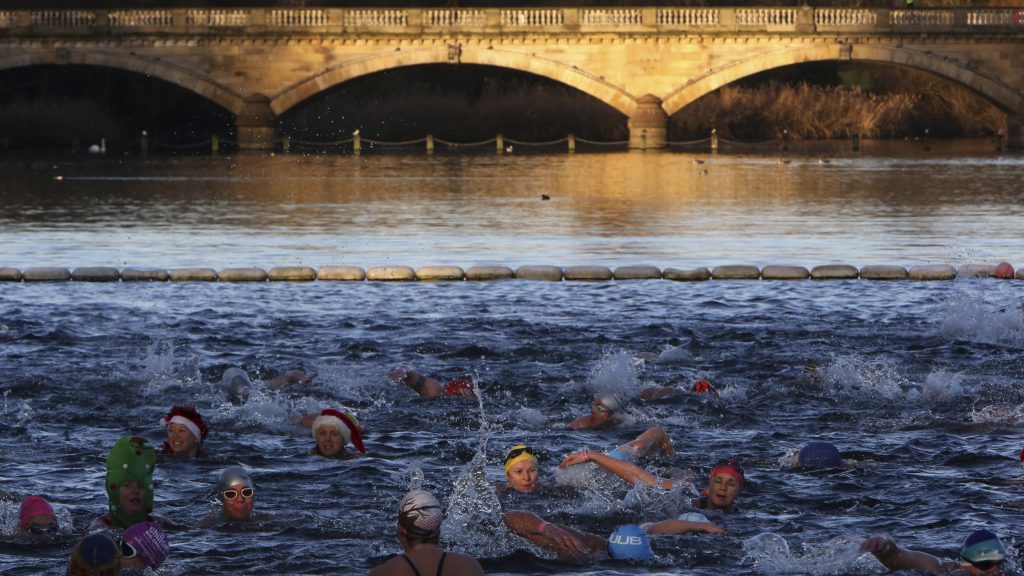
Membership at the Serpentine Swim Club costs £20 a year, and is currently in high demand.
SHARE:
In the summer, the pandemic closed indoor swimming pools across London. To get around the restrictions and stay active, many Londoners started taking regular dips in open-air pools, lakes and rivers as an alternative.
In June 2020, demand was so high that the Outdoor Swimming Society was forced to take down its map of wild swimming spots in an attempt to prevent overcrowding. It seems like the increasingly colder weather and the challenging water temperature is failing to deter many of the city’s converts.
Open water swimming is now thriving again in Hyde Park. Membership applications for the Serpentine swimming club have risen by over 50%, with many finding the sport through lockdown. “It’s great to see our club doing well again, in the 1980s our membership was actually down to 75 people and we were being faced with closure. But, since lockdown we’ve welcomed more and more people”, said Laure Latham, Club Secretary at the Serpentine.
She has seen membership applications sore in recent months, which she puts down to people discovering the sport through lockdown. “When you think of it, the growth is natural. People were so cooped up during lockdown they had to stay indoors in front of computers.
“They were not allowed to socialise and there’s a huge social element to swimming. Our club is social, as is open water swimming across London, it forms great communities. You don’t need equipment, membership if affordable, people are finally realising what a great sport it is”.
With temperatures of four degrees, a January swim in Hyde Park is not for the faint hearted. Credit: Elliot Turnbull
Londoners are certainly cottoning on. After closure during last year’s lockdowns, the Serpentine, the pond at Hampstead Heath, and London Royal Docks have all seen an increase in membership applications.
For Rachael from Kensington, a quick 7:30am swim offers a chance to clear the head before work. “I started off during lockdown, and could not live without it now. I just feel so energised after I’ve done it. Get something brave done early on in the day, it’s great. I wish I’d been doing this for years, it really helps with my concentration”.
While some come for the mental health benefits, others use the water’s therapeutic properties. “I come here because I’ve got arthritis. Colder water therapy is one of the best treatments for my condition, it really helps with my circulation”, said Oliver from Notting Hill.
You can only swim in the Serpentine if you are a member of the swim club. Credit: Elliot Turnbull
But, a London-based charity fears that the rise in open water swimmers may see a rise in accidents. Lee Heard, Charity Director of RLSS, wants to see swimming done safely.
“With around 85% of accidental drownings occurring at open water sites it is extremely important that those who wish to take part have prior knowledge and understanding of open water safety”, he told City News.
“Yes, open water swimming is good for you. Yet, there are some hazards that participants need to be aware of. These include cold water shock; a lack of safety equipment; unknown depth of the water; underwater objects and hazards; strong currents uneven banks and river beds; and poor water quality.
“Through organisation and planning we can reduce the risk of open water swimming. Swimmers need to stay vigilant, and make sure to practice in large groups”, he added.
— Brockwell Swimmers (@brockwellswim) May 20, 2020
What should I do if I’m in danger while swimming? (advice from RLSS)
Take a tow float and whistle with you on your swim. A tow float is a clear visual aid for rescuers, while a whistle will help you attract attention if you are in trouble
Always swim in a group and have a means of calling for help (whistle, phone, vhf radio if possible). Ensure a responsible person knows your plan and when you think you will be home
Float – if you are in trouble in the water, float until you feel calm and then think what to do next
Call 999 or 112 – if you see someone else in trouble in the water call 999 or 112 immediately, know basic rescue techniques and basic life support
Submitted Article
Headline
Short Headline
Standfirst
Published Article
HeadlineOpen water swim club sees largest rise in membership applications
Short HeadlineMore Londoners taking the plunge after lockdown
StandfirstThe Serpentine swim club in Hyde Park recorded its highest amount of membership applications over 2021/22.
In the summer, the pandemic closed indoor swimming pools across London. To get around the restrictions and stay active, many Londoners started taking regular dips in open-air pools, lakes and rivers as an alternative.
In June 2020, demand was so high that the Outdoor Swimming Society was forced to take down its map of wild swimming spots in an attempt to prevent overcrowding. It seems like the increasingly colder weather and the challenging water temperature is failing to deter many of the city’s converts.
Open water swimming is now thriving again in Hyde Park. Membership applications for the Serpentine swimming club have risen by over 50%, with many finding the sport through lockdown. “It’s great to see our club doing well again, in the 1980s our membership was actually down to 75 people and we were being faced with closure. But, since lockdown we’ve welcomed more and more people”, said Laure Latham, Club Secretary at the Serpentine.
She has seen membership applications sore in recent months, which she puts down to people discovering the sport through lockdown. “When you think of it, the growth is natural. People were so cooped up during lockdown they had to stay indoors in front of computers.
“They were not allowed to socialise and there’s a huge social element to swimming. Our club is social, as is open water swimming across London, it forms great communities. You don’t need equipment, membership if affordable, people are finally realising what a great sport it is”.
With temperatures of four degrees, a January swim in Hyde Park is not for the faint hearted. Credit: Elliot Turnbull
Londoners are certainly cottoning on. After closure during last year’s lockdowns, the Serpentine, the pond at Hampstead Heath, and London Royal Docks have all seen an increase in membership applications.
For Rachael from Kensington, a quick 7:30am swim offers a chance to clear the head before work. “I started off during lockdown, and could not live without it now. I just feel so energised after I’ve done it. Get something brave done early on in the day, it’s great. I wish I’d been doing this for years, it really helps with my concentration”.
While some come for the mental health benefits, others use the water’s therapeutic properties. “I come here because I’ve got arthritis. Colder water therapy is one of the best treatments for my condition, it really helps with my circulation”, said Oliver from Notting Hill.
You can only swim in the Serpentine if you are a member of the swim club. Credit: Elliot Turnbull
But, a London-based charity fears that the rise in open water swimmers may see a rise in accidents. Lee Heard, Charity Director of RLSS, wants to see swimming done safely.
“With around 85% of accidental drownings occurring at open water sites it is extremely important that those who wish to take part have prior knowledge and understanding of open water safety”, he told City News.
“Yes, open water swimming is good for you. Yet, there are some hazards that participants need to be aware of. These include cold water shock; a lack of safety equipment; unknown depth of the water; underwater objects and hazards; strong currents uneven banks and river beds; and poor water quality.
“Through organisation and planning we can reduce the risk of open water swimming. Swimmers need to stay vigilant, and make sure to practice in large groups”, he added.
— Brockwell Swimmers (@brockwellswim) May 20, 2020
What should I do if I’m in danger while swimming? (advice from RLSS)
Take a tow float and whistle with you on your swim. A tow float is a clear visual aid for rescuers, while a whistle will help you attract attention if you are in trouble
Always swim in a group and have a means of calling for help (whistle, phone, vhf radio if possible). Ensure a responsible person knows your plan and when you think you will be home
Float – if you are in trouble in the water, float until you feel calm and then think what to do next
Call 999 or 112 – if you see someone else in trouble in the water call 999 or 112 immediately, know basic rescue techniques and basic life support
A 2024 Freedom of Information request showed Bromley Council had £4.5 million invested in arms companies that year with £1.5 million reportedly linked to Israel.
Undercover officers raided three linked shops in Barking town centre, revealing how illicit tobacco is being hidden in walls, ceilings and nearby locations to evade detection.
More than 330,000 people across the UK sought support from the Stop It Now helpline in 2025 over concerns about their own or someone else’s online sexual behaviour towards children, according to new charity data. The anonymous service says contacts by phone, email and webchat rose significantly over the year.