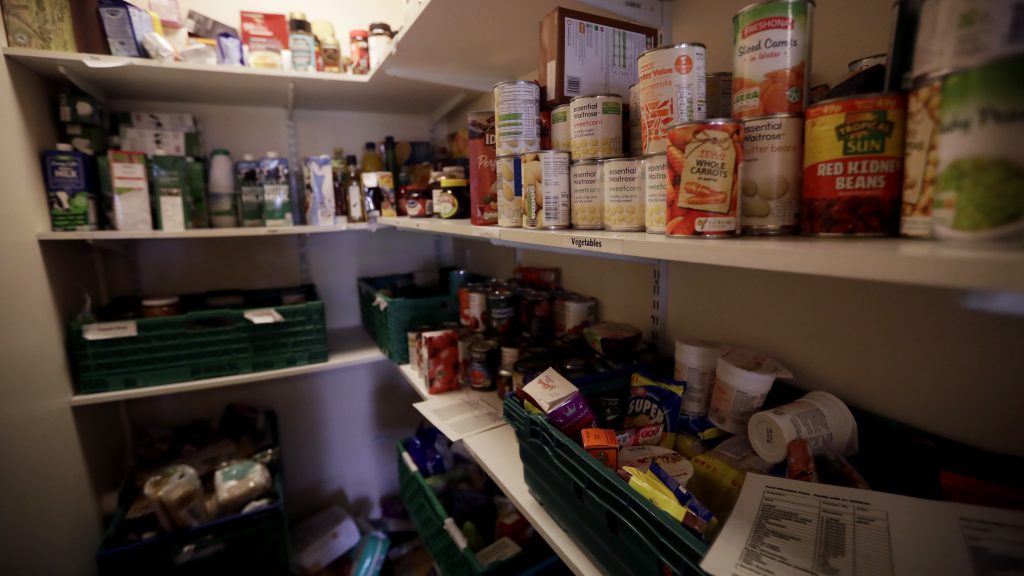
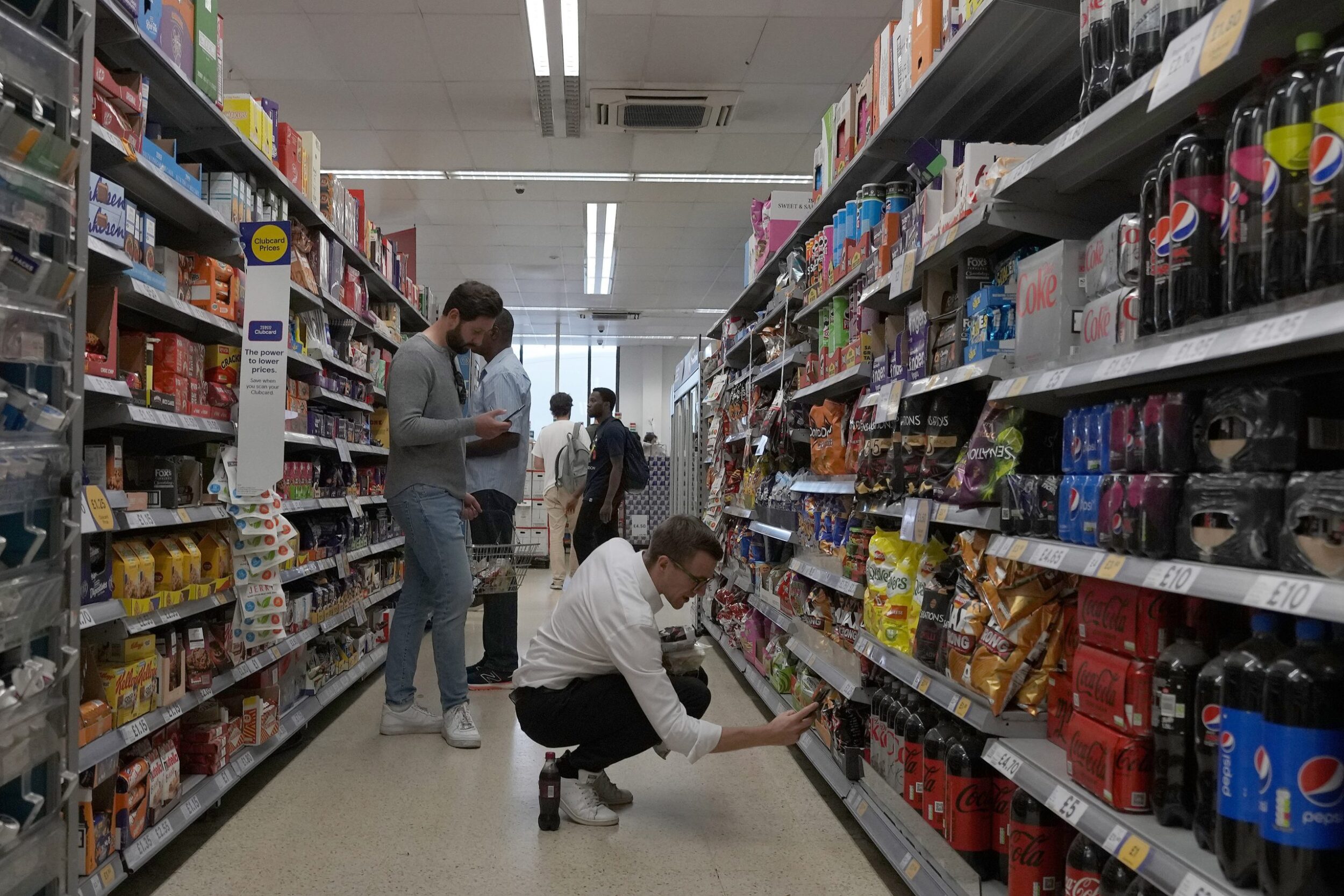
Shoppers check food prices in a supermarket in London on Wednesday. Food charities say that demand is in danger of outstripping supply as more people turn to food banks for support
SHARE:
The pressure on London food banks is so great that some are now contemplating the prospect of turning people away this winter.
That was the message of Heather Buckingham, Interim Head of Policy and Research at the Trussell Trust, when she addressed the London Assembly on Wednesday. The panel heard evidence from several organisations at the front line of the nation’s food security crisis.
What are the main causes of food insecurity in London?
Charities say that cuts to Universal Credit and the cost of living crisis have led to a dramatic spike in demand for food banks in London this year.
That’s supported by data from the Independent Food Aid Network (IFAN)’s survey in August 2022, which found that nearly 90% of food banks saw demand rise since April this year.
Services are already struggling to cope with rising demand. And the capacity of food banks is being stretched as more and more people turn to charitable organisations to help them feed their families.
The tip of the iceberg
In the last month, 5% of Londoners have visited a food bank. But data collected by The Food Foundation shows that 18% of Londoners qualify as food insecure.
That means that almost one in five adults in the capital have skipped a meal or gone a whole day without eating in the last month and surging demand at food banks is only the tip of the iceberg.
Can London food banks survive winter?
Some 87% of organisations reported supply issues since April, and one in five report having to reduce the size of their food parcels.
Some services now say they’re contemplating the prospect of turning people away if dramatic action isn’t taken.
Submitted Article
HeadlineSpiralling demand puts London food banks on the brink
Short HeadlineLondon food banks on the brink of collapse
Standfirst With food prices pushing inflation to a 40-year high, soaring demand for food banks is putting the capital's support system under enormous pressure.
Published Article
HeadlineSpiralling demand puts London food banks on the brink
Short HeadlineLondon food banks on the brink of collapse
Standfirst With food prices pushing inflation to a 40-year high, soaring demand for food banks is putting the capital's support system under enormous pressure.
The pressure on London food banks is so great that some are now contemplating the prospect of turning people away this winter.
That was the message of Heather Buckingham, Interim Head of Policy and Research at the Trussell Trust, when she addressed the London Assembly on Wednesday. The panel heard evidence from several organisations at the front line of the nation’s food security crisis.
What are the main causes of food insecurity in London?
Charities say that cuts to Universal Credit and the cost of living crisis have led to a dramatic spike in demand for food banks in London this year.
That’s supported by data from the Independent Food Aid Network (IFAN)’s survey in August 2022, which found that nearly 90% of food banks saw demand rise since April this year.
Services are already struggling to cope with rising demand. And the capacity of food banks is being stretched as more and more people turn to charitable organisations to help them feed their families.
The tip of the iceberg
In the last month, 5% of Londoners have visited a food bank. But data collected by The Food Foundation shows that 18% of Londoners qualify as food insecure.
That means that almost one in five adults in the capital have skipped a meal or gone a whole day without eating in the last month and surging demand at food banks is only the tip of the iceberg.
Can London food banks survive winter?
Some 87% of organisations reported supply issues since April, and one in five report having to reduce the size of their food parcels.
Some services now say they’re contemplating the prospect of turning people away if dramatic action isn’t taken.
The pressure on London food banks is so great that some are now contemplating the prospect of turning people away this winter.
That was the message of Heather Buckingham, Interim Head of Policy and Research at the Trussell Trust, when she addressed the London Assembly on Wednesday. The panel heard evidence from several organisations at the front line of the nation’s food security crisis.
What are the main causes of food insecurity in London?
Charities say that cuts to Universal Credit and the cost of living crisis have led to a dramatic spike in demand for food banks in London this year.
That’s supported by data from the Independent Food Aid Network (IFAN)’s survey in August 2022, which found that nearly 90% of food banks saw demand rise since April this year.
Services are already struggling to cope with rising demand. And the capacity of food banks is being stretched as more and more people turn to charitable organisations to help them feed their families.
The tip of the iceberg
In the last month, 5% of Londoners have visited a food bank. But data collected by The Food Foundation shows that 18% of Londoners qualify as food insecure.
That means that almost one in five adults in the capital have skipped a meal or gone a whole day without eating in the last month and surging demand at food banks is only the tip of the iceberg.
Can London food banks survive winter?
Some 87% of organisations reported supply issues since April, and one in five report having to reduce the size of their food parcels.
Some services now say they’re contemplating the prospect of turning people away if dramatic action isn’t taken.
A 2024 Freedom of Information request showed Bromley Council had £4.5 million invested in arms companies that year with £1.5 million reportedly linked to Israel.
Undercover officers raided three linked shops in Barking town centre, revealing how illicit tobacco is being hidden in walls, ceilings and nearby locations to evade detection.
More than 330,000 people across the UK sought support from the Stop It Now helpline in 2025 over concerns about their own or someone else’s online sexual behaviour towards children, according to new charity data. The anonymous service says contacts by phone, email and webchat rose significantly over the year.