Over 1000 refugees approached London homelessness services for help in January.
SHARE:
The number of refugees sleeping rough in London is far greater than government figures say, according to frontline homelessness workers.
London Councils said 311 refugees were sleeping rough in January 2024 after being required to leave Home Office accommodation once their asylum claims were closed. This is a 234% rise from the 93 refugees sleeping rough in September 2023.
The survey also found that over 1000 refugees approached London homelessness services for help in January following Home Office evictions.
But frontline shelters say that these figures are only part of the picture.
Mark Palframin, director of a homeless shelter in Hackney, said that London Councils “are not actually recording or passing on the information about how many people have been given refugee status and evicted from their accommodation.
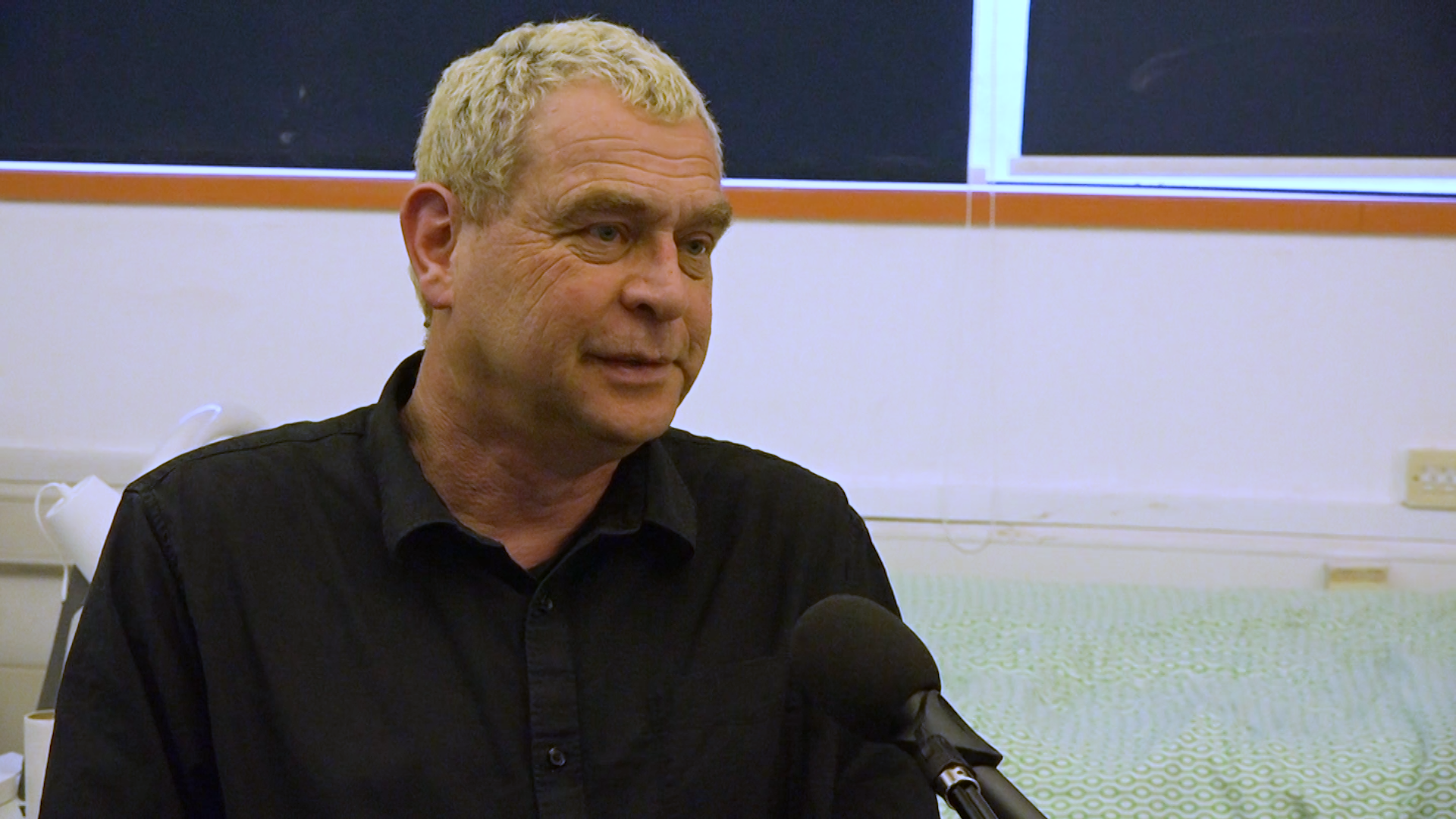
Mark Palframin is the director of a homelessness shelter in Hackney. Credit: Zheng Sun.
“So we know over 1000 [homeless refugees] asked for assistance, but we don’t know how many haven’t.
He added that over 80% of guests at his shelter are refugees. Alongside other shelter coordinators, he observed a spike in refugee homelessness in August 2023. A procedural change, introduced by the Home Office, resulted in refugees being evicted from hostels with seven days notice.
The change was reversed in December 2023. But, the number of refugees sleeping rough has been steadily rising since the administrative shift.
London Councils said, that their findings “are based on data from London boroughs about numbers of refugees sleeping rough who approached their housing services.”
An “avoidable” crisis?
Under current laws, people who receive refugee status have a 28-day window to find accommodation before being evicted from asylum hotels.
Leading homelessness and refugee charities said this timeframe is “contributing to further rough sleeping.” They have called on the home secretary to double the move-on period to 56 days.
In a letter addressed to James Cleverly, 16 charities – including Refugee Council, Shelter and St Mungo’s – said that the levels of refugee rough sleeping are “avoidable”.
“There are specific, targeted and easily implementable changes to policy and process which could avoid the human misery of forcing newly granted refugees onto the streets.”
The charities have also called on the government to “stagger large numbers of evictions from Home Office accommodation.”
Grace Williams, Labour leader of Waltham Forest Council and London Councils’ lead for asylum and refugees, added that “a longer move-on period for those leaving Home Office accommodation is crucial.”
A multi-agency approach
But, shelter workers say that instituting a longer move-in period is not enough.
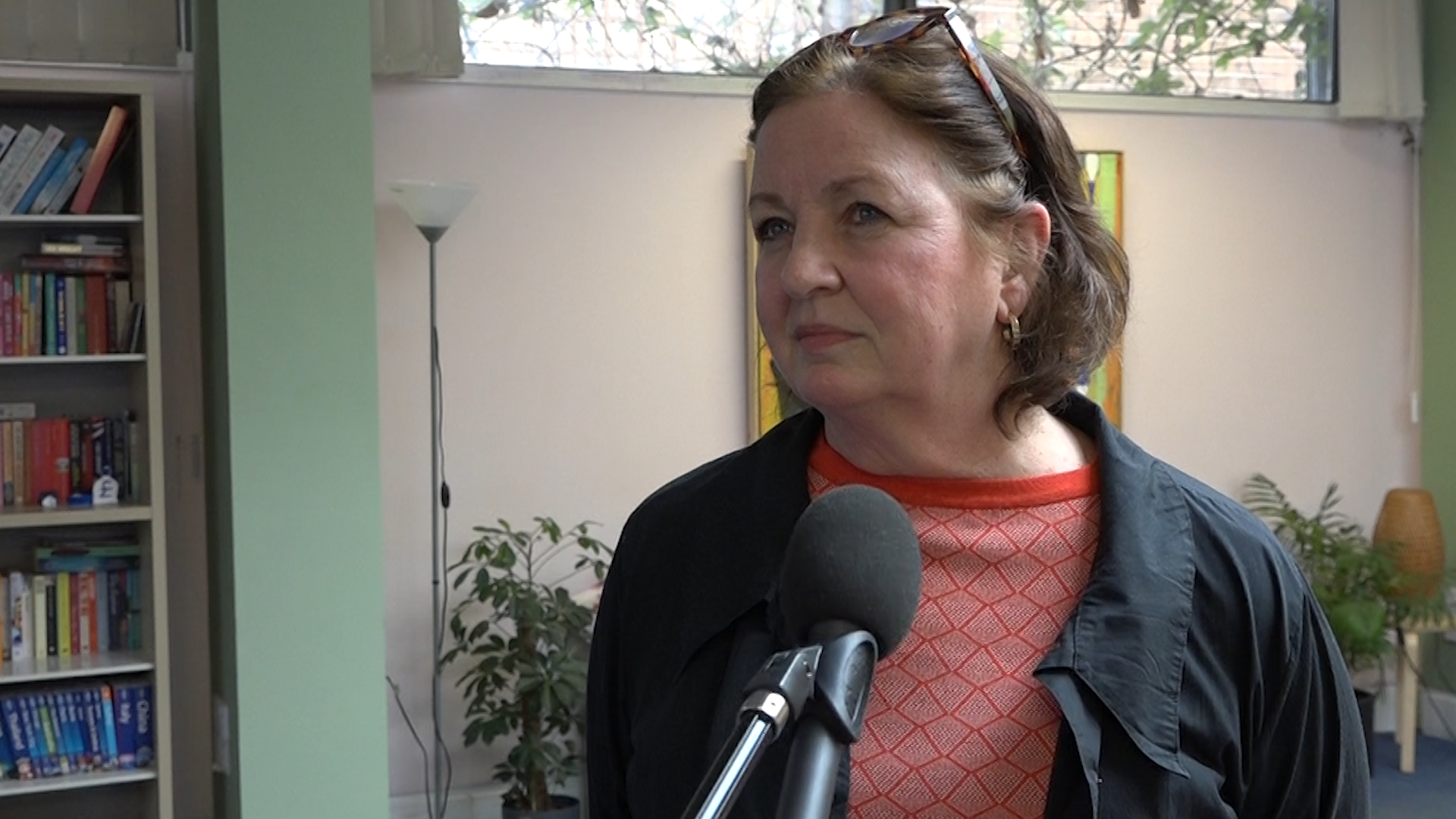
Colleen Sullivan is a homelessness shelter coordinator in Hackney. Credit: Zheng Sun.
Colleen Sullivan, a shelter coordinator in Hackney, said: “Refugees need help to move to the next phase of their life rather than just a longer time period.”
“London is an incredibly challenging housing market and, mostly because the system is pushing them out very quickly, they don’t have the language or resources.”
Charities and shelters have demanded that the government work with the third sector to create a comprehensive transition process for people whose asylum support is due to end.
Submitted Article
Headline
Short Headline
Standfirst
Published Article
HeadlineNumber of refugees sleeping rough greater than reported, shelter says
Short HeadlineRefugee homelessness greater than recorded
StandfirstLeading homelessness charities call for a longer move-on period for newly-recognised refugees to stem the tide of rough sleeping.
The number of refugees sleeping rough in London is far greater than government figures say, according to frontline homelessness workers.
London Councils said 311 refugees were sleeping rough in January 2024 after being required to leave Home Office accommodation once their asylum claims were closed. This is a 234% rise from the 93 refugees sleeping rough in September 2023.
The survey also found that over 1000 refugees approached London homelessness services for help in January following Home Office evictions.
But frontline shelters say that these figures are only part of the picture.
Mark Palframin, director of a homeless shelter in Hackney, said that London Councils “are not actually recording or passing on the information about how many people have been given refugee status and evicted from their accommodation.
Mark Palframin is the director of a homelessness shelter in Hackney. Credit: Zheng Sun.
“So we know over 1000 [homeless refugees] asked for assistance, but we don’t know how many haven’t.
He added that over 80% of guests at his shelter are refugees. Alongside other shelter coordinators, he observed a spike in refugee homelessness in August 2023. A procedural change, introduced by the Home Office, resulted in refugees being evicted from hostels with seven days notice.
The change was reversed in December 2023. But, the number of refugees sleeping rough has been steadily rising since the administrative shift.
London Councils said, that their findings “are based on data from London boroughs about numbers of refugees sleeping rough who approached their housing services.”
An “avoidable” crisis?
Under current laws, people who receive refugee status have a 28-day window to find accommodation before being evicted from asylum hotels.
Leading homelessness and refugee charities said this timeframe is “contributing to further rough sleeping.” They have called on the home secretary to double the move-on period to 56 days.
In a letter addressed to James Cleverly, 16 charities – including Refugee Council, Shelter and St Mungo’s – said that the levels of refugee rough sleeping are “avoidable”.
“There are specific, targeted and easily implementable changes to policy and process which could avoid the human misery of forcing newly granted refugees onto the streets.”
The charities have also called on the government to “stagger large numbers of evictions from Home Office accommodation.”
Grace Williams, Labour leader of Waltham Forest Council and London Councils’ lead for asylum and refugees, added that “a longer move-on period for those leaving Home Office accommodation is crucial.”
A multi-agency approach
But, shelter workers say that instituting a longer move-in period is not enough.
Colleen Sullivan is a homelessness shelter coordinator in Hackney. Credit: Zheng Sun.
Colleen Sullivan, a shelter coordinator in Hackney, said: “Refugees need help to move to the next phase of their life rather than just a longer time period.”
“London is an incredibly challenging housing market and, mostly because the system is pushing them out very quickly, they don’t have the language or resources.”
Charities and shelters have demanded that the government work with the third sector to create a comprehensive transition process for people whose asylum support is due to end.
A 2024 Freedom of Information request showed Bromley Council had £4.5 million invested in arms companies that year with £1.5 million reportedly linked to Israel.
Undercover officers raided three linked shops in Barking town centre, revealing how illicit tobacco is being hidden in walls, ceilings and nearby locations to evade detection.
More than 330,000 people across the UK sought support from the Stop It Now helpline in 2025 over concerns about their own or someone else’s online sexual behaviour towards children, according to new charity data. The anonymous service says contacts by phone, email and webchat rose significantly over the year.