Jeremy Corbyn: Government’s NHS Funding Plans are ‘Disgusting and Disgraceful’
Campaigners, NHS workers and MPs gathered outside The Department of Health and Public Services on Tuesday to warn that Private Finance Initiative (PFI) funding is quietly being revived in Rachel Reeves’ upcoming Budget.
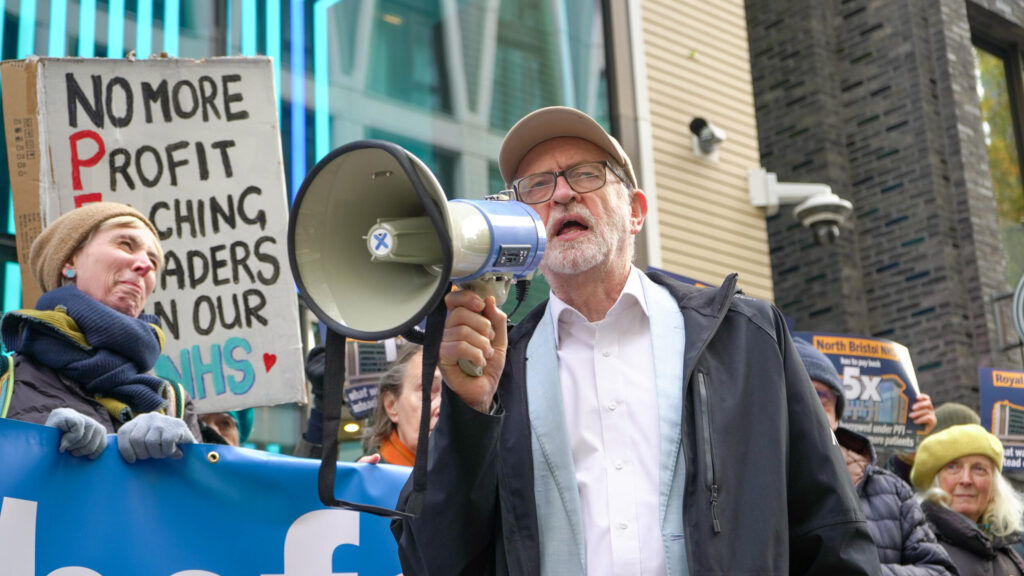
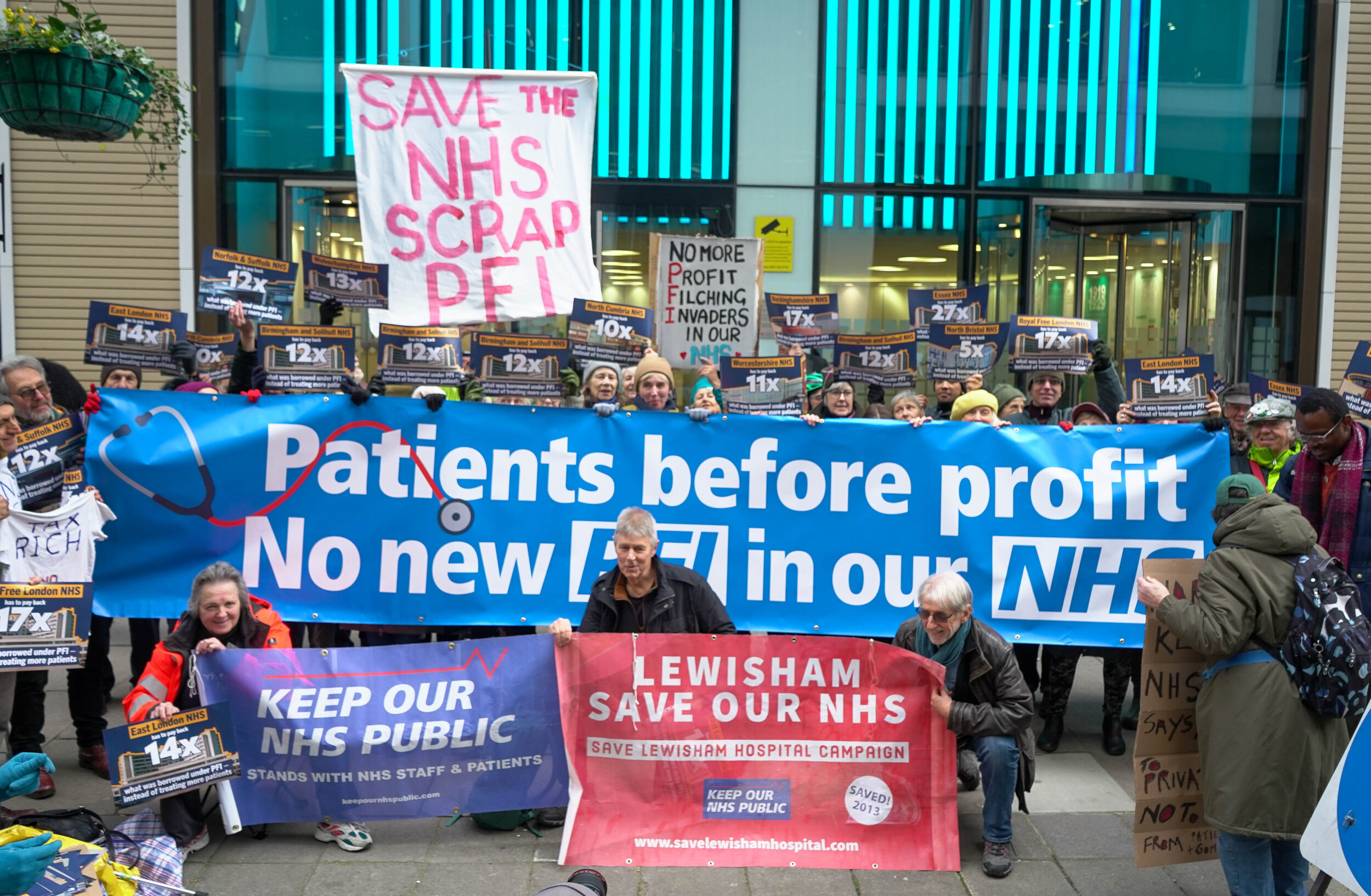
“NO NEW PFI IN OUR NHS”, Campaigners outside of the Department of Health and Public Services implore the government to reconsider reported plans to employ private financing models in the health service.
The protest, organised by campaign group We Own it, drew an impassioned crowd of NHS workers and concerned Londoners.
They stood alongside multiple government MPs, including former Labour leader Jeremy Corbyn, who spoke out against the use of private finance to fund NHS developments.
Protestors outside the Department of Health and Social Care represented over 10 different NHS trusts
Loans from private finance have been used across the London NHS trusts before to support developments.
Critics of the schemes say the cost of repayments far outweigh the investment, pointing to the Royal Free London Trust, which they claim will have to pay back 17 times what it originally received.
London’s biggest hospitals face some of the longest redevelopment delays in the country, and decisions on how to fund those rebuilds are now at the centre of this growing political dispute.
The redevelopments of St Mary’s in Paddington, Charing Cross in Hammersmith & Fulham, St Helier in Sutton and Whipps Cross in Waltham Forest have all been delayed significantly.
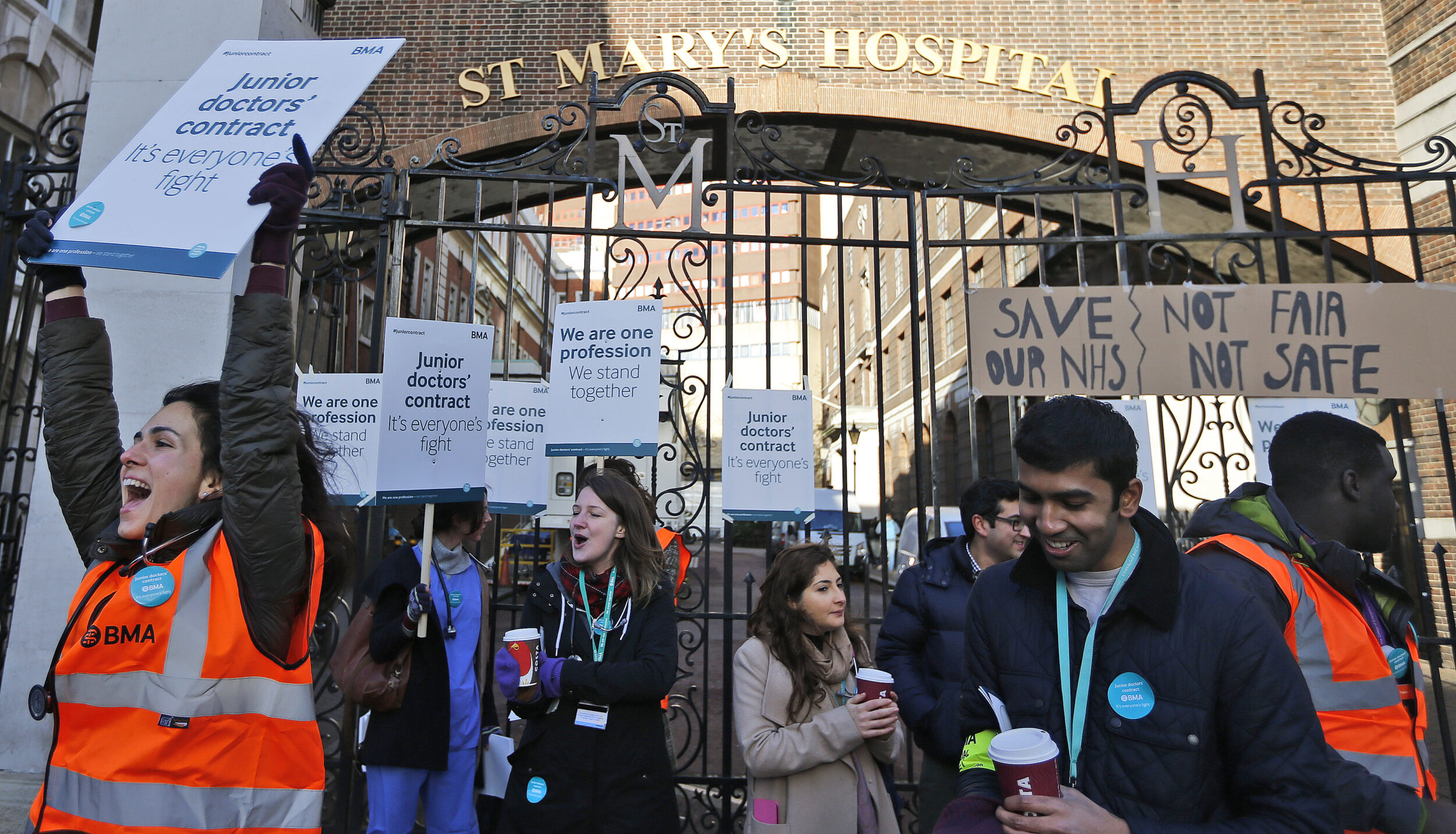
Protestors outside St Mary’s Hospital – (AP Photo/Frank Augstein)
Imperial College Hospital NHS trust, described St Mary’s as facing “serious risk of failure” without major reconstruction.
London also accounts for the highest share of PFI costs, with figures from HM Treasury and Infrastructure and Projects Authority summary data placing them at around £2.8 billion.
The question of how to fund these projects, and whether private finance will form part of the plan, is becoming urgent for Londoners who rely on these services daily.
So, what actually is PFI?
PFI was introduced in 1992 by Prime Minister John Major to build and maintain new infrastructure, such as schools, hospitals, and roads, without immediate upfront costs to the taxpayer.
It initiates a long-term contract between government trusts and a company specially set up for the project.
The initiative was part of a broader programme of privatisation that was intended to increase the efficiency and efficacy of public spending.
These private companies financed and constructed the projects, and NHS trusts agreed to repay them over 25 to 30-year periods.
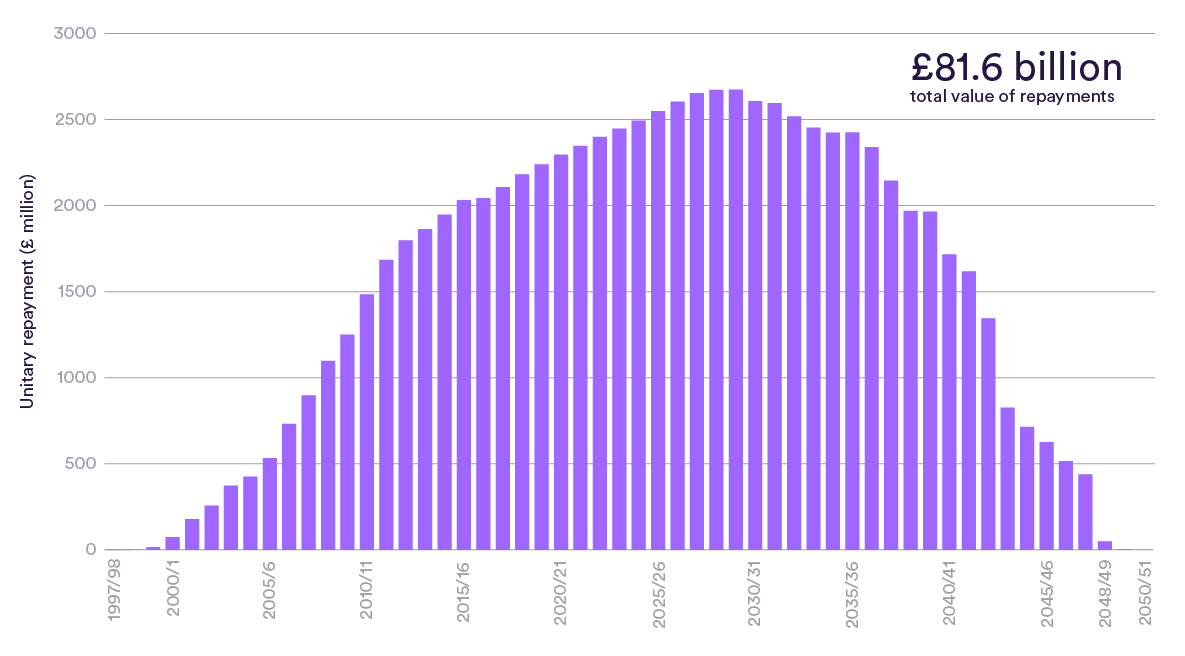
But repayments ended up vastly exceeding the original value of the hospitals.
Trusts were tied into rigid, long-term maintenance contracts and high annual fees that still drain budgets today.
Labour MP and GP Simon Opher told City News,
“We save a tiny bit of money now, but we get caned for it in the future.”
HM Treasury and Infrastructure and Projects Authority, Private Finance Initiative and Private Finance 2 projects: 2016 summary data – Nuffield Trust
What does the Chancellor say about PFI?
Rachel Reeves has ruled out bringing back the abolished “classic PFI”.
In a report by the Committee of Public Accounts, the treasury says they have “learned its lessons, and is putting in place mechanisms that will ensure taxpayers get value for money when using the more expensive private finance route”.
She has confirmed the Treasury is exploring “new partnership models” with private investors to help fund NHS infrastructure.
Chancellor Rachel Reeves – (AP Photo/Jon Super)
After years of capital underinvestment and a repair backlog worth tens of billions, private money may be needed to fill the gap.
Wes Streeting added,
“I am very sympathetic to the argument that we should try and lever in private finance”
Amyas Morse, head of The National Audit Office (NAO) says “Our examination of PFI hospital contracts indicates that most are well-managed and evidence indicates they are achieving the value for money expected.”
Tuesday’s protest
This pressure spilled out on the streets on Tuesday outside the Department of Health and Social Care.
Jeremy Corbyn, the Green Party’s Adrian Ramsay, and Welsh Labour MP Steve Witherden were in attendance.
They addressed the crowd and criticised the return of private finance into the NHS, warning that it risks repeating the same long-term financial burdens PFI created in the 1990s and 2000s.
Corbyn told us “about 15% of every hospital expenditure goes toward PFI every year… and this government is planning to resurrect these disgusting and disgraceful PFIs”
Mr Opher said they fear the Chancellor’s “partnership model” for hospital investment is “rotten” PFI under a different name.
Rachel Reeves is set to face tough questions on the future of the NHS’s funding ahead of the Autumn Budget.
What happens now?
The Autumn budget is due to be released on the 26 November. It will determine how London’s hospitals can be rebuilt, and whether PFI becomes part of that plan.
Campaigners and MP’s say they will continue to oppose any return to long-term private debt, while some argue London cannot afford to wait another decade for safe, modern facilities.
Submitted Article
Headline
Short Headline
Standfirst
Published Article
HeadlineJeremy Corbyn: Government’s NHS Funding Plans are ‘Disgusting and Disgraceful’
Short HeadlineCorbyn Calls Potential NHS Plans 'Disgusting and Disgraceful'
StandfirstCampaigners, NHS workers and MPs gathered outside The Department of Health and Public Services on Tuesday to warn that Private Finance Initiative (PFI) funding is quietly being revived in Rachel Reeves’ upcoming Budget.
“NO NEW PFI IN OUR NHS”, Campaigners outside of the Department of Health and Public Services implore the government to reconsider reported plans to employ private financing models in the health service.
The protest, organised by campaign group We Own it, drew an impassioned crowd of NHS workers and concerned Londoners.
They stood alongside multiple government MPs, including former Labour leader Jeremy Corbyn, who spoke out against the use of private finance to fund NHS developments.
Protestors outside the Department of Health and Social Care represented over 10 different NHS trusts
Loans from private finance have been used across the London NHS trusts before to support developments.
Critics of the schemes say the cost of repayments far outweigh the investment, pointing to the Royal Free London Trust, which they claim will have to pay back 17 times what it originally received.
London’s biggest hospitals face some of the longest redevelopment delays in the country, and decisions on how to fund those rebuilds are now at the centre of this growing political dispute.
The redevelopments of St Mary’s in Paddington, Charing Cross in Hammersmith & Fulham, St Helier in Sutton and Whipps Cross in Waltham Forest have all been delayed significantly.
Protestors outside St Mary’s Hospital – (AP Photo/Frank Augstein)
Imperial College Hospital NHS trust, described St Mary’s as facing “serious risk of failure” without major reconstruction.
London also accounts for the highest share of PFI costs, with figures from HM Treasury and Infrastructure and Projects Authority summary data placing them at around £2.8 billion.
The question of how to fund these projects, and whether private finance will form part of the plan, is becoming urgent for Londoners who rely on these services daily.
So, what actually is PFI?
PFI was introduced in 1992 by Prime Minister John Major to build and maintain new infrastructure, such as schools, hospitals, and roads, without immediate upfront costs to the taxpayer.
It initiates a long-term contract between government trusts and a company specially set up for the project.
The initiative was part of a broader programme of privatisation that was intended to increase the efficiency and efficacy of public spending.
These private companies financed and constructed the projects, and NHS trusts agreed to repay them over 25 to 30-year periods.
But repayments ended up vastly exceeding the original value of the hospitals.
Trusts were tied into rigid, long-term maintenance contracts and high annual fees that still drain budgets today.
Labour MP and GP Simon Opher told City News,
“We save a tiny bit of money now, but we get caned for it in the future.”
HM Treasury and Infrastructure and Projects Authority, Private Finance Initiative and Private Finance 2 projects: 2016 summary data – Nuffield Trust
What does the Chancellor say about PFI?
Rachel Reeves has ruled out bringing back the abolished “classic PFI”.
In a report by the Committee of Public Accounts, the treasury says they have “learned its lessons, and is putting in place mechanisms that will ensure taxpayers get value for money when using the more expensive private finance route”.
She has confirmed the Treasury is exploring “new partnership models” with private investors to help fund NHS infrastructure.
Chancellor Rachel Reeves – (AP Photo/Jon Super)
After years of capital underinvestment and a repair backlog worth tens of billions, private money may be needed to fill the gap.
Wes Streeting added,
“I am very sympathetic to the argument that we should try and lever in private finance”
Amyas Morse, head of The National Audit Office (NAO) says “Our examination of PFI hospital contracts indicates that most are well-managed and evidence indicates they are achieving the value for money expected.”
Tuesday’s protest
This pressure spilled out on the streets on Tuesday outside the Department of Health and Social Care.
Jeremy Corbyn, the Green Party’s Adrian Ramsay, and Welsh Labour MP Steve Witherden were in attendance.
They addressed the crowd and criticised the return of private finance into the NHS, warning that it risks repeating the same long-term financial burdens PFI created in the 1990s and 2000s.
Corbyn told us “about 15% of every hospital expenditure goes toward PFI every year… and this government is planning to resurrect these disgusting and disgraceful PFIs”
Mr Opher said they fear the Chancellor’s “partnership model” for hospital investment is “rotten” PFI under a different name.
Rachel Reeves is set to face tough questions on the future of the NHS’s funding ahead of the Autumn Budget.
What happens now?
The Autumn budget is due to be released on the 26 November. It will determine how London’s hospitals can be rebuilt, and whether PFI becomes part of that plan.
Campaigners and MP’s say they will continue to oppose any return to long-term private debt, while some argue London cannot afford to wait another decade for safe, modern facilities.
A 2024 Freedom of Information request showed Bromley Council had £4.5 million invested in arms companies that year with £1.5 million reportedly linked to Israel.
Undercover officers raided three linked shops in Barking town centre, revealing how illicit tobacco is being hidden in walls, ceilings and nearby locations to evade detection.
More than 330,000 people across the UK sought support from the Stop It Now helpline in 2025 over concerns about their own or someone else’s online sexual behaviour towards children, according to new charity data. The anonymous service says contacts by phone, email and webchat rose significantly over the year.