Rev. Jesse L Jackson has died aged 84 at home and surrounded by family, his daughter has said.
Protégé of Martin Luther King Jr, Jackson led the civil rights movement for decades following King’s assassination, as well as being a two time presidential candidate.
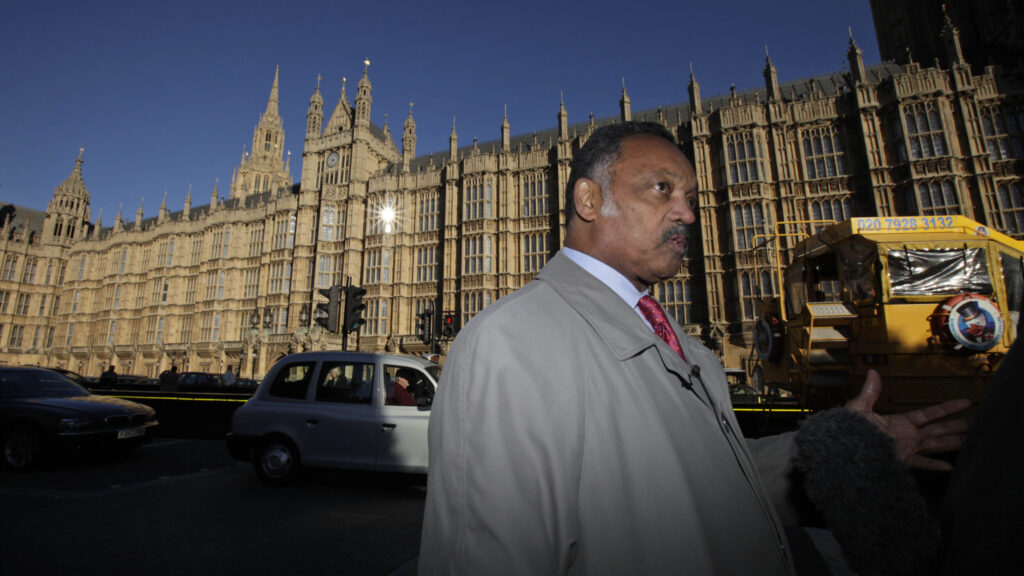
Remembering his legacy, here’s three impactful visits made by Jesse Jackson to London.
Jesse Jackson Visits Brixton 1983
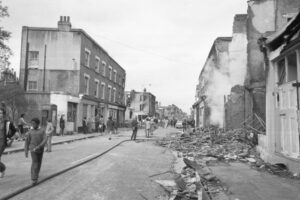
In September of 1983 while visiting London for the day, Jackson made a 45 minute walking tour of Brixton’s streets with residents. This was two years after the Brixton riots, which broke out as a result of the aggressive racial discrimination of the black community by white police officers.
Passersby view the wrecked houses in Railton Road, Brixton, London, April 12, 1981, following a six hour riot. (AP Photo/Bob Dear)
During his visit he met at Lambeth town hall with community leaders, stating at the end ”we focus on the feet of government, not the heads of government.”
Anti-apartheid rally 1985
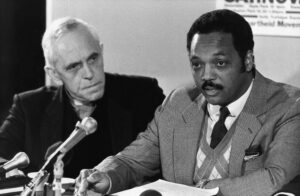
Pictured above: Rev. Jesse Jackson beside Bishop Trevor Huddleston of anti-apartheid movement. November 1, 1985. (AP Photo/Press Association)
In November 1985 Jackson led an anti apartheid rally calling on the British Government to impose sanctions against South Africa. He was a figurehead of the rally alongside the President of African National Congress, Oliver Tambo and leader of the South West Africa People’s Organisation, Shapua Kaukungua.
The rally took form of three separate marches on Trafalgar Square with over 100,000 people participating to ‘March Against Apartheid’.
Jackson visits anti-war demonstration in Hyde Park
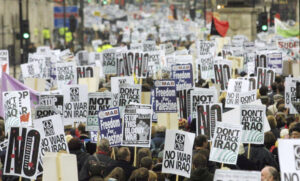
Just over 23 years ago, in February 2003, Jackson took part in a march against the Iraq War in London’s Hyde Park. Between one and two million people marched, making it the largest political demonstration in UK history. Dozens of anti-war marches took place in cities around the world on the same day, the 15th of February.
Jackson attended and spoke, telling protestors to “turn up the heat” against the war.
Saturday, Feb. 15, 2003 protesters during a march to Hyde Park. (AP Photo/Alastair Grant, File)
Notable figures such as Donald Trump, Bernice King (daughter of Martin Luther King) and Kamala Harris have been paying tribute to Jackson across social media today after the news of his death. Deputy Prime Minister, David Lammy, wrote on X to say “may his legacy live on.”
Submitted Article
Headline
Short Headline
Standfirst
Published Article
HeadlineThe London legacy of civil rights activist Jesse Jackson
Short Headline
StandfirstA brief history of some of Jackson's impactful London visits.
Rev. Jesse L Jackson has died aged 84 at home and surrounded by family, his daughter has said.
Protégé of Martin Luther King Jr, Jackson led the civil rights movement for decades following King’s assassination, as well as being a two time presidential candidate.
Remembering his legacy, here’s three impactful visits made by Jesse Jackson to London.
Jesse Jackson Visits Brixton 1983
In September of 1983 while visiting London for the day, Jackson made a 45 minute walking tour of Brixton’s streets with residents. This was two years after the Brixton riots, which broke out as a result of the aggressive racial discrimination of the black community by white police officers.
Passersby view the wrecked houses in Railton Road, Brixton, London, April 12, 1981, following a six hour riot. (AP Photo/Bob Dear)
During his visit he met at Lambeth town hall with community leaders, stating at the end ”we focus on the feet of government, not the heads of government.”
Anti-apartheid rally 1985
Pictured above: Rev. Jesse Jackson beside Bishop Trevor Huddleston of anti-apartheid movement. November 1, 1985. (AP Photo/Press Association)
In November 1985 Jackson led an anti apartheid rally calling on the British Government to impose sanctions against South Africa. He was a figurehead of the rally alongside the President of African National Congress, Oliver Tambo and leader of the South West Africa People’s Organisation, Shapua Kaukungua.
The rally took form of three separate marches on Trafalgar Square with over 100,000 people participating to ‘March Against Apartheid’.
Jackson visits anti-war demonstration in Hyde Park
Just over 23 years ago, in February 2003, Jackson took part in a march against the Iraq War in London’s Hyde Park. Between one and two million people marched, making it the largest political demonstration in UK history. Dozens of anti-war marches took place in cities around the world on the same day, the 15th of February.
Jackson attended and spoke, telling protestors to “turn up the heat” against the war.
Saturday, Feb. 15, 2003 protesters during a march to Hyde Park. (AP Photo/Alastair Grant, File)
Notable figures such as Donald Trump, Bernice King (daughter of Martin Luther King) and Kamala Harris have been paying tribute to Jackson across social media today after the news of his death. Deputy Prime Minister, David Lammy, wrote on X to say “may his legacy live on.”
A 2024 Freedom of Information request showed Bromley Council had £4.5 million invested in arms companies that year with £1.5 million reportedly linked to Israel.
Undercover officers raided three linked shops in Barking town centre, revealing how illicit tobacco is being hidden in walls, ceilings and nearby locations to evade detection.
More than 330,000 people across the UK sought support from the Stop It Now helpline in 2025 over concerns about their own or someone else’s online sexual behaviour towards children, according to new charity data. The anonymous service says contacts by phone, email and webchat rose significantly over the year.