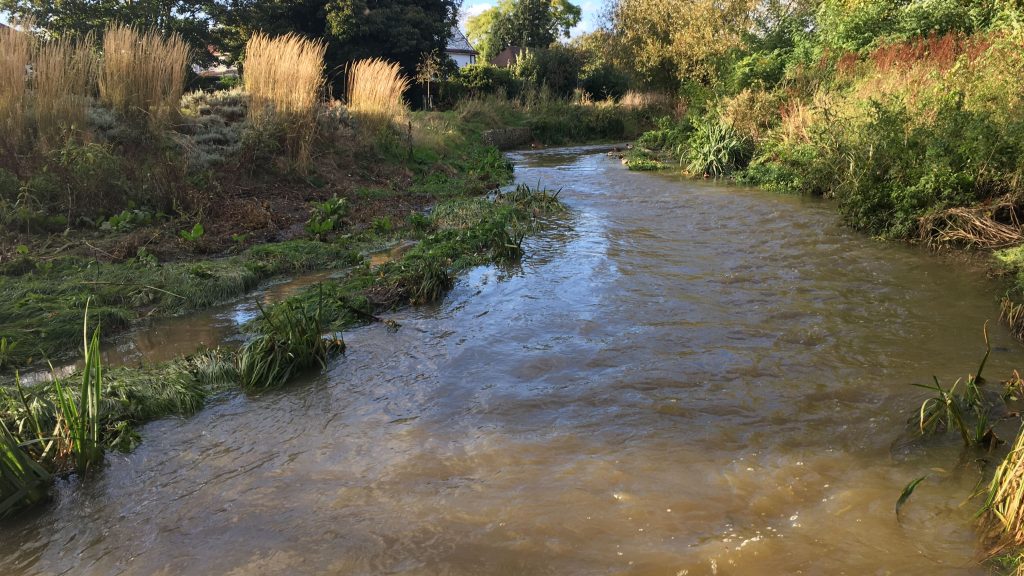
Silk Stream, which runs along the Barnet/Harrow border, regularly floods and causes significant damage to local homes and businesses.
SHARE:
Barnet and Harrow Councils have been awarded £6m to improve natural flood defences around the Silk Stream, which currently threatens over 1000 homes.
The Silk Stream Flood and Resilience Innovation project (SSFRI) will focus on nature-based defences to tackle flood risk. The project plans to develop new wetlands, increase natural drainage via vegetation, and create rain gardens.
The Silk Stream project will create natural flood defences across large areas of Harrow and Barnet. Credit: Thames 21.
More than 1000 homes are currently deemed at serious risk of regular flooding from the Silk Stream.
Flooding problems in Barnet and Harrow have worsened in recent years due to increased rainfall linked to climate change, and urban developments on previously green spaces. In July 2021, homes and businesses in the area suffered significant flood damage.
A wonderful video to show the extent of flooding we experienced at our North West London basement flat last night. pic.twitter.com/UanyuUs77H
Environmental charity Thames 21 explains, “As the catchment has become increasingly urbanised with natural vegetation replaced by hard surfaces, water is less able to soak into the ground and during intense rainfall events water levels can rise rapidly, causing flooding.”
London is susceptible to three main types of flooding:
Tidal flooding – due to surges in the Thames Estuary
River flooding – heavy rainfall can cause rivers and streams to burst their banks
Surface water flooding – when heavy rainfall causes flash floods, particularly affecting highly built-up urban areas
Scientists warn the capital will soon experience more flooding of all types, due to rising sea levels and increasingly common extreme weather events.
The Silk Stream defences will not be complete until 2027, with financing provided by the UK government’s fund for Flood & Coastal Resilience Innovation.
Barnet and Harrow Councils are inviting the local community to give feedback on the project via an online survey, open until 31 October.
Submitted Article
Headline
Short Headline
Standfirst
Published Article
HeadlineBarnet and Harrow awarded £6m to improve flood defences
Short HeadlineMulti-million pound flood defences for Barnet and Harrow
StandfirstCouncils jointly granted £6m for seven-year environmental project to protect thousands of families from flooding.
Barnet and Harrow Councils have been awarded £6m to improve natural flood defences around the Silk Stream, which currently threatens over 1000 homes.
The Silk Stream Flood and Resilience Innovation project (SSFRI) will focus on nature-based defences to tackle flood risk. The project plans to develop new wetlands, increase natural drainage via vegetation, and create rain gardens.
The Silk Stream project will create natural flood defences across large areas of Harrow and Barnet. Credit: Thames 21.
More than 1000 homes are currently deemed at serious risk of regular flooding from the Silk Stream.
Flooding problems in Barnet and Harrow have worsened in recent years due to increased rainfall linked to climate change, and urban developments on previously green spaces. In July 2021, homes and businesses in the area suffered significant flood damage.
A wonderful video to show the extent of flooding we experienced at our North West London basement flat last night. pic.twitter.com/UanyuUs77H
Environmental charity Thames 21 explains, “As the catchment has become increasingly urbanised with natural vegetation replaced by hard surfaces, water is less able to soak into the ground and during intense rainfall events water levels can rise rapidly, causing flooding.”
London is susceptible to three main types of flooding:
Tidal flooding – due to surges in the Thames Estuary
River flooding – heavy rainfall can cause rivers and streams to burst their banks
Surface water flooding – when heavy rainfall causes flash floods, particularly affecting highly built-up urban areas
Scientists warn the capital will soon experience more flooding of all types, due to rising sea levels and increasingly common extreme weather events.
The Silk Stream defences will not be complete until 2027, with financing provided by the UK government’s fund for Flood & Coastal Resilience Innovation.
Barnet and Harrow Councils are inviting the local community to give feedback on the project via an online survey, open until 31 October.
Internationally renowned for transforming her life into confessional art, the exhibition offers an intimate and unapologetic glimpse into one of Britain’s most influential contemporary artists.
As e-bike riders weave through London’s busiest junctions, red lights are increasingly treated as optional. One software engineer says the problem may be baked into how hire firms charge users