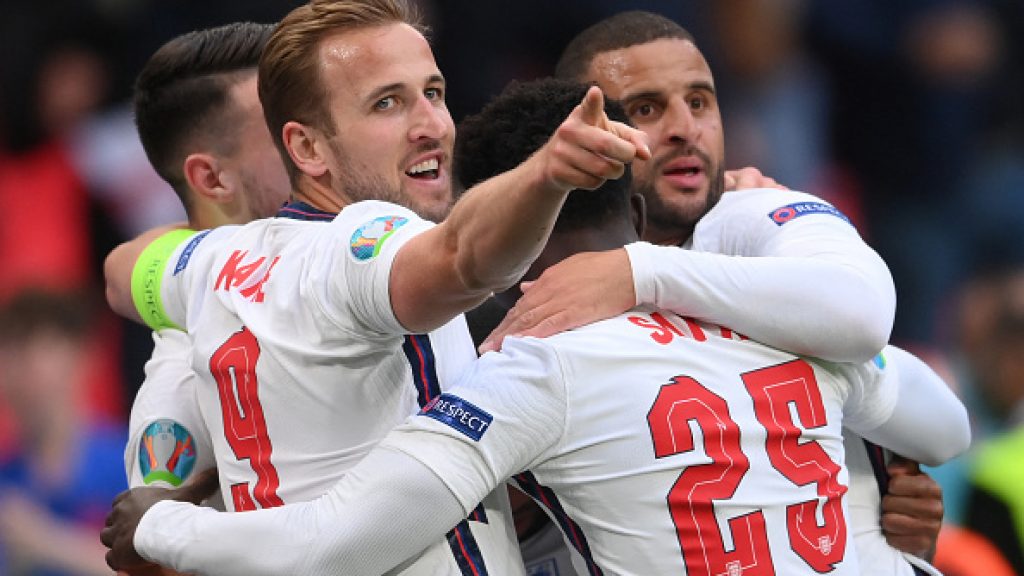
£9 million is estimated to have been spent on food and drink by visitors to London and Glasgow.
SHARE:
England reaching the UEFA Euro 2020 final has been called ‘a gift’ for UK economy and local sports clubs.
Deutsche Bank predicts £40 million will have been spent on accommodation by visitors attending matches in London and Glasgow.
An estimated £9 million will have been spent on food and drink over the same period.
A combined surge in spending that will give a £90 million boost to the economy, according to the German bank.
Chancellor Rishi Sunak has been more cautious, but expects to see a “bounce” in consumer confidence because of the tournament.
This feeling has been echoed by the British Beer & Pub Association, which predicts 13 million extra pints will be enjoyed on Sunday – an uptick in drinking that they believe will see £720 million spent in pubs during the championship.
They say this is a £104 million increase on normal spending rates in the summer.
But Ian Cass, from the Forum of Private Business argues this figure would have been a “lot higher” if restrictions had been lifted in June 21st.
Fans watching England beat Ukraine 4-0 in the Quarter-finals of Euro 2020. (credit: Getty images)
Is this increase in spending expected?
History shows us that England doing well in major sporting events often leads to a short-term boom in spending.
In 2018, a study by Barclaycard found that spending in pubs was 16.8% higher around the World Cup than it was during the same time the previous year.
The 2012 London Olympics generated £134 million in the summer of the games alone.
Marilyn Smith, head of Actonians Women’s Cricket team says, events like the Euros help bring families into the club:
“England doing so well and the loosening of restrictions, means people are coming to the club to watch the game. It’s been great for us”.
“It’s also inspired so many to take up a sport and give it a go. It remains to be seen whether this enthusiasm will remain, but I’m optimistic.”
Wingrave First vs Stoke Mandeville First FC in April 2021 (credit: Getty Images).
What could England’s success do for engagement in local sport?
It’s unclear whether England reaching the Euro 2020 will “inspire a generation”.
However, it seems clear that a feel good factor around English sports teams does create a short-term surge in sports participation.
Sport England found that the number of adults playing sport at least once a week had increased by 750,000 from between 2011 and 2012.
They also found that 5.5m people aged 16 and over were playing sport more than once a week in 2012.
However, the same grassroots body found that regular participation among 16 to 25-year-olds in sport, had declined by 53,000 in 2013. This meant the overall figure fell to 3.74 million.
Most worrying for football, the Active People found that the number of 16-year-olds and over playing football has gone down from 2.02 million to 1.84 million since 2005, when the survey began.
The pandemic blighted young people’s ability to get involved in sport this year and last.
William Fenwick, a primary school sports teacher has said it’s up schools, parents and society more generally to make sure “youth engagement in sport recovers from the pandemic”.
He believes that while the Euros represents a good opportunity to do this, a long-term commitment to sport from the Government is badly needed.
Submitted Article
Headline
Short Headline
Standfirst
Published Article
HeadlineEngland Euros glory ‘a gift’ for local economy and sport
Short Headline England Euros glory ‘a gift’ for local sport
StandfirstEngland reaching the Euro 2020 final and the loosening of restrictions could result in economic and social 'bounce'
England reaching the UEFA Euro 2020 final has been called ‘a gift’ for UK economy and local sports clubs.
Deutsche Bank predicts £40 million will have been spent on accommodation by visitors attending matches in London and Glasgow.
An estimated £9 million will have been spent on food and drink over the same period.
A combined surge in spending that will give a £90 million boost to the economy, according to the German bank.
Chancellor Rishi Sunak has been more cautious, but expects to see a “bounce” in consumer confidence because of the tournament.
This feeling has been echoed by the British Beer & Pub Association, which predicts 13 million extra pints will be enjoyed on Sunday – an uptick in drinking that they believe will see £720 million spent in pubs during the championship.
They say this is a £104 million increase on normal spending rates in the summer.
But Ian Cass, from the Forum of Private Business argues this figure would have been a “lot higher” if restrictions had been lifted in June 21st.
Fans watching England beat Ukraine 4-0 in the Quarter-finals of Euro 2020. (credit: Getty images)
Is this increase in spending expected?
History shows us that England doing well in major sporting events often leads to a short-term boom in spending.
In 2018, a study by Barclaycard found that spending in pubs was 16.8% higher around the World Cup than it was during the same time the previous year.
The 2012 London Olympics generated £134 million in the summer of the games alone.
Marilyn Smith, head of Actonians Women’s Cricket team says, events like the Euros help bring families into the club:
“England doing so well and the loosening of restrictions, means people are coming to the club to watch the game. It’s been great for us”.
“It’s also inspired so many to take up a sport and give it a go. It remains to be seen whether this enthusiasm will remain, but I’m optimistic.”
Wingrave First vs Stoke Mandeville First FC in April 2021 (credit: Getty Images).
What could England’s success do for engagement in local sport?
It’s unclear whether England reaching the Euro 2020 will “inspire a generation”.
However, it seems clear that a feel good factor around English sports teams does create a short-term surge in sports participation.
Sport England found that the number of adults playing sport at least once a week had increased by 750,000 from between 2011 and 2012.
They also found that 5.5m people aged 16 and over were playing sport more than once a week in 2012.
However, the same grassroots body found that regular participation among 16 to 25-year-olds in sport, had declined by 53,000 in 2013. This meant the overall figure fell to 3.74 million.
Most worrying for football, the Active People found that the number of 16-year-olds and over playing football has gone down from 2.02 million to 1.84 million since 2005, when the survey began.
The pandemic blighted young people’s ability to get involved in sport this year and last.
William Fenwick, a primary school sports teacher has said it’s up schools, parents and society more generally to make sure “youth engagement in sport recovers from the pandemic”.
He believes that while the Euros represents a good opportunity to do this, a long-term commitment to sport from the Government is badly needed.