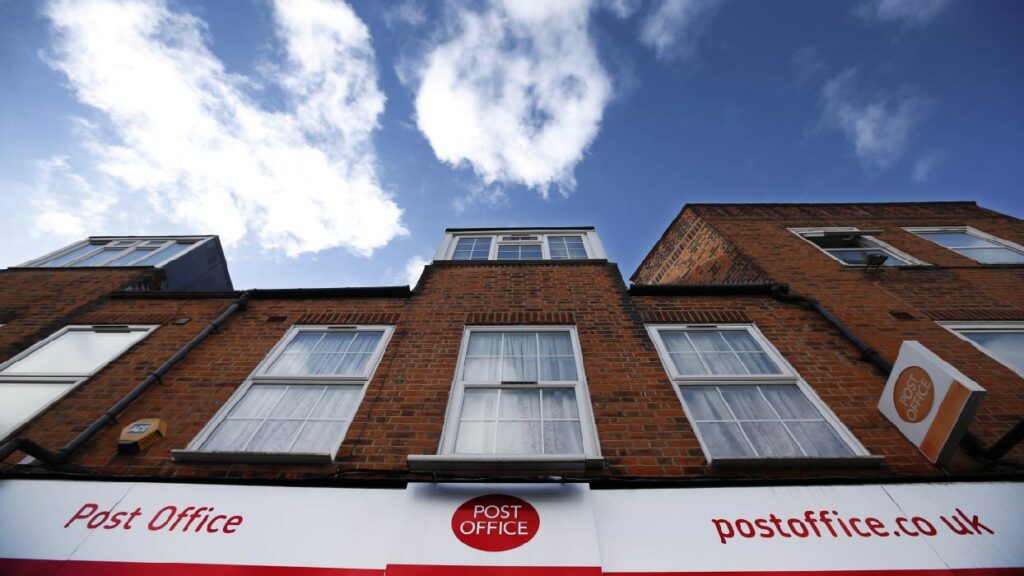
As the Post Office announces the potential closure of 32 post offices branches in London, we examine whether this is a move that will have serious consequences for those with accessibility issues in the capital.
The digital age.
The risk of lower post office presence on our high streets can pose the greatest threat to older residents, who are much more likely to lack the digital skills with which to navigate daily tasks that are finding themselves increasingly moved online.
Age UK data from 2024 found that 1 in 3 people over the age of 65 lack the basic skills to use the internet successfully in daily life.
A local post office can offer someone the opportunity to send mail, collect pension payments and pay bills amongst other face-to-face services. This is a vital physical space for those that struggle to engage with the digital world, and the erosion of these facilities threatens to leave the older generation behind.
Age UK’s Campaign’s Manager John McGeachy highlighted the post office’s importance to his members and the wider elderly community in London.
“They (older people) can get really stuck and are missing out on the services they would benefit from the most because of something as fundamental as not having internet access”
The cash problem.
Another service that post offices offer is the ability to conduct banking services in an environment that is seeing fewer and fewer high street bank branches.
The Office for National Statistics found that the number of bank branches and building societies in the UK fell for 13,345 in 2012 to just 7,400 in 2023. With a little over half of 2012’s high street banking presence, post offices have helped to redress this decline over time and should the same downward trajectory continue then they may find themselves being increasingly relied upon.
15% of individuals depend on their local Post Office branch for cash and banking services (YouGov 2021)
John McGeachy also noted that this problem is exacerbated for those that wish to deal in cash, often those that are older, and on lower incomes.
He pointed out that this demographic often find that “having cash or having a £20 note or some coins makes it easier to keep on top of your budget so you know how much to spend.”
The travelling element.
Age UK estimates that, in 2024, 5% (500,000) of people aged 65 and over have difficulty walking across a room. For these kinds of people the removal of local essential services means much more than simply needing to walk further to another post office, but may mean they are unable to engage with that activity completely.
Islington Green Party has launched a petition to save the two Post Office branches earmarked for potential closure in their constituency.
Sheridan Kates, author of the petition, notes that the distance added by consistent closures can be “horribly inconvenient for people especially the elderly and disabled”. Recent closures of branches such as the Highbury Corner Post Office had already directed people to the Upper Street branch, but with that location now being under threat there is this image of a “constant erosion” of public services on high streets.
Is London more immune?
With London being one of the cities that boasts excellent public transport and an array of high street options, one might think that the city would be rather immune to post office closures.
In March 2023, the Post Office reported having 716 branches in London alone, 6% of its total network.
However, John McGeachy warns against this dangerous assumption, noting outer London boroughs such as Havering, Hounslow and South Croydon that could be described as “semi-rural”.
Sheridan Kates agreed, having shared the petition with local activists who pointed out that Croydon would find reduced Post Office presence “specifically a problem” due to vast banking closures in the area also.
As a city with a large population of younger adults – 23.1% aged 25-34 in London according to Trust For London data 2023 – it is easy to overlook the impact of high street services for the older generation.
However, post offices are much more vital for this demographic than many of us understand and as such long-term connection with communities, it is clear to see why this Post Office announcement has ruffled a few feathers.
Submitted Article
Headline
Short Headline
Standfirst
Published Article
HeadlineThe Post Office’s Age Old Problem
Short HeadlineThe Post Office's Age Old Problem
StandfirstWill potential Post Office closures in London disproportionately impact the older generation?
As the Post Office announces the potential closure of 32 post offices branches in London, we examine whether this is a move that will have serious consequences for those with accessibility issues in the capital.
The digital age.
The risk of lower post office presence on our high streets can pose the greatest threat to older residents, who are much more likely to lack the digital skills with which to navigate daily tasks that are finding themselves increasingly moved online.
Age UK data from 2024 found that 1 in 3 people over the age of 65 lack the basic skills to use the internet successfully in daily life.
A local post office can offer someone the opportunity to send mail, collect pension payments and pay bills amongst other face-to-face services. This is a vital physical space for those that struggle to engage with the digital world, and the erosion of these facilities threatens to leave the older generation behind.
Age UK’s Campaign’s Manager John McGeachy highlighted the post office’s importance to his members and the wider elderly community in London.
“They (older people) can get really stuck and are missing out on the services they would benefit from the most because of something as fundamental as not having internet access”
The cash problem.
Another service that post offices offer is the ability to conduct banking services in an environment that is seeing fewer and fewer high street bank branches.
The Office for National Statistics found that the number of bank branches and building societies in the UK fell for 13,345 in 2012 to just 7,400 in 2023. With a little over half of 2012’s high street banking presence, post offices have helped to redress this decline over time and should the same downward trajectory continue then they may find themselves being increasingly relied upon.
15% of individuals depend on their local Post Office branch for cash and banking services (YouGov 2021)
John McGeachy also noted that this problem is exacerbated for those that wish to deal in cash, often those that are older, and on lower incomes.
He pointed out that this demographic often find that “having cash or having a £20 note or some coins makes it easier to keep on top of your budget so you know how much to spend.”
The travelling element.
Age UK estimates that, in 2024, 5% (500,000) of people aged 65 and over have difficulty walking across a room. For these kinds of people the removal of local essential services means much more than simply needing to walk further to another post office, but may mean they are unable to engage with that activity completely.
Islington Green Party has launched a petition to save the two Post Office branches earmarked for potential closure in their constituency.
Sheridan Kates, author of the petition, notes that the distance added by consistent closures can be “horribly inconvenient for people especially the elderly and disabled”. Recent closures of branches such as the Highbury Corner Post Office had already directed people to the Upper Street branch, but with that location now being under threat there is this image of a “constant erosion” of public services on high streets.
Is London more immune?
With London being one of the cities that boasts excellent public transport and an array of high street options, one might think that the city would be rather immune to post office closures.
In March 2023, the Post Office reported having 716 branches in London alone, 6% of its total network.
However, John McGeachy warns against this dangerous assumption, noting outer London boroughs such as Havering, Hounslow and South Croydon that could be described as “semi-rural”.
Sheridan Kates agreed, having shared the petition with local activists who pointed out that Croydon would find reduced Post Office presence “specifically a problem” due to vast banking closures in the area also.
As a city with a large population of younger adults – 23.1% aged 25-34 in London according to Trust For London data 2023 – it is easy to overlook the impact of high street services for the older generation.
However, post offices are much more vital for this demographic than many of us understand and as such long-term connection with communities, it is clear to see why this Post Office announcement has ruffled a few feathers.
The UK Health Security Agency has confirmed cases of the water-borne disease in parts of North-West and South-West London but are yet to identify a source.