“Where on earth are these increased sales? I’m not seeing them.”
For designer and brand owner Pip Chawner, talk on the radio of a UK retail recovery rings hollow. Her label, Philippa London, was born from a love of British craft and a desire to create clothes that last decades, not seasons. Each coat and skirt is made in London by specialists she’s known for 20 years, including one of the city’s last remaining furriers.
With skirts retailing at £795, Philippa London was never meant for the mass market. It caters to women who value investment pieces and can afford the “hands, craft, skill and love” that goes into each item, as Pip puts it.
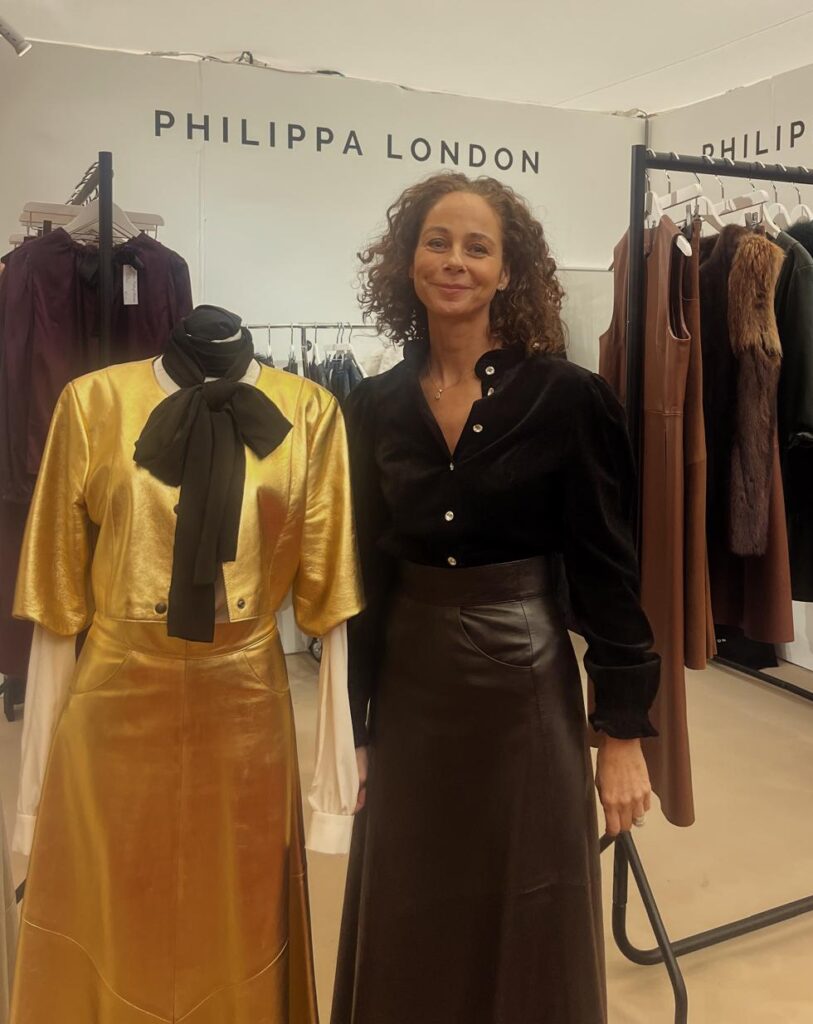
Pip Chawner, founder of Philippa London at Spirit of Christmas
Yet that clientele is shrinking, she reveals, and growth is modest – a single-digit uplift in turnover, with spring and summer sales coming in at half of last year’s.
With peers like Cefinn and Anna Mason closing, confidence among independent traders is fragile.
For artisan brands, local production is costly, taxes are high, and the pressure of being self-funded is relentless.
But most of all, Pip explains, it’s customer sentiment. With narratives of a “broken Britain” and scaremongering around the Autumn Budget, discretionary spend is not a priority.
For Pip, it is less the policy itself that constrains spending than the pervasive, amplified chatter that stirs dread and keeps wallets firmly closed.
But here lies the contrast – from above, the picture seems brighter.
Recent figures from the Office for National Statistics sparked optimism. UK retail sales rose 0.5% in September and 0.6% in August, marking a 1.5% year-on-year uplift.
High-street giant, Next, also joined the fun – raising profit forecasts for the fourth time, sending its share price to record highs.
After years of sluggish performance and private equity retreat, the figures hinted at the UK consumer sector’s long-awaited rebound.
But talk to independents on the ground and another narrative emerges – one of grit, fatigue, and fierce creativity amid wafer-thin margins.
At the Spirit of Christmas — London’s largest winter shopping fair, running 3–9 November — 600 independent founders gather at Kensington Olympia.
Here, the high street is a dirty word. Success is measured not in footfall but in loyalty and authenticity.
It’s about finding your people and holding on to them for dear life.
The death of international custom
For Pip and many others, the once-lucrative base of international shoppers has evaporated.
We used to have a lot of very wealthy European customers – the type who lived in Hyde Park. They’re gone now. Why would you want to be in London anymore? – Pip Chawner.
For retail veteran Marietta, founder of Silver Art, the story is the same. With two decades in jewellery, her handmade designs once drew 90% of sales from European tourists – now it’s down to single figures.
With lost tourism, stifling tax pressures, and absent government support, Marietta says trading conditions are “the worst I’ve ever seen”.
Others have tried expanding elsewhere. Melissa, co-founder of trendy newcomer, Blush and Blaze, planned to use her links to enter the US market only to find that tariffs and shipping costs made it “simply not viable.”
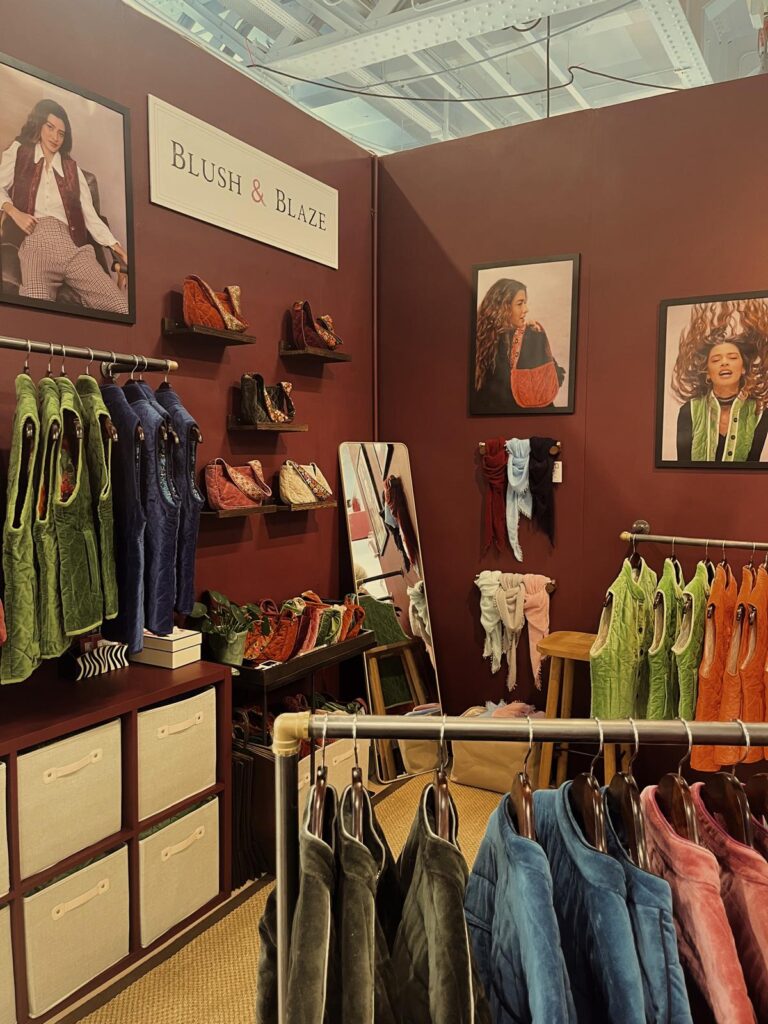
Womenswear label, Blush and Blaze’s stand at Spirit of Christmas
The brand has since re-focused on nurturing a loyal domestic base, flexing the benefits of being young and independent.
Consumer confidence
With international spenders gone, Brits aren’t rushing to fill the gap. Inflation may have steadied, but job insecurity and a looming Autumn Budget have left consumers wary. PwC’s latest Consumer Sentiment Survey shows Brits now save more than they did pre-pandemic but are still reluctant to splurge.
Against a stingy backdrop, founders say customer loyalty has become a lifeline.
Callum McCall, co-founder of menswear label Original Fibres, says the quality and longevity of his British-made garments – paired with a free repair service – turn first-time buyers into lifelong devotees.
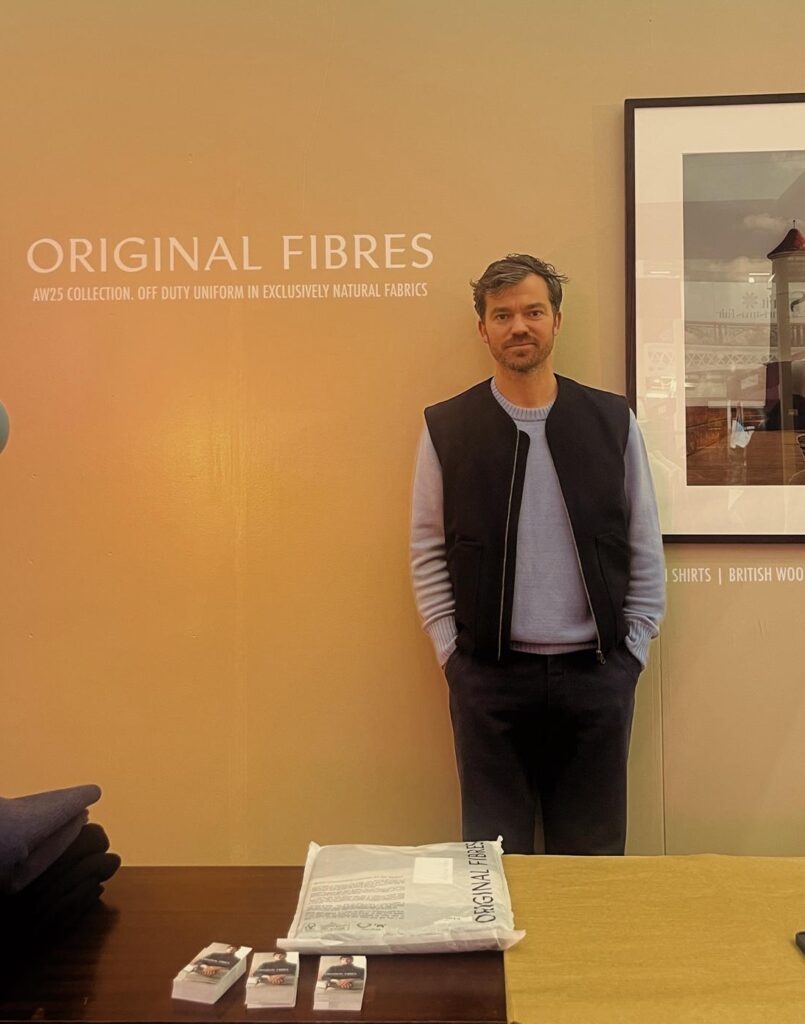
Callum McCall, Co-founder and Creative Director of Original Fibres – ‘London’s only specialist linen brand’
But it’s customer acquisition not retention that’s the real battle in the current climate, he says.
Despite operating two London stores, he sees fairs like Spirit of Christmas as essential – a rare opportunity to tell the stories e-commerce can’t convey.
Original Fibres picks up somewhere between 100 and 200 new customers per fair – modest by mass-market standards, but gold dust for independent brands playing the long game.
Direct-to-consumer
For London’s independents, survival means doubling down on identity and direct connection. Direct-to-consumer strategies help them control the narrative and build intimacy with customers.
Babble & Hemp, for instance, operates entirely without stores, building awareness through social media and founder Charlie’s endurance feats – running marathons and Ironmans in his hemp shirts. Customers come to the stand ready to commit, “already knowing me and the brand’s story,” he says.
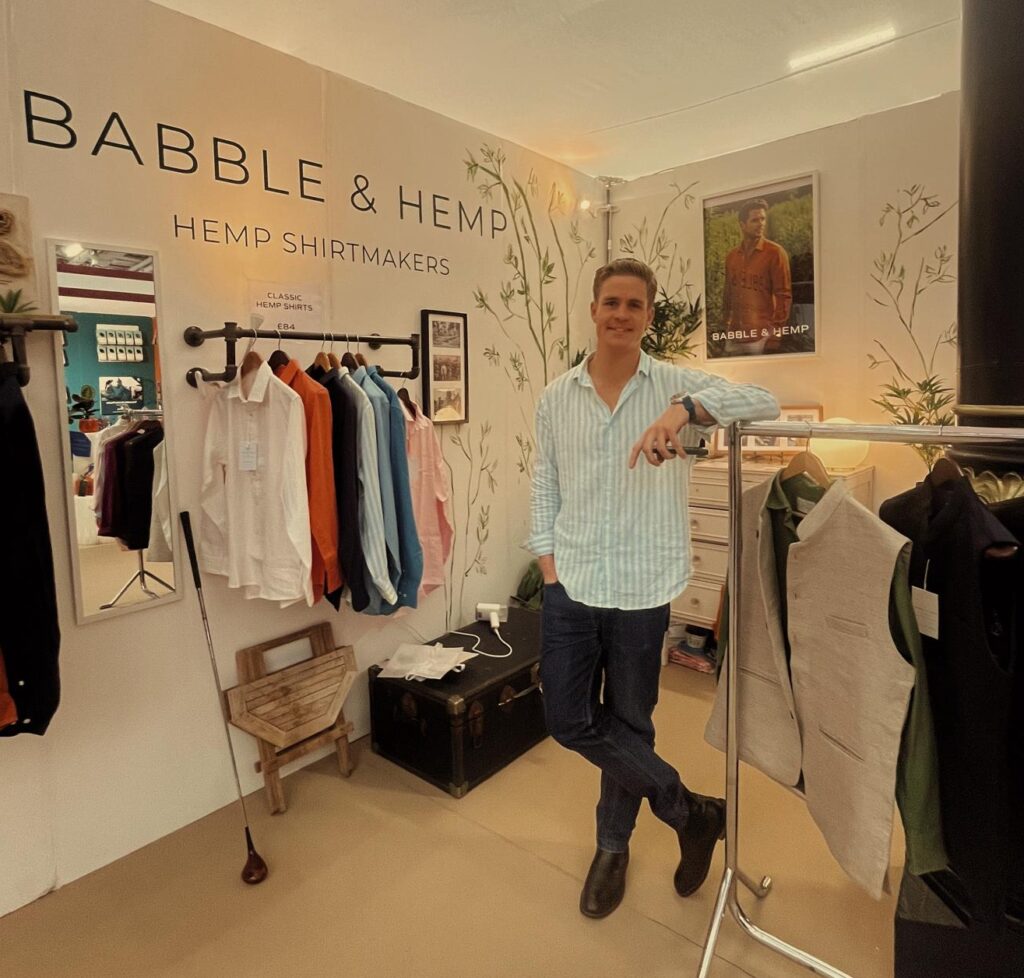
Charlie Thomas, content creator, sustainable fashion enthusiast and founder of Babble & Hemp
SIMS Wear, a British wool specialist, leans on its “Made in Britain” credentials. That appeal allows it to experiment with a new womenswear line, without straying from its core DNA.
Gabriele Rose London has taken a different approach with her distinctive apparel designs: intentionally downsizing to preserve the allure.
“I don’t want to be everywhere – I want to be more and more exclusive,” says Gabriele, whose customers frequently return to share stories about how her coats make them feel.
Gabriela Rose, founder of the eponymous British womenswear brand, combining luxury tailoring with bold, artistic details.
The antithesis of mass retail, Spirit of Christmas shelters a world where trade is guided by connection, creativity, and dedication, not volume or scale.
Running for another five days, Olympia’s day one energy hints at a promising Christmas quarter.
Perhaps its not a retail rebound, but against a challenging backdrop there’s a quiet triumph of craft and resilience amongst London’s independents.
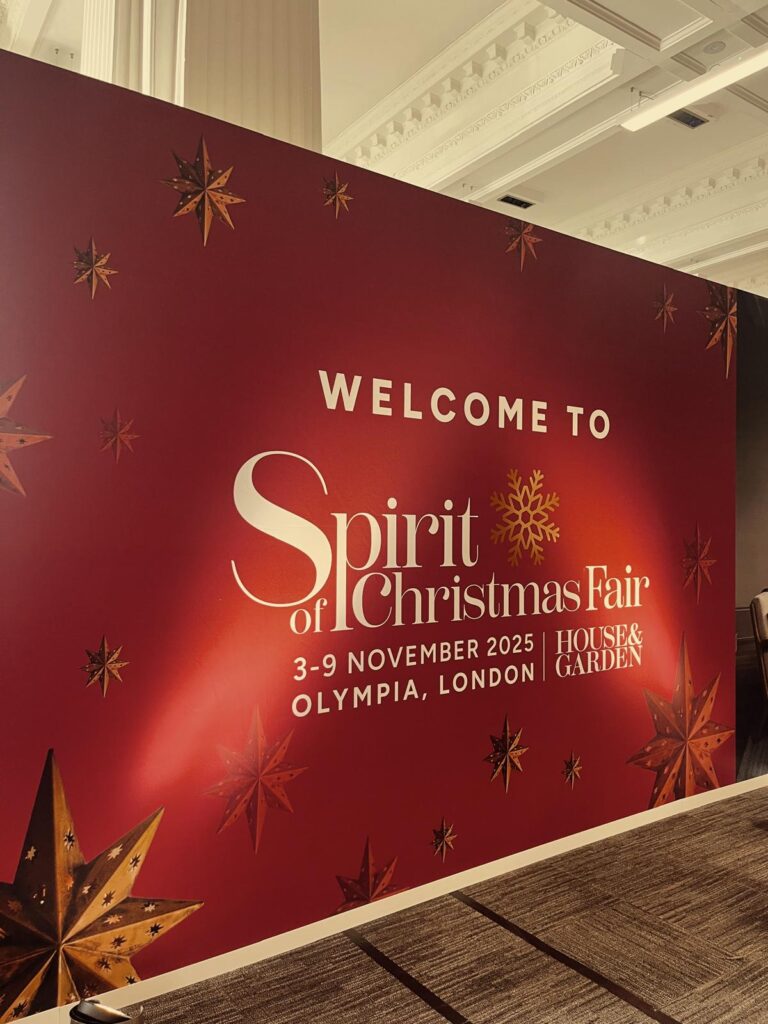
Entrance to Spirit of London Fair in Kensington Olympia
Submitted Article
Headline
Short Headline
Standfirst
Published Article
HeadlineLondon’s Independent Fashion Brands Feel the Squeeze Despite Retail Rebound
Short HeadlineLondon's independent fashion brands still struggling despite UK Retail Rebound
StandfirstIndependent fashion founders rely on grit and creativity, despite official stats reporting an uptick in retail sales.
“Where on earth are these increased sales? I’m not seeing them.”
For designer and brand owner Pip Chawner, talk on the radio of a UK retail recovery rings hollow. Her label, Philippa London, was born from a love of British craft and a desire to create clothes that last decades, not seasons. Each coat and skirt is made in London by specialists she’s known for 20 years, including one of the city’s last remaining furriers.
With skirts retailing at £795, Philippa London was never meant for the mass market. It caters to women who value investment pieces and can afford the “hands, craft, skill and love” that goes into each item, as Pip puts it.
Pip Chawner, founder of Philippa London at Spirit of Christmas
Yet that clientele is shrinking, she reveals, and growth is modest – a single-digit uplift in turnover, with spring and summer sales coming in at half of last year’s.
With peers like Cefinn and Anna Mason closing, confidence among independent traders is fragile.
For artisan brands, local production is costly, taxes are high, and the pressure of being self-funded is relentless.
But most of all, Pip explains, it’s customer sentiment. With narratives of a “broken Britain” and scaremongering around the Autumn Budget, discretionary spend is not a priority.
For Pip, it is less the policy itself that constrains spending than the pervasive, amplified chatter that stirs dread and keeps wallets firmly closed.
But here lies the contrast – from above, the picture seems brighter.
Recent figures from the Office for National Statistics sparked optimism. UK retail sales rose 0.5% in September and 0.6% in August, marking a 1.5% year-on-year uplift.
High-street giant, Next, also joined the fun – raising profit forecasts for the fourth time, sending its share price to record highs.
After years of sluggish performance and private equity retreat, the figures hinted at the UK consumer sector’s long-awaited rebound.
But talk to independents on the ground and another narrative emerges – one of grit, fatigue, and fierce creativity amid wafer-thin margins.
At the Spirit of Christmas — London’s largest winter shopping fair, running 3–9 November — 600 independent founders gather at Kensington Olympia.
Here, the high street is a dirty word. Success is measured not in footfall but in loyalty and authenticity.
It’s about finding your people and holding on to them for dear life.
The death of international custom
For Pip and many others, the once-lucrative base of international shoppers has evaporated.
We used to have a lot of very wealthy European customers – the type who lived in Hyde Park. They’re gone now. Why would you want to be in London anymore? – Pip Chawner.
For retail veteran Marietta, founder of Silver Art, the story is the same. With two decades in jewellery, her handmade designs once drew 90% of sales from European tourists – now it’s down to single figures.
With lost tourism, stifling tax pressures, and absent government support, Marietta says trading conditions are “the worst I’ve ever seen”.
Others have tried expanding elsewhere. Melissa, co-founder of trendy newcomer, Blush and Blaze, planned to use her links to enter the US market only to find that tariffs and shipping costs made it “simply not viable.”
Womenswear label, Blush and Blaze’s stand at Spirit of Christmas
The brand has since re-focused on nurturing a loyal domestic base, flexing the benefits of being young and independent.
Consumer confidence
With international spenders gone, Brits aren’t rushing to fill the gap. Inflation may have steadied, but job insecurity and a looming Autumn Budget have left consumers wary. PwC’s latest Consumer Sentiment Survey shows Brits now save more than they did pre-pandemic but are still reluctant to splurge.
Against a stingy backdrop, founders say customer loyalty has become a lifeline.
Callum McCall, co-founder of menswear label Original Fibres, says the quality and longevity of his British-made garments – paired with a free repair service – turn first-time buyers into lifelong devotees.
Callum McCall, Co-founder and Creative Director of Original Fibres – ‘London’s only specialist linen brand’
But it’s customer acquisition not retention that’s the real battle in the current climate, he says.
Despite operating two London stores, he sees fairs like Spirit of Christmas as essential – a rare opportunity to tell the stories e-commerce can’t convey.
Original Fibres picks up somewhere between 100 and 200 new customers per fair – modest by mass-market standards, but gold dust for independent brands playing the long game.
Direct-to-consumer
For London’s independents, survival means doubling down on identity and direct connection. Direct-to-consumer strategies help them control the narrative and build intimacy with customers.
Babble & Hemp, for instance, operates entirely without stores, building awareness through social media and founder Charlie’s endurance feats – running marathons and Ironmans in his hemp shirts. Customers come to the stand ready to commit, “already knowing me and the brand’s story,” he says.
Charlie Thomas, content creator, sustainable fashion enthusiast and founder of Babble & Hemp
SIMS Wear, a British wool specialist, leans on its “Made in Britain” credentials. That appeal allows it to experiment with a new womenswear line, without straying from its core DNA.
Gabriele Rose London has taken a different approach with her distinctive apparel designs: intentionally downsizing to preserve the allure.
“I don’t want to be everywhere – I want to be more and more exclusive,” says Gabriele, whose customers frequently return to share stories about how her coats make them feel.
Gabriela Rose, founder of the eponymous British womenswear brand, combining luxury tailoring with bold, artistic details.
The antithesis of mass retail, Spirit of Christmas shelters a world where trade is guided by connection, creativity, and dedication, not volume or scale.
Running for another five days, Olympia’s day one energy hints at a promising Christmas quarter.
Perhaps its not a retail rebound, but against a challenging backdrop there’s a quiet triumph of craft and resilience amongst London’s independents.
Entrance to Spirit of London Fair in Kensington Olympia
A 2024 Freedom of Information request showed Bromley Council had £4.5 million invested in arms companies that year with £1.5 million reportedly linked to Israel.
Undercover officers raided three linked shops in Barking town centre, revealing how illicit tobacco is being hidden in walls, ceilings and nearby locations to evade detection.
More than 330,000 people across the UK sought support from the Stop It Now helpline in 2025 over concerns about their own or someone else’s online sexual behaviour towards children, according to new charity data. The anonymous service says contacts by phone, email and webchat rose significantly over the year.