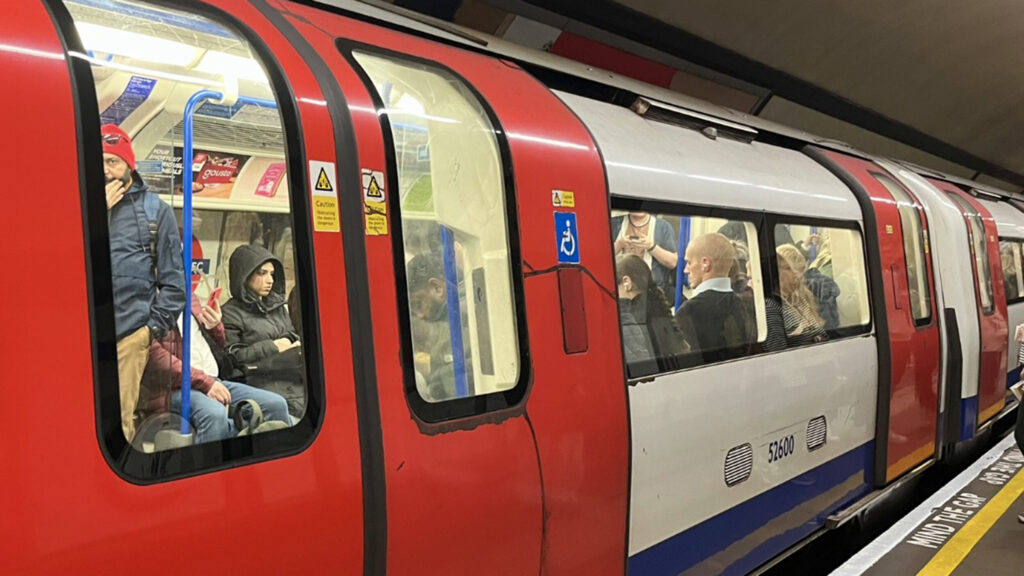
The Freedom Pass has allowed Londoners aged 66 and over to travel for free on London’s public transport network for more than 50 years. But concerns about its rising cost have created uncertainty over the scheme’s future.
Earlier this month, London Councils – the body which represents all 32 London boroughs and the City of London- announced a potential review of the Older Person’s Freedom Pass, due to rising financial pressures on boroughs.
The pass currently costs London’s councils almost £333m, a figure expected to rise to £372m next financial year.
One of the proposals is to limit the London over-66 pass to buses only, in keeping with other Older Person Travel cards across the country.
The announcement has caused concern amongst many older Londoners. An online petition against possible cuts has gained over 88,000 signatures.
Phillip Clayton, who launched the petition, warns that cuts would “be a significant blow” and “confine many of us to our homes.”
Currently, pass holders can travel for free on weekends and at any time from Monday to Friday, except between 4:30 am and 9:00 am.
Older Londoners told City News what they think of the potential Freedom Pass review:
‘It means freedom’
Betty Nixon, aged 80, who has lived in London her whole life, told City News: “With a pass I don’t have to think twice about going to a hospital or appointment or just going out to do something nice because it’s not going to cost me anything.”
She says the Freedom Pass has allowed her to stay independent and connected with her community.
“It gives me the option to take part in things that are going on in the community, which I wouldn’t have otherwise.”
Approximately 1.1 million Londoner’s use the Older Person’s Freedom Pass every year. Credit: Mia Flook
‘A vital lifeline’
This week, the leader of Lambeth Council, Claire Holland, has spoken out following the petition underlining the council’s commitment to the scheme. She notes that cuts to funding under the previous government have left councils “to foot the bill.”
“Labour councils will oppose any changes that would see restrictions placed on who can use it and which modes of transport it applies to.”
The majority of London councils are Labour-run, with 21 of the 32 London boroughs under their control, and they have said they will refuse to reduce the scope of the pass.
Age UK welcomed the pledge but cautioned that the threat of a future review has not gone away: “The review could still return, and it has already caused anxiety for thousands of older Londoners who rely on it as a lifeline.”
In response to the recent petition the Mayor of London Sir Sadiq Khan has said:
“The Freedom Pass is crucial for older Londoners, enabling them to travel around the city and stay connected to friends and family.”
“While I have no control over the 66+ pass, Labour councils have my full support in committing to keep it.”
Submitted Article
Headline
Short Headline
Standfirst
Published Article
HeadlineLabour councils pledge to protect free travel for over 66s in London
Short HeadlineLabour councils vow to protect the Freedom Pass
StandfirstThey say the Freedom Pass is a ‘vital lifeline’ for older Londoners to travel for free, despite rising costs.
The Freedom Pass has allowed Londoners aged 66 and over to travel for free on London’s public transport network for more than 50 years. But concerns about its rising cost have created uncertainty over the scheme’s future.
Earlier this month, London Councils – the body which represents all 32 London boroughs and the City of London- announced a potential review of the Older Person’s Freedom Pass, due to rising financial pressures on boroughs.
The pass currently costs London’s councils almost £333m, a figure expected to rise to £372m next financial year.
One of the proposals is to limit the London over-66 pass to buses only, in keeping with other Older Person Travel cards across the country.
The announcement has caused concern amongst many older Londoners. An online petition against possible cuts has gained over 88,000 signatures.
Phillip Clayton, who launched the petition, warns that cuts would “be a significant blow” and “confine many of us to our homes.”
Currently, pass holders can travel for free on weekends and at any time from Monday to Friday, except between 4:30 am and 9:00 am.
Older Londoners told City News what they think of the potential Freedom Pass review:
‘It means freedom’
Betty Nixon, aged 80, who has lived in London her whole life, told City News: “With a pass I don’t have to think twice about going to a hospital or appointment or just going out to do something nice because it’s not going to cost me anything.”
She says the Freedom Pass has allowed her to stay independent and connected with her community.
“It gives me the option to take part in things that are going on in the community, which I wouldn’t have otherwise.”
Approximately 1.1 million Londoner’s use the Older Person’s Freedom Pass every year. Credit: Mia Flook
‘A vital lifeline’
This week, the leader of Lambeth Council, Claire Holland, has spoken out following the petition underlining the council’s commitment to the scheme. She notes that cuts to funding under the previous government have left councils “to foot the bill.”
“Labour councils will oppose any changes that would see restrictions placed on who can use it and which modes of transport it applies to.”
The majority of London councils are Labour-run, with 21 of the 32 London boroughs under their control, and they have said they will refuse to reduce the scope of the pass.
Age UK welcomed the pledge but cautioned that the threat of a future review has not gone away: “The review could still return, and it has already caused anxiety for thousands of older Londoners who rely on it as a lifeline.”
In response to the recent petition the Mayor of London Sir Sadiq Khan has said:
“The Freedom Pass is crucial for older Londoners, enabling them to travel around the city and stay connected to friends and family.”
“While I have no control over the 66+ pass, Labour councils have my full support in committing to keep it.”
A 2024 Freedom of Information request showed Bromley Council had £4.5 million invested in arms companies that year with £1.5 million reportedly linked to Israel.
Undercover officers raided three linked shops in Barking town centre, revealing how illicit tobacco is being hidden in walls, ceilings and nearby locations to evade detection.