As the government commits to halving knife crime within the next decade, community groups say the priority should be listening to local voices, not writing more legislation.
City News spoke to campaigners and artists who say change comes through direct action, not declarations.
Knife crime has fallen by 9%, according to the Office for National Statistics, but there were still 50,430 police recorded offences involving a knife or sharp instrument in England and Wales.
London accounted for 14,860 of those offences, underlining the scale of the challenge in the capital.
The government has also published new guidance aimed at supporting police, youth justice services and other agencies working with children found carrying knives.
It says every child found in possession of a knife should be referred for support and intervention through a youth justice service.
Natasha Manners, from the Generational Change Family Group, told City News the government needs to “work with organisations and give more support”.
She said funding should be directed towards outreach projects like hers, rather than relying on policy alone.
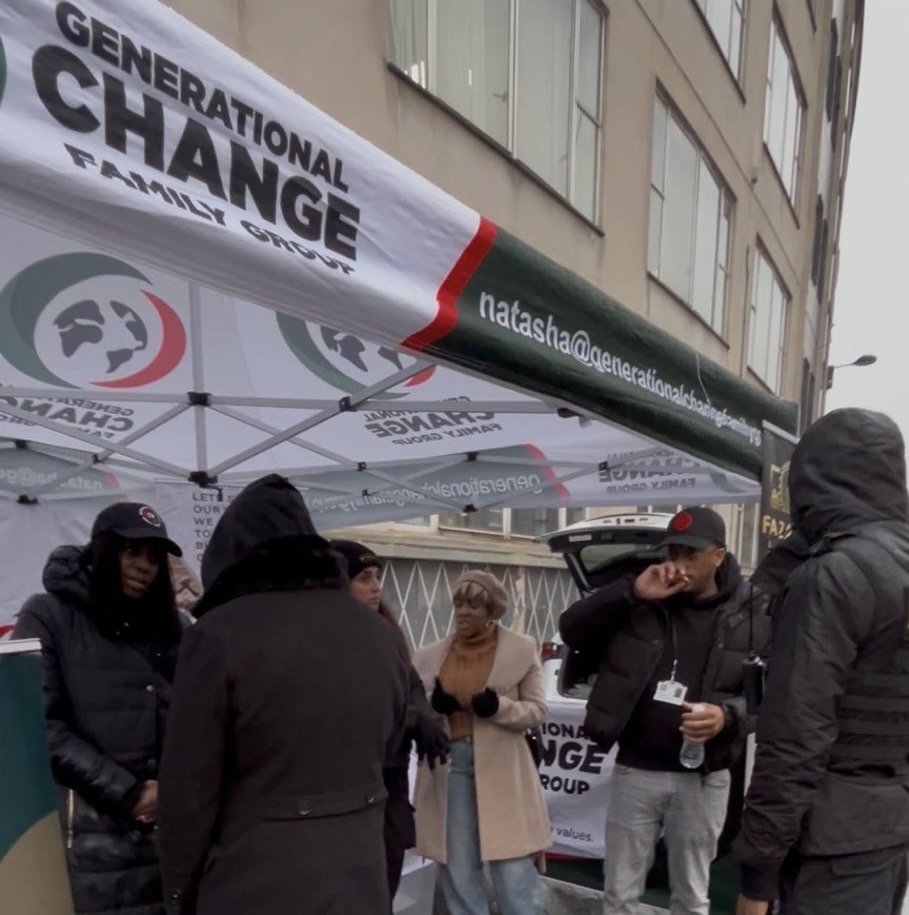
Natasha Manners during a Generational Change Family Group outreach.
Over five Thursdays, Natasha and her team say they took 270 weapons off the street through outreach work. She argues that hands-on interventions like this do more to reduce harm than anything coming out of Westminster.
Others are trying to shift the conversation through art.
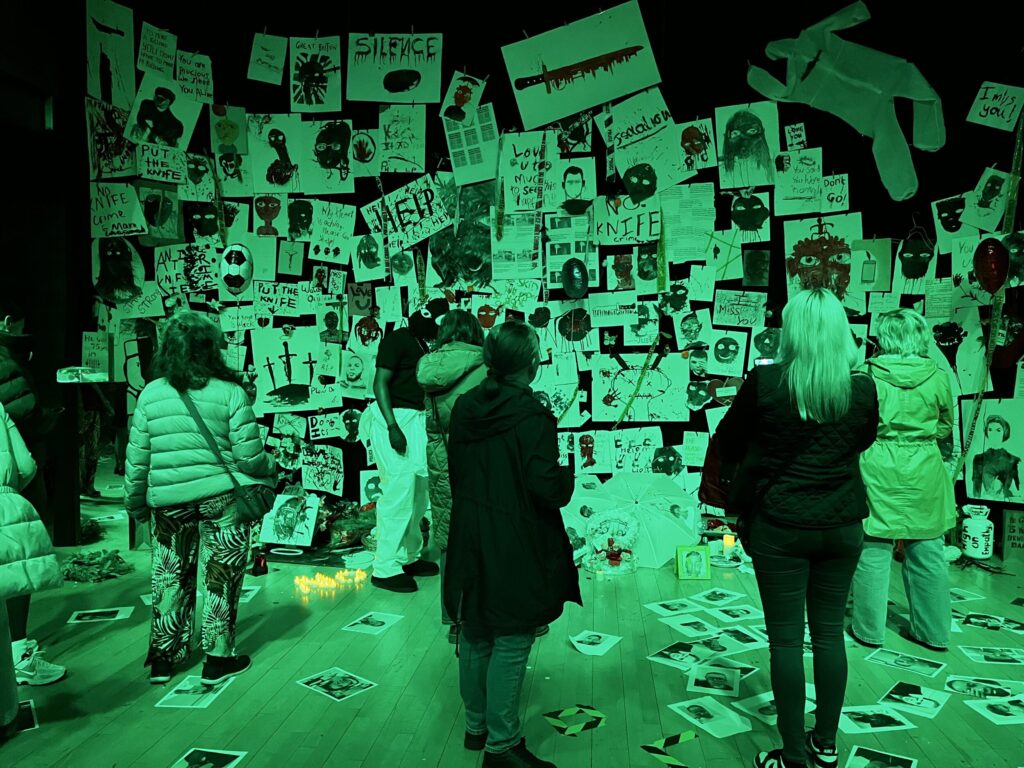
The Salmon Youth Centre in Southwark, one of London’s boroughs with the highest number of knife crime offences, has staged an immersive exhibition created with local young people.
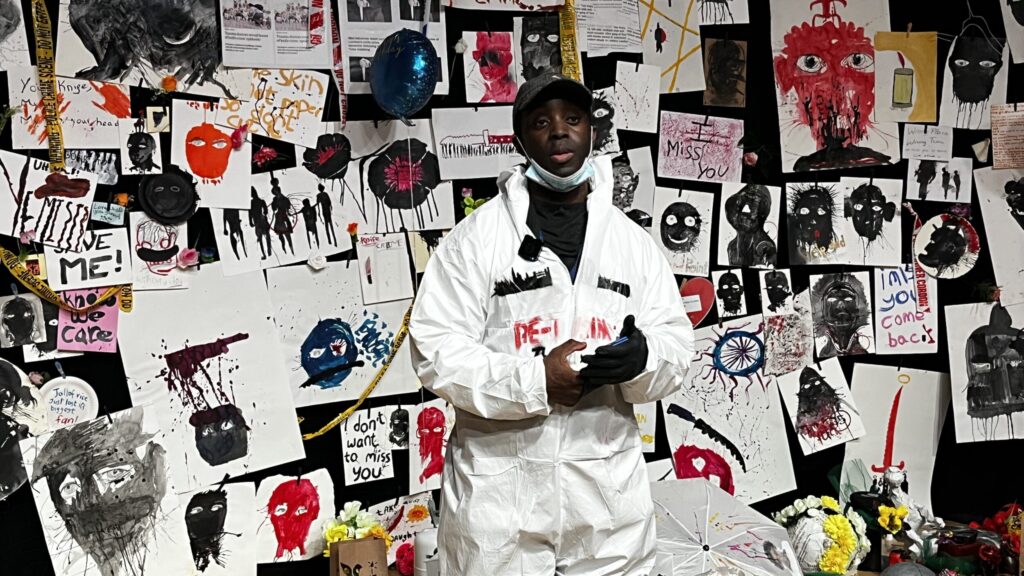
Re-Claim the Runway (Rest and Recuperation) is designed to confront visitors with the realities behind the headlines, and to give young people space to process what they see and live around them.
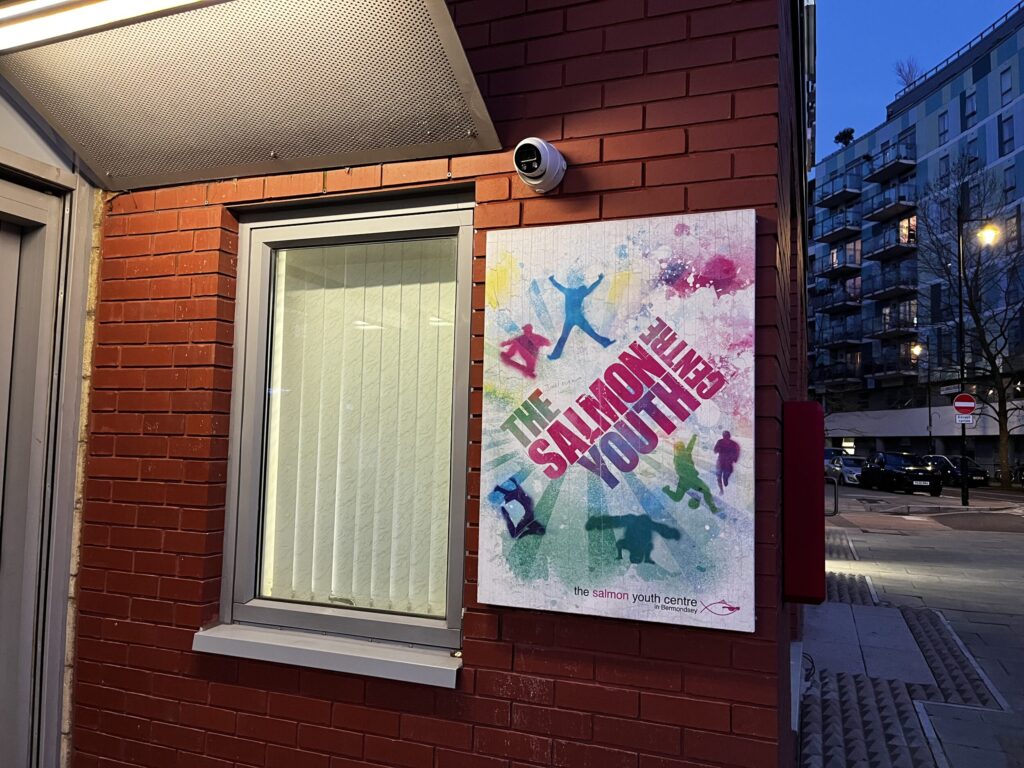
The Salmon Youth Centre on Old Jamaica Road, Southwark
Eugene Ankomah is the artist in residence at the youth centre. He developed the exhibition with young people in Southwark to give them space to explore how knife crime affects them.
All of the work on display was made by young people at The Salmon Youth Centre. Ankomah said the aim was to take their “emotion and truth” and reclaim the narrative around knife crime.
Megan Kelly, a youth worker at the centre who took part in the exhibition’s first iteration when she was a young person there, told City News the participants are “passionate about helping and making a change in their community”.
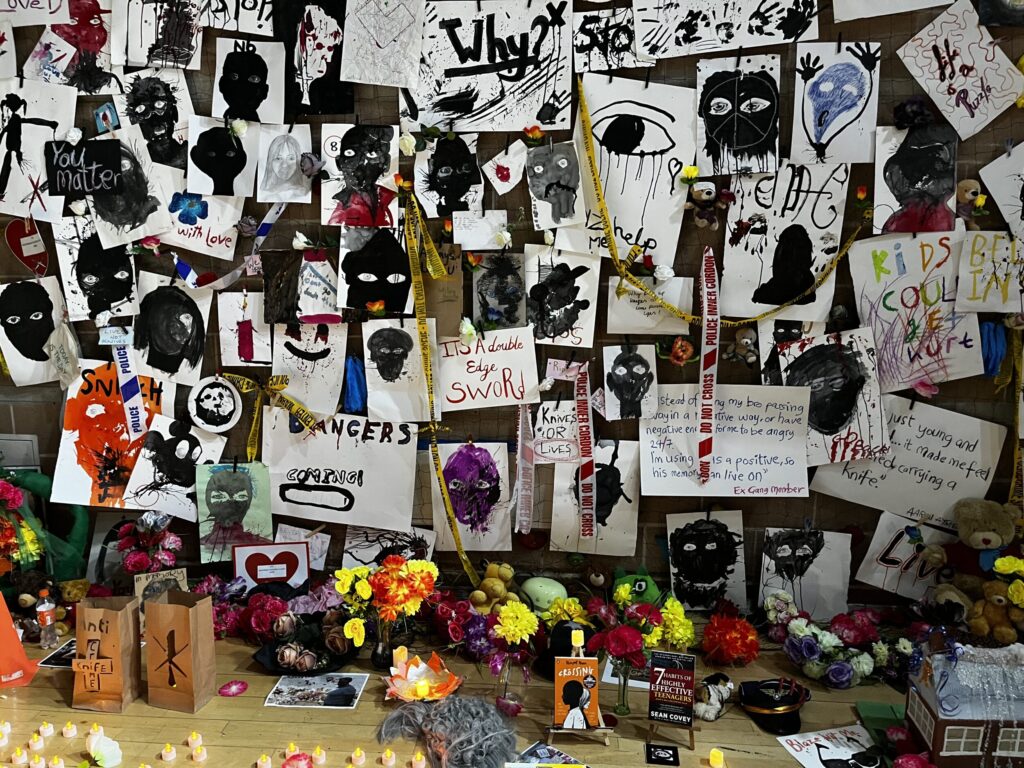
Artwork all completed by young people from The Salmon Youth Centre.
The latest exhibition drew more young people into making work and engaging with the themes around knife crime, according to staff at the centre.
Visitors said the show landed hard.
One attendee told City News he felt a “wave of sadness” as soon as he walked in, adding that “we have become desensitised” and need to reconnect with the human reality behind the stories.
Another said she left with a sense of hope, which Ankomah says is central to the project. “It’s heartwarming to know that the young people are engaging and wanting to see change in their communities,” she said.
Staff at the centre said the project reflects how committed many of the young people are to the youth club, and the role it plays in creating a more positive space locally.
More members of the public experiencing the art exhibition.
Supporters of projects like Re-Claim the Runway argue that exhibitions can play a role in preventing violence by making the issue feel real.
Natasha Manners, from the Generational Change Family Group, said artwork “definitely” helps because people can “see the realities of it”. “Visuals are always better than just talking,” she added.
Not everyone agrees.
Leonardo Scalcione, a retired social worker who worked on an adolescent team in Southwark, told City News an exhibition “wouldn’t change behaviour at all” and that its impact would be limited to “information sharing and awareness”.
Ankomah and youth workers at The Salmon Youth Centre dispute that. They say giving young people a say, and involving them directly in conversations about knife crime, can build understanding, confidence and, over time, influence behaviour.
Submitted Article
Headline
Short Headline
Standfirst
Published Article
HeadlineSouthwark youth take knife crime head-on with immersive exhibition
Short HeadlineSouthwark exhibition takes on knife crime
StandfirstA new exhibition by Eugene Ankomah at The Salmon Youth Centre puts young people’s work at the centre of the conversation on knife crime in London
As the government commits to halving knife crime within the next decade, community groups say the priority should be listening to local voices, not writing more legislation.
City News spoke to campaigners and artists who say change comes through direct action, not declarations.
Knife crime has fallen by 9%, according to the Office for National Statistics, but there were still 50,430 police recorded offences involving a knife or sharp instrument in England and Wales.
London accounted for 14,860 of those offences, underlining the scale of the challenge in the capital.
The government has also published new guidance aimed at supporting police, youth justice services and other agencies working with children found carrying knives.
It says every child found in possession of a knife should be referred for support and intervention through a youth justice service.
Natasha Manners, from the Generational Change Family Group, told City News the government needs to “work with organisations and give more support”.
She said funding should be directed towards outreach projects like hers, rather than relying on policy alone.
Natasha Manners during a Generational Change Family Group outreach.
Over five Thursdays, Natasha and her team say they took 270 weapons off the street through outreach work. She argues that hands-on interventions like this do more to reduce harm than anything coming out of Westminster.
Others are trying to shift the conversation through art.
The Salmon Youth Centre in Southwark, one of London’s boroughs with the highest number of knife crime offences, has staged an immersive exhibition created with local young people.
Re-Claim the Runway (Rest and Recuperation) is designed to confront visitors with the realities behind the headlines, and to give young people space to process what they see and live around them.
The Salmon Youth Centre on Old Jamaica Road, Southwark
Eugene Ankomah is the artist in residence at the youth centre. He developed the exhibition with young people in Southwark to give them space to explore how knife crime affects them.
All of the work on display was made by young people at The Salmon Youth Centre. Ankomah said the aim was to take their “emotion and truth” and reclaim the narrative around knife crime.
Megan Kelly, a youth worker at the centre who took part in the exhibition’s first iteration when she was a young person there, told City News the participants are “passionate about helping and making a change in their community”.
Artwork all completed by young people from The Salmon Youth Centre.
The latest exhibition drew more young people into making work and engaging with the themes around knife crime, according to staff at the centre.
Visitors said the show landed hard.
One attendee told City News he felt a “wave of sadness” as soon as he walked in, adding that “we have become desensitised” and need to reconnect with the human reality behind the stories.
Another said she left with a sense of hope, which Ankomah says is central to the project. “It’s heartwarming to know that the young people are engaging and wanting to see change in their communities,” she said.
Staff at the centre said the project reflects how committed many of the young people are to the youth club, and the role it plays in creating a more positive space locally.
More members of the public experiencing the art exhibition.
Supporters of projects like Re-Claim the Runway argue that exhibitions can play a role in preventing violence by making the issue feel real.
Natasha Manners, from the Generational Change Family Group, said artwork “definitely” helps because people can “see the realities of it”. “Visuals are always better than just talking,” she added.
Not everyone agrees.
Leonardo Scalcione, a retired social worker who worked on an adolescent team in Southwark, told City News an exhibition “wouldn’t change behaviour at all” and that its impact would be limited to “information sharing and awareness”.
Ankomah and youth workers at The Salmon Youth Centre dispute that. They say giving young people a say, and involving them directly in conversations about knife crime, can build understanding, confidence and, over time, influence behaviour.
A 2024 Freedom of Information request showed Bromley Council had £4.5 million invested in arms companies that year with £1.5 million reportedly linked to Israel.
Undercover officers raided three linked shops in Barking town centre, revealing how illicit tobacco is being hidden in walls, ceilings and nearby locations to evade detection.
More than 330,000 people across the UK sought support from the Stop It Now helpline in 2025 over concerns about their own or someone else’s online sexual behaviour towards children, according to new charity data. The anonymous service says contacts by phone, email and webchat rose significantly over the year.