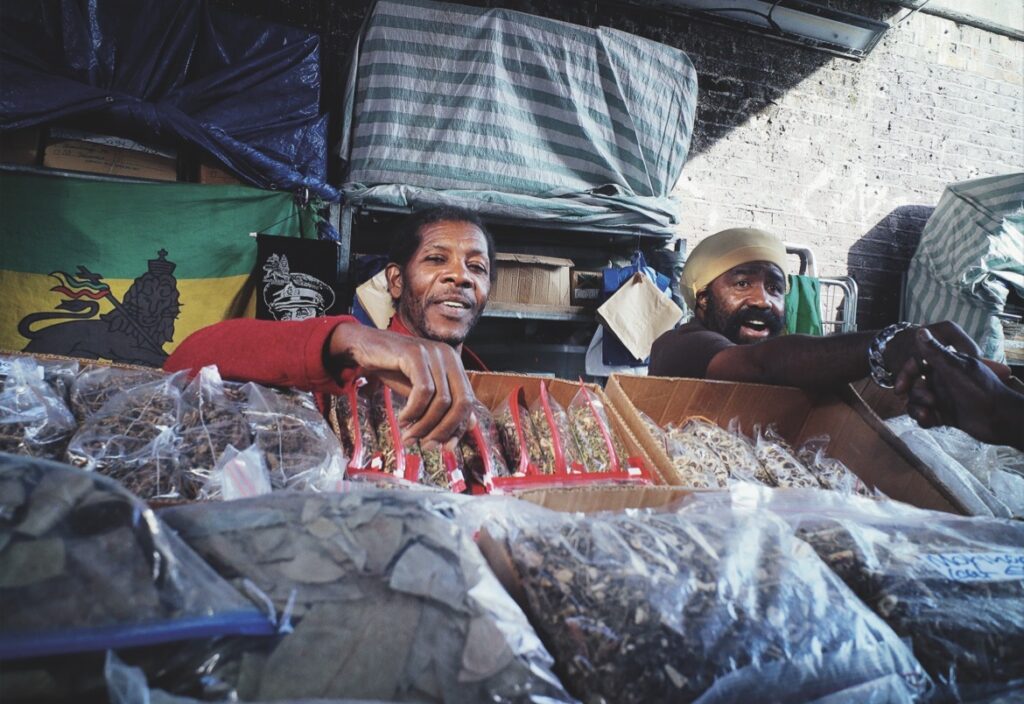
On the streets of Brixton, among market stalls and the steady rhythm of South London life, Christopher Icha stands with a stack of self-published zines in his hands.
For years, he has documented change in the area he has called home since the 1970s. “I publish zines. Since 2013, I’ve been documenting Brixton, because it’s changing over time.” But his latest issue wasn’t born from gentrification or cultural shifts in South London. It was sparked thousands of miles away, in Jamaica.
Watching From Afar
When Hurricane Melissa tore through Jamaica in October, Christopher was in Brixton.
“Jamaica’s a place that has hurricanes almost every year,” he says. “But when I saw this one, I couldn’t believe what I was seeing. Roofs flying off. Trees bending all the way down. It was absolutely devastating.”
Reports of winds reaching 250 miles per hour spread quickly. His mother is Jamaican. He has family there. Then the messages stopped.
“We couldn’t contact them. We couldn’t communicate. We’ve got a little WhatsApp group… anybody heard anything? Nobody’s heard anything. It’s gone dead.”
For days, he watched from London, scrolling, waiting, hoping. Eventually, news filtered through: the storm had hit close to where his family live. They avoided the very worst, but the damage was still severe.
“It’s hard being here and not being able to do anything,” he says. That feeling — distance without power — became the catalyst for action.
Brixton Responds
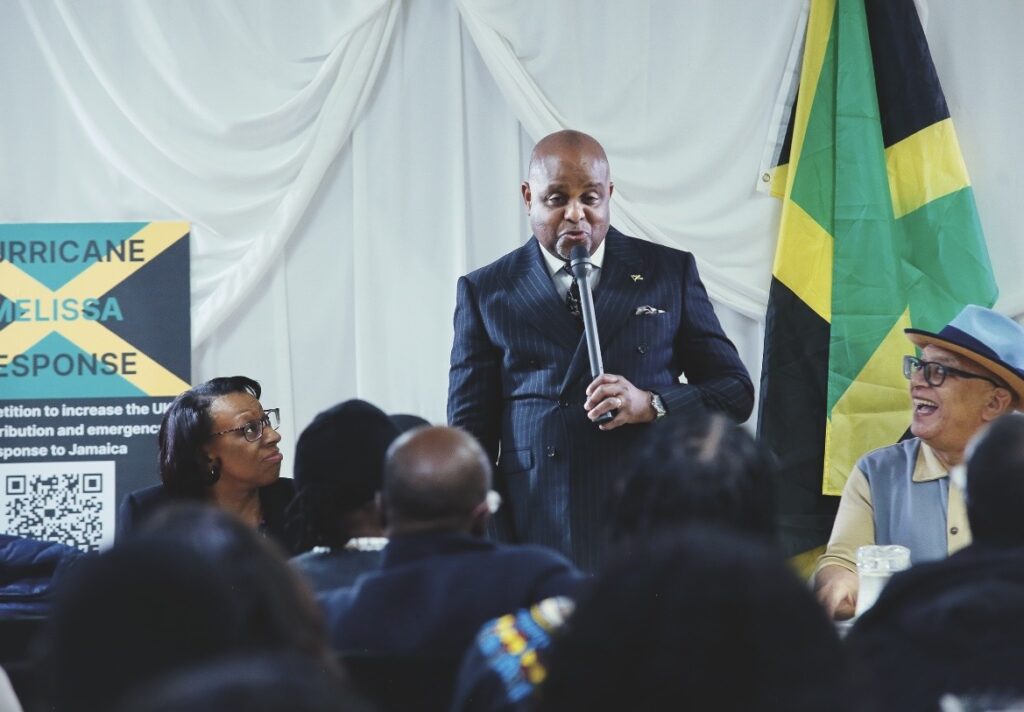
In South London, the response was immediate. Fundraisers sprang up across Brixton. Community activist Lee Jasper organised a meeting that drew hundreds, with the Jamaican High Commission in attendance, alongside representatives from the Jamaican National Bank.
Christopher says that’s when the scale of it hit him. “That’s how I knew how serious it was the amount of people that turned up. We all needed to pull together.”
Credit: Christopher Icha
For him, the question became simple: what can I do from here? “As I’m a zine publisher and of Jamaican descent, I thought, you know what? Let me put together this zine.” The result is IOU Jamaica: Smile for Jamaica and the title is deliberate. “Jamaica has done so much for the world,” he says. “Reggae, sound system culture it’s time that I paid back. It’s time we gave back.”
Diaspora in Action
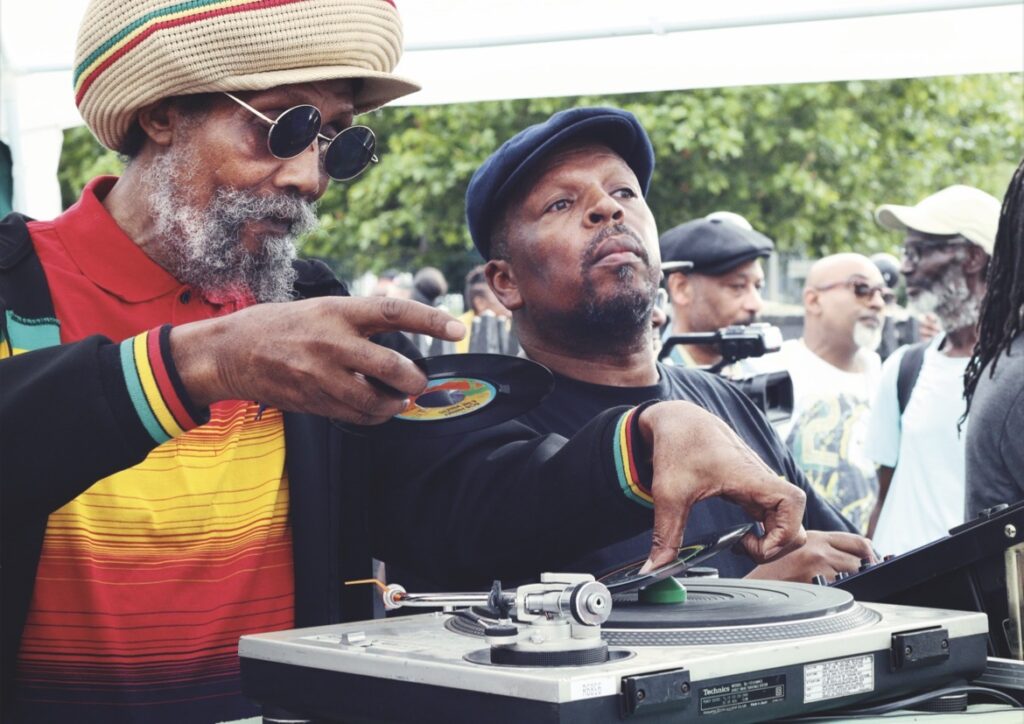
As Jamaica marks Reggae Month this February, celebrating the global influence of its music and culture, the timing feels significant. For Christopher, the same culture that travelled from Kingston to Brixton is now helping to drive support back to the island.
The zine is more than a creative project. A portion of sales in Brixton goes towards hurricane relief, helping fund repairs and support recovery. He has documented fundraising events, the packing of an articulated lorry at Pop Brixton, and the quieter, unglamorous labour of community organisers.
“It’s good to know that I’m not the only one who feels that I owe Jamaica,” he says. “We owe Jamaica.”
Credit: Christopher Icha
What has surprised him most is who is buying it. “The response is really from everybody,” he says. “It’s not just people from Jamaican heritage people of different backgrounds, different ethnicities, who have been touched by reggae music.”
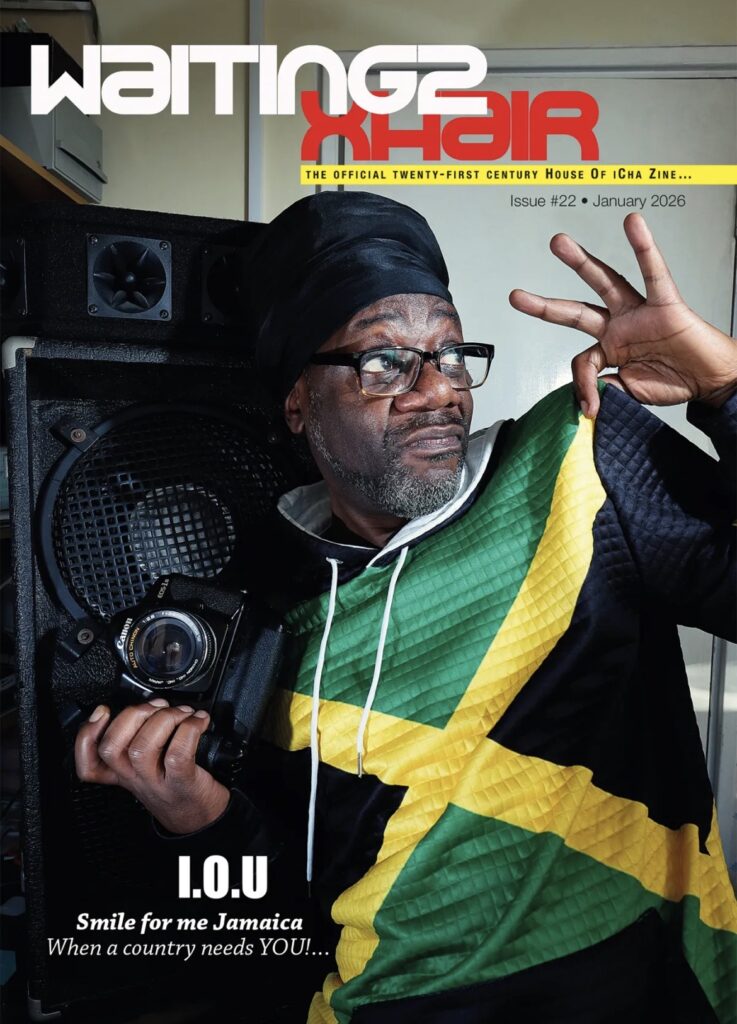
The cover shows Christopher draped in the Jamaican flag, black, gold and green. “When people see those colours, they instantly know it’s Jamaica,” he says. “It’s distinct. It sticks out.”
He chose to feature himself rather than a model. “I thought, let me just do it myself.”
Credit: Christopher Icha
More Than Memory
Christopher admits he has not followed every recovery statistic or tourism update. Instead, his focus is immediate and tangible.
For him, this project is about responsibility.
“Jamaica’s done so much… spread reggae all over the world. It’s time for us to give back. And that’s what I’m doing.”
Submitted Article
Headline
Short Headline
Standfirst
Published Article
Headline“IOU Jamaica”: Brixton Photographer Turns Helplessness Into Hurricane Relief
Short HeadlineBrixton photographer turns distance into relief
StandfirstFrom Kingston to Brixton and back again: Christopher Icha’s new zine raises money for Jamaica hurricane relief
On the streets of Brixton, among market stalls and the steady rhythm of South London life, Christopher Icha stands with a stack of self-published zines in his hands.
For years, he has documented change in the area he has called home since the 1970s. “I publish zines. Since 2013, I’ve been documenting Brixton, because it’s changing over time.” But his latest issue wasn’t born from gentrification or cultural shifts in South London. It was sparked thousands of miles away, in Jamaica.
Watching From Afar
When Hurricane Melissa tore through Jamaica in October, Christopher was in Brixton.
“Jamaica’s a place that has hurricanes almost every year,” he says. “But when I saw this one, I couldn’t believe what I was seeing. Roofs flying off. Trees bending all the way down. It was absolutely devastating.”
Reports of winds reaching 250 miles per hour spread quickly. His mother is Jamaican. He has family there. Then the messages stopped.
“We couldn’t contact them. We couldn’t communicate. We’ve got a little WhatsApp group… anybody heard anything? Nobody’s heard anything. It’s gone dead.”
For days, he watched from London, scrolling, waiting, hoping. Eventually, news filtered through: the storm had hit close to where his family live. They avoided the very worst, but the damage was still severe.
“It’s hard being here and not being able to do anything,” he says. That feeling — distance without power — became the catalyst for action.
Brixton Responds
In South London, the response was immediate. Fundraisers sprang up across Brixton. Community activist Lee Jasper organised a meeting that drew hundreds, with the Jamaican High Commission in attendance, alongside representatives from the Jamaican National Bank.
Christopher says that’s when the scale of it hit him. “That’s how I knew how serious it was the amount of people that turned up. We all needed to pull together.”
Credit: Christopher Icha
For him, the question became simple: what can I do from here? “As I’m a zine publisher and of Jamaican descent, I thought, you know what? Let me put together this zine.” The result is IOU Jamaica: Smile for Jamaica and the title is deliberate. “Jamaica has done so much for the world,” he says. “Reggae, sound system culture it’s time that I paid back. It’s time we gave back.”
Diaspora in Action
As Jamaica marks Reggae Month this February, celebrating the global influence of its music and culture, the timing feels significant. For Christopher, the same culture that travelled from Kingston to Brixton is now helping to drive support back to the island.
The zine is more than a creative project. A portion of sales in Brixton goes towards hurricane relief, helping fund repairs and support recovery. He has documented fundraising events, the packing of an articulated lorry at Pop Brixton, and the quieter, unglamorous labour of community organisers.
“It’s good to know that I’m not the only one who feels that I owe Jamaica,” he says. “We owe Jamaica.”
Credit: Christopher Icha
What has surprised him most is who is buying it. “The response is really from everybody,” he says. “It’s not just people from Jamaican heritage people of different backgrounds, different ethnicities, who have been touched by reggae music.”
The cover shows Christopher draped in the Jamaican flag, black, gold and green. “When people see those colours, they instantly know it’s Jamaica,” he says. “It’s distinct. It sticks out.”
He chose to feature himself rather than a model. “I thought, let me just do it myself.”
Credit: Christopher Icha
More Than Memory
Christopher admits he has not followed every recovery statistic or tourism update. Instead, his focus is immediate and tangible.
For him, this project is about responsibility.
“Jamaica’s done so much… spread reggae all over the world. It’s time for us to give back. And that’s what I’m doing.”
A 2024 Freedom of Information request showed Bromley Council had £4.5 million invested in arms companies that year with £1.5 million reportedly linked to Israel.
Undercover officers raided three linked shops in Barking town centre, revealing how illicit tobacco is being hidden in walls, ceilings and nearby locations to evade detection.
More than 330,000 people across the UK sought support from the Stop It Now helpline in 2025 over concerns about their own or someone else’s online sexual behaviour towards children, according to new charity data. The anonymous service says contacts by phone, email and webchat rose significantly over the year.