London is en-route to becoming greener and safer for children during the busy school pickup time.
On Monday 1 November, the borough’s 36th School Street came into force, with restrictions to motorised traffic at school drop-off and pick-up times.
Croydon and Islington led the initiative with 13 schemes in place, closely followed by Hackney, Southwark, Camden, and Greenwich.
They are the latest to adopt the School Street’s Initiative, joining over 500 other London schools, with plans for over 50 more to come.
St Luke’s Church of England Primary School’s School Street went active on Monday in Islington.
What is a School Street?
A School Street is a road outside a school that temporarily restricts motorised traffic at busy school drop-off and pick-up times.
The School Streets Initiative is a national scheme that first started in London in 2017, with Camden being the first borough to adopt it.
Its aim is to reduce road danger, create a cleaner environment and encourage active travel leading to better mental and physical health. School streets initiative works alongside councils and local authorities to use traffic management orders to turn a street into a pedestrian and cycle zone.
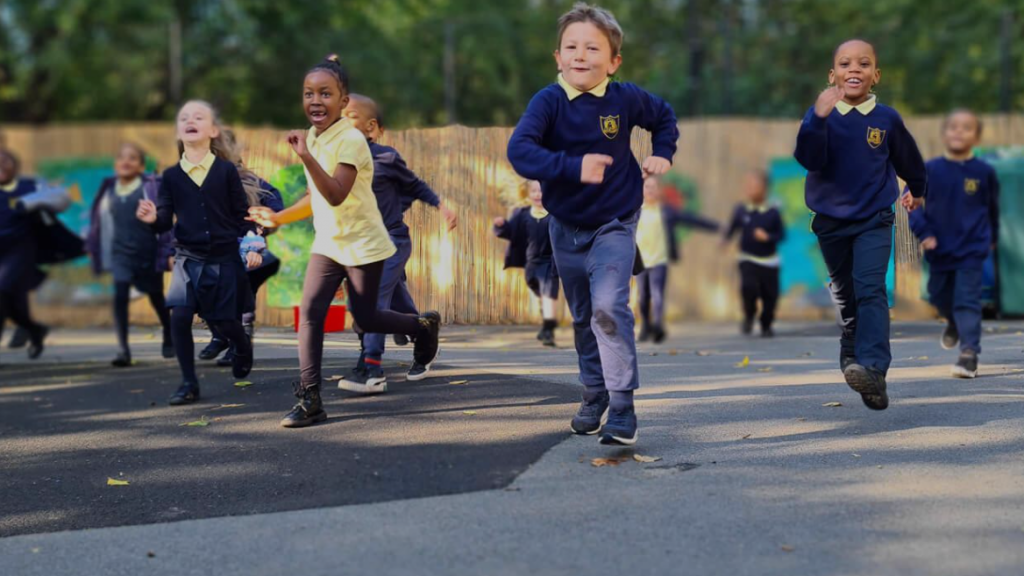
Views of Lizard Street outside the primary school during school pick-up time when the street it is strictly a pedestrian and cycle zone.The activities yard inside the grounds of the Primary School.
What are the benefits of a School Street?
Jemima Hartshorn, CEO and founder of Mums for Lungs, a charity that works closely with School Streets to transform the roads around schools, explains how important this initiative is:
“They really create change around a school on many levels. If the road is closed in front of a school at drop off and pick-up times it really creates an environment that is much less polluted than it otherwise would be at the school gates because there are no cars driving past.
“It’s more peaceful, it’s more safe; frankly, cars are a huge danger to children’s health, pollution and otherwise. So, it really changes the atmosphere around the school – children start their day much healthier.
“School Streets raise awareness of air pollution and the impact on children’s health to the whole school community: parents, teachers, children.”
Mary Jamieson, a local Islington child-minder said:
“I think School Streets are really good. The children go back to playing hopscotch, hula-hoops, kicking a football, and it’s just lovely to see. The novelty of it is that children are allowed to play, whereas before, they would just hold hands and walk along, and not play like people used to many years ago.”
Map of the streets surrounding the school that have the new motor vehicle restrictions in place during pick-up and drop-off times.
With 12 more schools in the Islington borough also set to become Street Schools in the near future, other councils across the capital are rapidly adopting the scheme. Perhaps this initiative is a positive direction toward preventing motor danger and pollution to protect children.
Submitted Article
Headline
Short Headline
Standfirst
Published Article
HeadlineSchool Street opens in Islington
Short HeadlineSchool Street opens in Islington
StandfirstIslington is next to adopt a School Street outside St Luke’s CofE Primary School in Bunhill.
London is en-route to becoming greener and safer for children during the busy school pickup time.
On Monday 1 November, the borough’s 36th School Street came into force, with restrictions to motorised traffic at school drop-off and pick-up times.
Croydon and Islington led the initiative with 13 schemes in place, closely followed by Hackney, Southwark, Camden, and Greenwich.
They are the latest to adopt the School Street’s Initiative, joining over 500 other London schools, with plans for over 50 more to come.
St Luke’s Church of England Primary School’s School Street went active on Monday in Islington.
What is a School Street?
A School Street is a road outside a school that temporarily restricts motorised traffic at busy school drop-off and pick-up times.
The School Streets Initiative is a national scheme that first started in London in 2017, with Camden being the first borough to adopt it.
Its aim is to reduce road danger, create a cleaner environment and encourage active travel leading to better mental and physical health. School streets initiative works alongside councils and local authorities to use traffic management orders to turn a street into a pedestrian and cycle zone.
Views of Lizard Street outside the primary school during school pick-up time when the street it is strictly a pedestrian and cycle zone.The activities yard inside the grounds of the Primary School.
What are the benefits of a School Street?
Jemima Hartshorn, CEO and founder of Mums for Lungs, a charity that works closely with School Streets to transform the roads around schools, explains how important this initiative is:
“They really create change around a school on many levels. If the road is closed in front of a school at drop off and pick-up times it really creates an environment that is much less polluted than it otherwise would be at the school gates because there are no cars driving past.
“It’s more peaceful, it’s more safe; frankly, cars are a huge danger to children’s health, pollution and otherwise. So, it really changes the atmosphere around the school – children start their day much healthier.
“School Streets raise awareness of air pollution and the impact on children’s health to the whole school community: parents, teachers, children.”
Mary Jamieson, a local Islington child-minder said:
“I think School Streets are really good. The children go back to playing hopscotch, hula-hoops, kicking a football, and it’s just lovely to see. The novelty of it is that children are allowed to play, whereas before, they would just hold hands and walk along, and not play like people used to many years ago.”
Map of the streets surrounding the school that have the new motor vehicle restrictions in place during pick-up and drop-off times.
With 12 more schools in the Islington borough also set to become Street Schools in the near future, other councils across the capital are rapidly adopting the scheme. Perhaps this initiative is a positive direction toward preventing motor danger and pollution to protect children.
The Guardian Angels, recognisable by their militant red berets and bomber jackets, returned to New York’s subways at the end of last year following a string of violent attacks.
Internationally renowned for transforming her life into confessional art, the exhibition offers an intimate and unapologetic glimpse into one of Britain’s most influential contemporary artists.
As e-bike riders weave through London’s busiest junctions, red lights are increasingly treated as optional. One software engineer says the problem may be baked into how hire firms charge users