In under two months’ time, a sea of ceramic poppies will return to the Tower of London to celebrate 80 years since the end of World War Two.
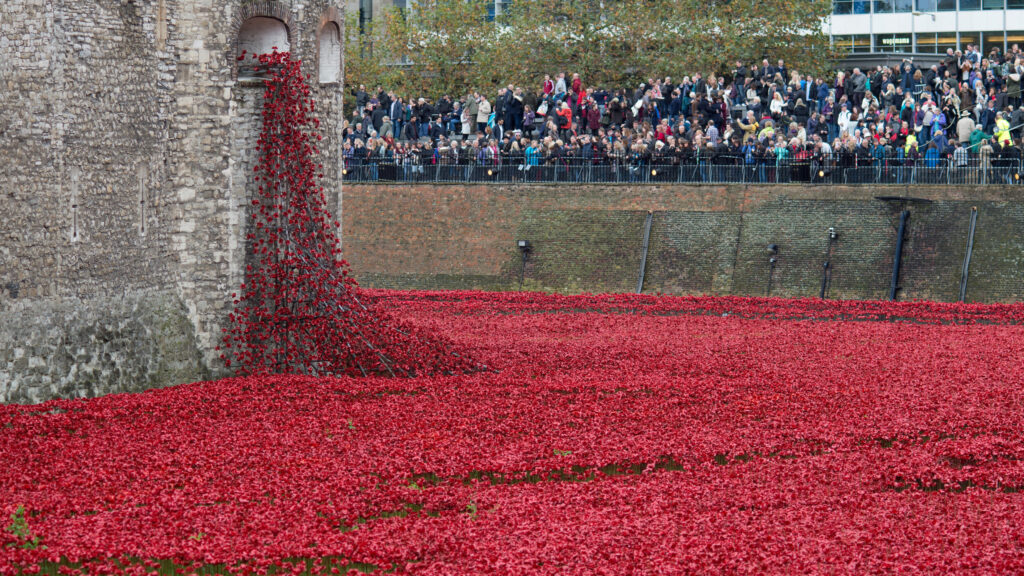
Ceramic poppies first went on display at the tower back in 2014 to mark the start of World War One. 888,246 poppies were planted, one for each military life lost during the war.
Now, 11 years later a display of nearly 30,000 poppies from the original collection will go on display at the heart of the tower.
The poppies are on loan from Imperial War Museums and were designed and made by artist, Paul Cummins. After the 2014 display, the poppies went on sale with proceeds going to various military charities.
The poppies were designed and made by artist, Paul Cummins.
For the installation in 2014, there were around 1,000 volunteers who helped install the poppies, guide visitors, and maintain the display during its run.
One of which was Minnie, who said that being able to create something so beautiful was a real privilege. She also said that the moat of poppies was a reminder of the enormous sacrifice of so much life.
Although there are expected to be volunteers for this display, specific details have not been publicly announced yet.
A ‘wound’ represented by ‘blood-red flowers’
The installation aims to resemble a “wound” at the centre of the tower, which was bombed during the Blitz.
Royal Historic Palaces (RHP) said the poppies “will pour across the lawn overlooked by the ancient White Tower, where the blood-red flowers will form a crater, with ripples flowing outwards”.
The display can be seen as part of general admission to the Tower of London however, RHP has said that a small part of the display would be visible from the public footpath.
The installation opens on 6 May and closes on 11 November, which is Armistice Day.
Submitted Article
Headline
Short Headline
Standfirst
Published Article
HeadlineCeramic poppies to return to Tower of London
Short HeadlineCeramic poppies to return to Tower of London
StandfirstA new display using 80,000 ceramic poppies will be on display at the Tower of London to mark 80 years since the end of WW2.
In under two months’ time, a sea of ceramic poppies will return to the Tower of London to celebrate 80 years since the end of World War Two.
Ceramic poppies first went on display at the tower back in 2014 to mark the start of World War One. 888,246 poppies were planted, one for each military life lost during the war.
Now, 11 years later a display of nearly 30,000 poppies from the original collection will go on display at the heart of the tower.
The poppies are on loan from Imperial War Museums and were designed and made by artist, Paul Cummins. After the 2014 display, the poppies went on sale with proceeds going to various military charities.
The poppies were designed and made by artist, Paul Cummins.
For the installation in 2014, there were around 1,000 volunteers who helped install the poppies, guide visitors, and maintain the display during its run.
One of which was Minnie, who said that being able to create something so beautiful was a real privilege. She also said that the moat of poppies was a reminder of the enormous sacrifice of so much life.
Although there are expected to be volunteers for this display, specific details have not been publicly announced yet.
A ‘wound’ represented by ‘blood-red flowers’
The installation aims to resemble a “wound” at the centre of the tower, which was bombed during the Blitz.
Royal Historic Palaces (RHP) said the poppies “will pour across the lawn overlooked by the ancient White Tower, where the blood-red flowers will form a crater, with ripples flowing outwards”.
The display can be seen as part of general admission to the Tower of London however, RHP has said that a small part of the display would be visible from the public footpath.
The installation opens on 6 May and closes on 11 November, which is Armistice Day.
To mark the launch of HBO Max, iconic movie sets land in London for a two-day immersive experience, letting visitors wander through worlds from Friends, Harry Potter, The White Lotus and Superman.
In a rare, candid interview, Blake Fielder-Civil opens up about the relationship that gripped a generation - and why he refuses to carry the guilt alone.