Many Commonwealth memorials in London hold the names of those who died in the World Wars, with unknown final resting places. The job of the Commonwealth War Graves Commemoration case officers is to match these names with the unmarked graves in their cemeteries.
The process starts with cases submitted by independent researchers matching casualties listed on Commonwealth memorials with casualties buried in unknown graves.
From there, Commemoration case officers will triage and compare the information with their own records and any available information to paint a picture of what happened when they passed.
The team will then conduct a thorough peer review process, followed by the relevant service authorities conducting their own research. Once the service authorities are satisfied, they will proceed with adjudication.
Source: Commonwealth War Graves Commission
“It’s a very long process that involves multiple different parties collaborating together”, Polly Brewster, a Commemoration case officer for the Commonwealth War Graves Commission team, told us. “And that helps us to ensure that every identification that we make, we can have 100 percent confidence in.”
The evidence used in the identification process, sourced from the commission’s records, can vary widely from case to case.
The commission’s records, maintained since 1917, include a wealth of information about the casualties, including their date of death and identifiable features they might have had on them when they died, like items with initials or their rank insignia.
The team also looks at where they were based, where their grave was originally found, and whether it was marked or not in order to use mapping software to build a picture of what the particular site looked like throughout the war.
Along with all of this, the team also uses original military records. These include war diaries, service records, missing enquiries, and records from the Red Cross.
“A lot of this is free to view online, which is really fantastic for us, but also really helpful for any prospective researchers. It means that a lot of the cases that come to us are incredibly thoroughly researched already” Polly Brewster said.
The number of case inquiries the team receives can vary. They typically receive three to four inquiries a week and a heightened amount around major events such as Remembrance Day.
Source: Commonwealth War Graves Commission
According to Polly, “in the years following the centenary… especially that number was much higher, and we are still currently working through a lot of those cases from maybe a few years ago. So it’s an ongoing battle really, but it’s a very worthwhile one.”
Polly is a part of the three-person identification team, along with two officers responsible for recovery cases.
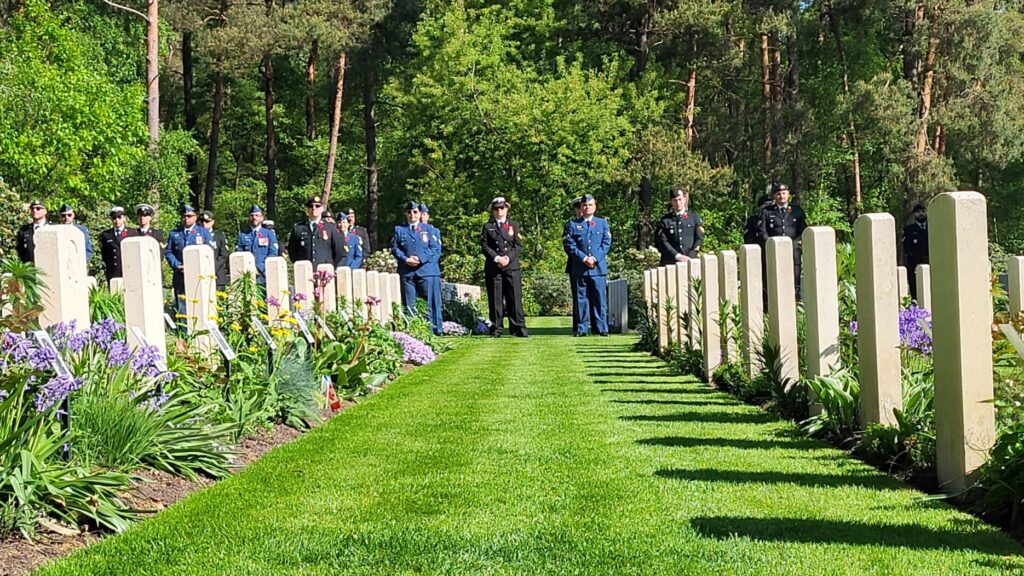
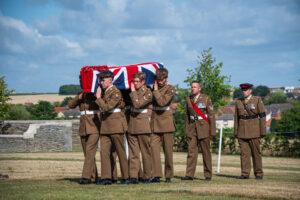
If the identification case is successful, the team will organize a rededication ceremony with the help of relevant service authorities, typically the Ministry of Defence and their Joint Casualty and Compassionate Centre.
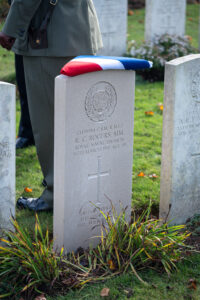
“Rededication ceremonies are organized once we’ve managed to complete a successful identification of a casualty. A new named headstone will be installed at the casualty’s final resting place, and members of the casualty’s family… are invited alongside the casualty’s regimental representatives.”
Polly will be attending her very first renaming ceremony for Private George Hall from the 17th Battalion, Lancashire Fusiliers, this Wednesday. Hall hailed from Stratford in East London.
The ceremony will take place at Vichte Military Cemetery in Belgium, his final resting place, with members of the Royal Fusiliers regiment and service authorities.
This is a case Polly worked on from start to finish. “I think it’s a really poignant moment of finally, after over 100 years in many cases, being able to finally commemorate a casualty with a named headstone at their final resting place.”
Submitted Article
Headline
Short Headline
Standfirst
Published Article
HeadlineHow unmarked war graves get their names back
Short HeadlineHow unmarked war graves regain their names
StandfirstCommemoration officer Polly Brewster explains the identification process for unmarked Commonwealth war graves
Many Commonwealth memorials in London hold the names of those who died in the World Wars, with unknown final resting places. The job of the Commonwealth War Graves Commemoration case officers is to match these names with the unmarked graves in their cemeteries.
The process starts with cases submitted by independent researchers matching casualties listed on Commonwealth memorials with casualties buried in unknown graves.
From there, Commemoration case officers will triage and compare the information with their own records and any available information to paint a picture of what happened when they passed.
The team will then conduct a thorough peer review process, followed by the relevant service authorities conducting their own research. Once the service authorities are satisfied, they will proceed with adjudication.
Source: Commonwealth War Graves Commission
“It’s a very long process that involves multiple different parties collaborating together”, Polly Brewster, a Commemoration case officer for the Commonwealth War Graves Commission team, told us. “And that helps us to ensure that every identification that we make, we can have 100 percent confidence in.”
The evidence used in the identification process, sourced from the commission’s records, can vary widely from case to case.
The commission’s records, maintained since 1917, include a wealth of information about the casualties, including their date of death and identifiable features they might have had on them when they died, like items with initials or their rank insignia.
The team also looks at where they were based, where their grave was originally found, and whether it was marked or not in order to use mapping software to build a picture of what the particular site looked like throughout the war.
Along with all of this, the team also uses original military records. These include war diaries, service records, missing enquiries, and records from the Red Cross.
“A lot of this is free to view online, which is really fantastic for us, but also really helpful for any prospective researchers. It means that a lot of the cases that come to us are incredibly thoroughly researched already” Polly Brewster said.
The number of case inquiries the team receives can vary. They typically receive three to four inquiries a week and a heightened amount around major events such as Remembrance Day.
Source: Commonwealth War Graves Commission
According to Polly, “in the years following the centenary… especially that number was much higher, and we are still currently working through a lot of those cases from maybe a few years ago. So it’s an ongoing battle really, but it’s a very worthwhile one.”
Polly is a part of the three-person identification team, along with two officers responsible for recovery cases.
If the identification case is successful, the team will organize a rededication ceremony with the help of relevant service authorities, typically the Ministry of Defence and their Joint Casualty and Compassionate Centre.
“Rededication ceremonies are organized once we’ve managed to complete a successful identification of a casualty. A new named headstone will be installed at the casualty’s final resting place, and members of the casualty’s family… are invited alongside the casualty’s regimental representatives.”
Polly will be attending her very first renaming ceremony for Private George Hall from the 17th Battalion, Lancashire Fusiliers, this Wednesday. Hall hailed from Stratford in East London.
The ceremony will take place at Vichte Military Cemetery in Belgium, his final resting place, with members of the Royal Fusiliers regiment and service authorities.
This is a case Polly worked on from start to finish. “I think it’s a really poignant moment of finally, after over 100 years in many cases, being able to finally commemorate a casualty with a named headstone at their final resting place.”
As the weather turns, City News has spoken to a long-term rough sleeper to see how those on the street feel about Andy Burnham’s plan to end homelessness and the upcoming winter.